
AGM and gel batteries are both valve-regulated lead-acid (VRLA) types, but they have distinct characteristics. Understanding the differences helps you choose the right one. Jetray Battery manufactures LiFePO4 alternatives for those seeking longer life, but also provides guidance on lead-acid options.
Two Sealed Lead-Acid Types
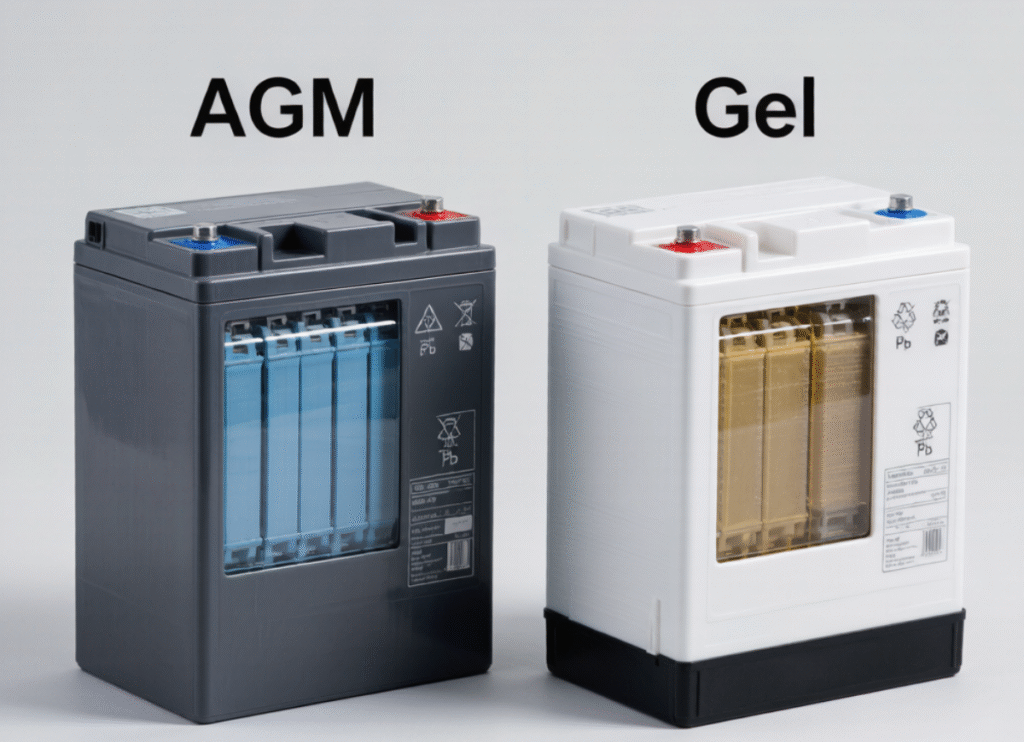
Both AGM and gel are sealed, maintenance-free lead-acid batteries. Neither requires water addition and both can be mounted in various orientations. However, they differ in internal construction, charging requirements, and performance characteristics. The Wikipedia article on VRLA batteries explains the technology behind both types. Choosing between them depends on your specific application requirements.
AGM Technology Explained
AGM (Absorbent Glass Mat) batteries use a fiberglass mat to hold electrolyte between the plates: The mat absorbs and immobilizes the electrolyte, making the battery spill-proof. AGM offers lower internal resistance than gel, enabling higher discharge currents and faster charging. AGM is better for high-current applications like engine starting and inverter loads. Cycle life: 400-600 cycles at 50% DoD. AGM performs well in cold temperatures and resists vibration. It is the most popular VRLA type for general use. Jetray’s custom battery services include AGM configuration support.
Gel Technology Explained
Gel batteries use a silica additive that turns the electrolyte into a thick gel. This completely immobilizes the electrolyte and prevents stratification. Gel batteries have higher internal resistance than AGM, so they cannot deliver the same peak currents. However, gel cells have better deep discharge recovery and longer cycle life (500-800 cycles at 50% DoD). Gel is more tolerant of deep discharges and performs better in cyclic applications like daily solar cycling. The Wikipedia lead-acid article discusses gel technology in depth.
Charging Differences
AGM: Accepts higher charge currents (up to 0.3C). Charging voltage: 14.4-14.7V for 12V system. Can tolerate some overcharging. Gel: Must be charged at lower voltages (14.0-14.2V for 12V system). Overcharging damages gel permanently by creating voids in the gel. Always use a charger with a gel-specific setting. Using an AGM charger on a gel battery will destroy it within weeks.
Cycle Life
| Depth of Discharge | AGM Cycles | Gel Cycles |
|---|---|---|
| 30% DoD | 1,000-1,200 | 1,200-1,500 |
| 50% DoD | 400-600 | 500-800 |
| 80% DoD | 200-300 | 300-400 |
Temperature Performance
AGM: Better cold temperature performance. Delivers higher current at 0°F (-18°C). Capacity retention is good. Gel: Better high temperature tolerance. Slower degradation above 80°F (27°C). Performs well in hot climates where AGM would degrade faster. For extreme temperature environments, the choice between AGM and gel matters significantly.
Cost Comparison
AGM: $1.00-2.00 per Ah. Gel: $1.50-2.50 per Ah. Gel typically costs 20-30% more than equivalent AGM. The higher cost is justified by longer cycle life in deep cycling applications. For standby or occasional use, AGM offers better value. For daily deep cycling, gel’s longer life may offset the higher initial cost.
Vibration Resistance
AGM: Excellent — fiberglass mat holds plates firmly. Preferred for marine, RV, and off-road applications. Gel: Good — gel immobilizes electrolyte but plates can shift under severe vibration. For high-vibration environments, AGM is the better choice. The UL battery safety standards include vibration testing for both types.
Best Applications
AGM: RVs, marine, motorcycles, powersports, UPS backup, security systems, emergency lighting. Gel: Golf carts, floor scrubbers, solar energy storage, medical equipment, wheelchairs, trolling motors. For most modern applications, consider Jetray’s LiFePO4 batteries as they outperform both AGM and gel in cycle life and total cost.
Comparison Table
| Factor | AGM | Gel |
|---|---|---|
| Internal resistance | Low | Higher |
| Charge voltage (12V) | 14.4-14.7V | 14.0-14.2V |
| Cycle life (50% DoD) | 400-600 | 500-800 |
| Cold performance | Excellent | Good |
| Heat tolerance | Moderate | Excellent |
| Vibration resistance | Excellent | Good |
| Cost per Ah | $1.00-2.00 | $1.50-2.50 |
FAQ
Which is better, AGM or gel battery?
AGM is better for high-current and cold-temperature applications. Gel is better for deep cycling and hot environments. Consider LiFePO4 for the best overall performance.
Can I use an AGM charger on a gel battery?
No. Gel batteries require lower charging voltages. An AGM charger will overcharge and permanently damage a gel battery.
Which lasts longer, AGM or gel?
Gel typically lasts 20-30% longer in cycle life than AGM, especially in deep cycling applications.
Is gel battery worth the extra cost?
For daily deep cycling applications like solar or golf carts, yes. For occasional or standby use, AGM offers better value.
Expert Battery Advice from Jetray
Not sure between AGM, gel, or LiFePO4? Jetray Battery provides free technical consultation to help you choose the optimal battery type for your application. Learn about our custom solutions or contact our team.