
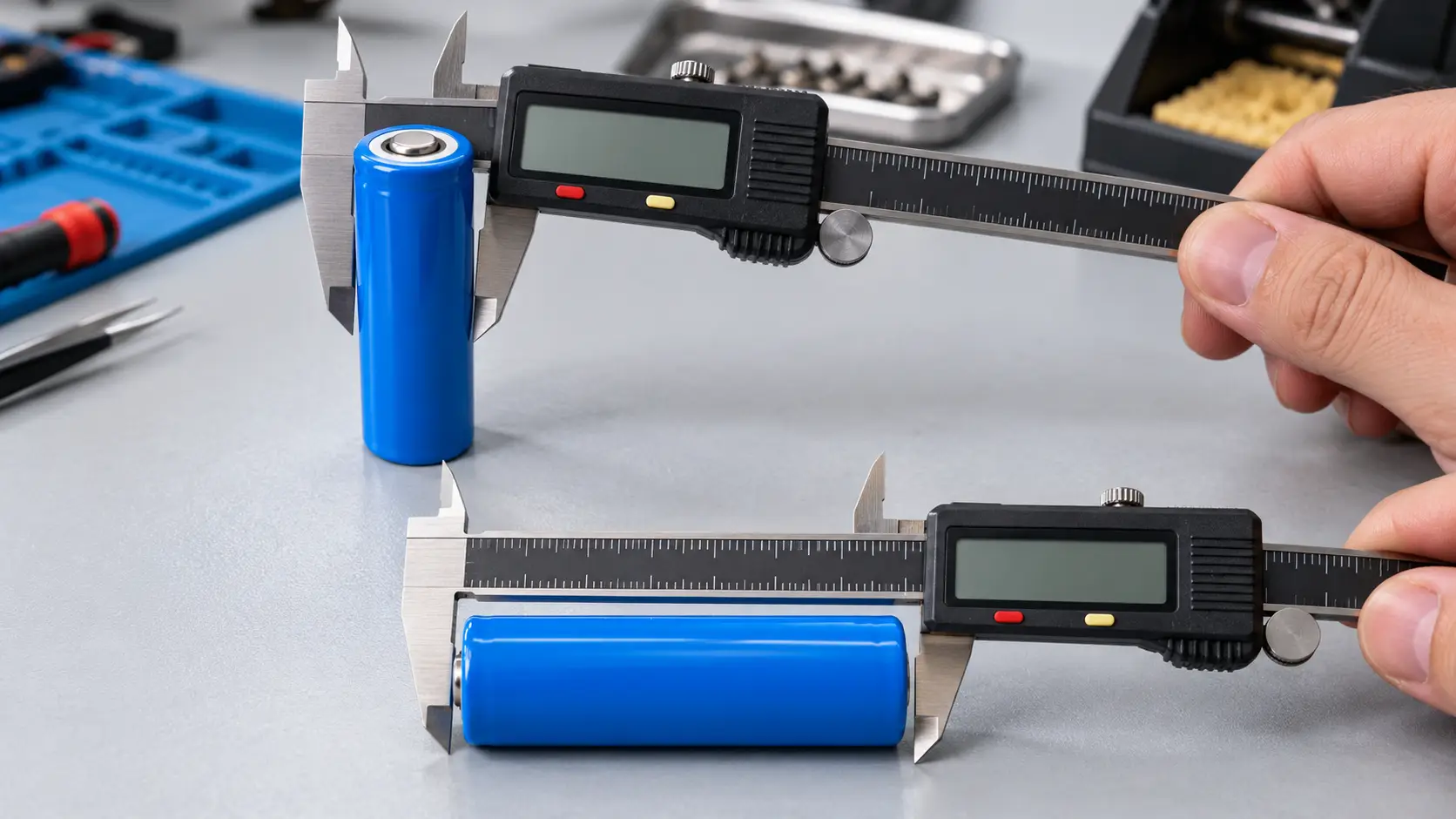
An 18650 battery is a cylindrical lithium-ion cell about 18 mm in diameter and 65 mm long, and the name encodes those two numbers. Datasheet maximums run a little larger, for example 18.50 mm by 65.25 mm for Samsung’s INR18650-35E, and a bare cell weighs about 50 g or less. A 21700 is about 21 by 70 mm, a 26650 about 26 by 65 mm and an AA about 14.5 by 50.5 mm.
Key Takeaways
- Battery University’s BU-301a gives the 18650 size as 18 mm diameter and 65 mm length; the trailing zero marks a cylindrical cell.
- Design to the datasheet maximum, not the name: Samsung’s INR18650-35E report shows a maximum of 18.50 mm diameter, 65.25 mm length and 50.0 g.
- A 21700 is bigger in every direction: Samsung’s INR21700-50E specification lists up to 21.25 mm by 70.80 mm and 69.5 g.
- Protected cells are longer and wider than bare cells, so a holder built for a bare 18650 may not take them.
- Different formats do not swap: the holder, the cell voltage and the electronics all differ.
What does “18650” mean, and how big is an 18650 battery?
The name 18650 means an 18 mm diameter and a 65 mm length, as BU-301a states. The same page says the last zero in a name such as 21700 describes a cylindrical cell, following the IEC naming practice.
Real cells are not exactly 18.0 by 65.0 mm. These are the figures to use:
- Diameter: about 18 mm by name. Samsung’s INR18650-35E report lists a maximum of 18.50 mm with the sleeve on, and Jetray’s product listing for that model shows 18.55 mm, so confirm against the current datasheet.
- Length: about 65 mm by name, with a 65.25 mm maximum on the same Samsung report.
- Weight: 50.0 g maximum for the INR18650-35E; Jetray’s LG INR18650 MJ1 listing shows 49.0 g. Weight varies by model.
- Voltage: 3.60 V nominal and 4.20 V charge voltage on the Samsung report. Capacity depends on the model; BU-301a notes that 18650 capacity rose from 2.2 Ah in early cells to 3.4 Ah by 2017.
How do 18650, 21700, 26650 and AA battery sizes and weights compare?
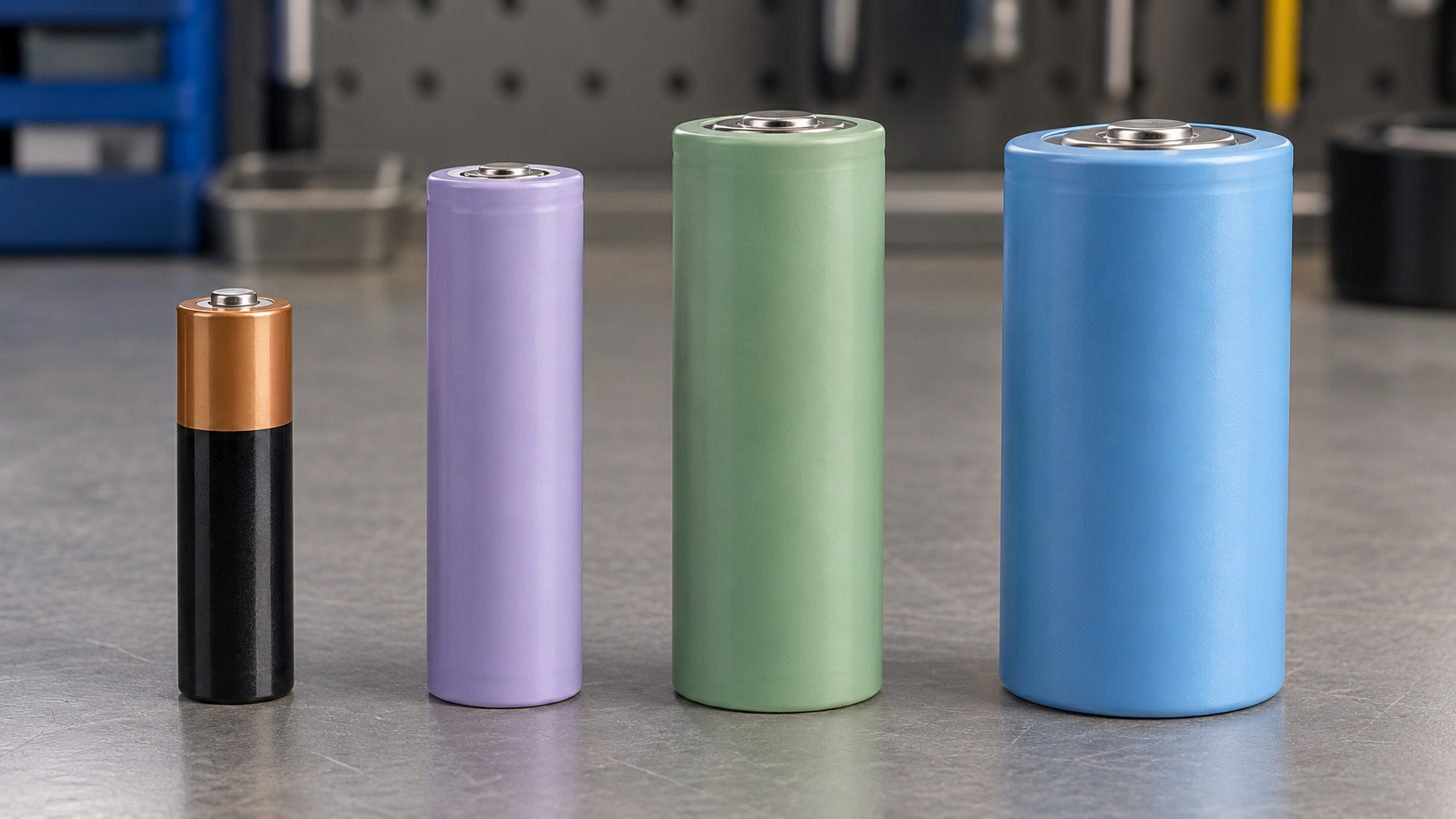
A 21700 is about 3 mm wider and 5 mm longer than an 18650, a 26650 is about 8 mm wider at the same length, and an AA is much smaller than all three. The table gives the nominal size from the name, the maximum size from one datasheet per format, and the weight.
| Format | Nominal size (diameter × length) | Datasheet maximum (example model) | Weight (example model) | Nominal voltage | Approx. volume* |
|---|---|---|---|---|---|
| 18650 | 18 × 65 mm | 18.50 × 65.25 mm (Samsung INR18650-35E) | 50.0 g max | 3.60 V | 16.5 cm³ |
| 21700 | 21 × 70 mm | 21.25 × 70.80 mm (Samsung INR21700-50E) | 69.5 g max | 3.63 V | 24.2 cm³ |
| 26650 | 26 × 65 mm | 26.1 × 65.2 mm (Keeppower 26650-E700) | 97.5 g | 3.6 V | 34.5 cm³ |
| AA alkaline | 14.5 × 50.5 mm | 14.50 × 50.50 mm (Energizer EN91) | 23.0 g typical | 1.5 V | 8.3 cm³ |
| Protected 18650 (one example) | about 18 × 65 mm cell plus protection board | 19.3 × 70.0 mm (NCR18650-340PCM data card) | 49.0 g | 3.60 V | 20.5 cm³ |
Sources: Samsung SDI INR18650-35E report and INR21700-50E specification; Keeppower 26650-E700; Energizer EN91; a distributor data card for a protected cell based on the Panasonic NCR18650B. *Volume is calculated from the size in the table, as a cylinder.
- One model per row: other models of the same format differ by a few tenths of a millimeter and several grams, so use the datasheet for your cell.
- Tolerances differ: the Energizer sheet gives a range (13.50 to 14.50 mm for AA diameter), while the lithium-ion sheets give maximums.
- Not a capacity ranking: bigger does not automatically mean more capacity per cm³, and the datasheet’s capacity and discharge rating decide that.
Why are 21700 cells replacing 18650 in many designs?
A 21700 holds more energy per cell, so a pack needs fewer cells for the same energy. BU-301a says a 21700 has a volume of about 24 cm³ and up to 6,000 mAh, which it describes as roughly doubling capacity with a 50 percent increase in volume.
- Fewer cells per pack: for the same watt-hours there are usually fewer cells to weld, balance and monitor.
- Discharge is model-specific: Samsung’s 21700-50E specification lists 9,800 mA maximum continuous discharge, while Jetray’s listing for the 18650 35E shows 8 A. Read the maximum continuous current on each datasheet rather than assuming from the format.
- Heat follows current: the heat each cell produces depends on its internal resistance and the current drawn, so compare models at your load.
- 18650 stays in use: many existing products, holders and chargers are built around it.
For 21700 cell brands and selection, see our guide to choosing 21700 cells.
Which cell size fits which application?
Choose the format by the space you have and the energy and current you need. BU-301a notes that cylindrical cells are widely used in power tools, medical instruments, laptops and e-bikes because of their fixed size and mechanical stability.
- 18650: the established format, with a large choice of models; Jetray’s 18650 cell category lists models whose titles name LG, Panasonic, Samsung and Sanyo cells.
- 21700: the larger successor, chosen when a design needs more energy per cell; see Jetray’s 21700 cell category.
- 26650: a wider, heavier cell used when there is room; see our 26650 battery guide.
- AA: a 1.5 V alkaline size for ordinary devices, not a lithium-ion cell format. For the AA-sized lithium cell, see our 14500 vs 18650 comparison.
- Cost and supply: compare cost per watt-hour at pack level, including holders, welds and BMS channels, not only the price per cell.
Can you swap an 18650 with a 21700, 26650 or AA?
No, these formats are not interchangeable, because the size, the holder and the voltage all differ. The table shows what goes wrong in each case.
| Swap | Result | Why |
|---|---|---|
| 21700 into an 18650 holder | Does not fit | About 3 mm wider and 5 mm longer by name |
| 18650 into a 21700 holder | Loose or no contact | The cell is smaller than the space, so the contacts may not touch |
| 26650 into an 18650 holder | Does not fit | About 8 mm wider and heavier |
| Protected 18650 into a bare-cell holder | May not fit | The example card above lists 19.3 × 70.0 mm against about 18 × 65 mm for a bare cell |
| 18650 in place of AA | Do not do this | 3.60 V nominal against 1.5 V for alkaline AA, plus a different size |
The mechanical mismatch is the first problem, but a swap can also change the voltage range and the charging settings. If a design must change cell format, treat it as a redesign and re-check the BMS and charger.
How do you choose a cell size for a new product?
Start from pack voltage, energy and available space, then pick a cell model, not just a format. Follow these steps:
- Set the pack voltage and energy: divide the pack voltage by about 3.6 V to get the series count, and multiply voltage by capacity to get watt-hours.
- Fix the envelope: use the datasheet maximum diameter and length, then add room for sleeves, nickel strip, holders and tolerance.
- Set the current: list the continuous and peak current per cell and choose a model whose maximum continuous discharge covers it.
- Compare at pack level: count cells, welds, balance channels, weight and cost for each format.
- Confirm supply and documents: ask for the cell model, the datasheet and the supplier’s cell source before you lock the design.
What should OEM buyers check on 18650 and 21700 cells?
OEM buyers should buy to a named cell model and a datasheet, not to a size name. Two cells that are both called 18650 can differ in capacity, discharge rating, length and weight.
- Exact model and datasheet: get the model name and the current datasheet for each cell, and compare its maximum dimensions with your holder or housing.
- Bare or protected: confirm whether the cell has a protection board, a button top or a sleeve, because each changes the length and diameter.
- Dimensions on the label and in the sample: measure a sample with calipers before approving a tray, holder or case.
- Source of the cells: ask where the cells come from and for traceable documents; unmarked or relabeled cells are a risk.
- Documents: request the certificate and test documents that apply to your exact pack model and confirm the model is within their scope.
How does Jetray approach 18650 cells and packs?
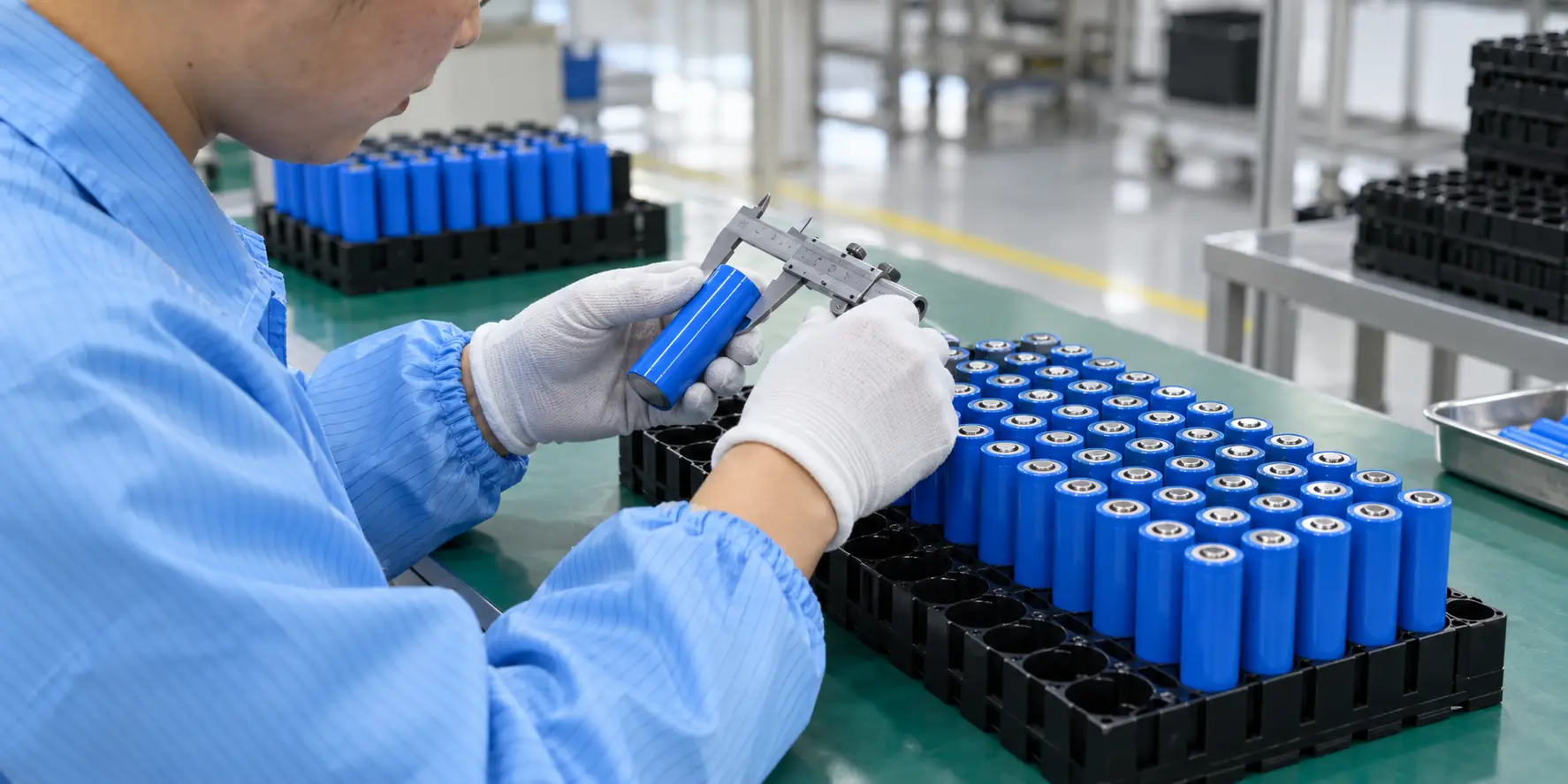
Jetray is a lithium battery pack manufacturer in Shenzhen, China, and sells both 18650 cells and 18650 battery packs. This section lists what the website shows, as a reference for your own design.
- Samsung INR18650-35E listing: the product page lists a 3.6 V nominal voltage, 3,500 mAh rated capacity, 18.55 mm diameter, 65.25 mm length and 50.0 g.
- LG INR18650 MJ1 listing: the product page lists a 3.6 V rated voltage, 3,500 mAh rated capacity, a maximum size of 18.5 × 65.2 mm and 49.0 g.
- Cell suppliers: Jetray’s About page lists Panasonic, Samsung, LG, Molicel, Murata, EVE and BAK as lithium-ion cell suppliers. The cell in a given pack is shown on that product page.
- Custom packs: the customized service page covers cell selection and configuration, BMS design, housing and structure, and communication options, with OEM/ODM support.
Frequently Asked Questions
How big is an 18650 battery?
An 18650 battery is about 18 mm in diameter and 65 mm long, according to BU-301a. Datasheet maximums are slightly larger, for example 18.50 mm by 65.25 mm for Samsung’s INR18650-35E.
How much does an 18650 battery weigh?
An 18650 battery weighs about 50 g or less for a bare cell. Samsung’s INR18650-35E report lists 50.0 g maximum and Jetray’s LG INR18650 MJ1 listing shows 49.0 g, but the weight changes with the model.
Can I use a 21700 battery instead of an 18650?
You cannot use a 21700 battery instead of an 18650 in a holder built for the 18650, because the 21700 is about 3 mm wider and 5 mm longer. Changing the format in a product means a redesign of the holder and a re-check of the BMS and charger.
What is the difference between an 18650 and an AA battery?
The difference between an 18650 and an AA battery is size, voltage and chemistry: the 18650 is about 18 by 65 mm at 3.60 V nominal, while Energizer’s alkaline AA is 14.50 by 50.50 mm maximum at 1.5 V and 23.0 g typical. They cannot be swapped.
How long is a protected 18650 battery?
A protected 18650 battery is longer than a bare cell because of the protection board. One distributor data card for a protected cell based on the Panasonic NCR18650B lists 19.3 mm by 70.0 mm, so check the exact model before choosing a holder.
Need Custom 18650 or 21700 Battery Packs?
Tell Jetray your pack voltage, capacity, current and space limits through the contact page, or read about the custom battery pack service. Jetray’s contact page says it replies within 24 hours.
Sources and data checked in October 2026: Battery University (Cadex) BU-301a Types of Battery Cells; Samsung SDI INR18650-35E technical report (tentative specification) and INR21700-50E specification, as hosted by distributors; Energizer EN91 datasheet; Keeppower 26650-E700 product page; a distributor data card for NCR18650-340PCM; Jetray product pages 1938 and 1956 and the customized service page. Volumes are calculated from nominal sizes. Always use the current datasheet for your cell.