
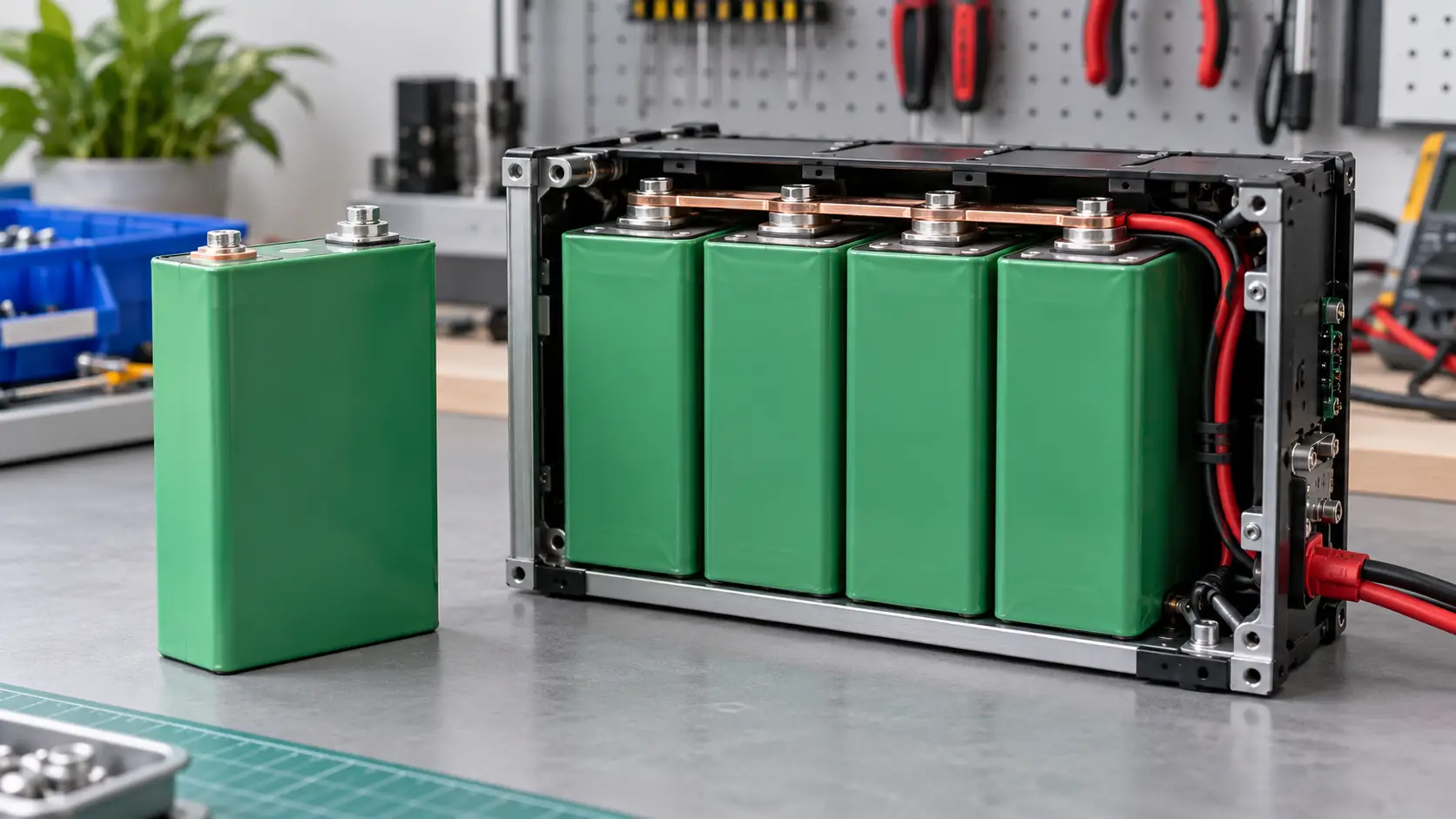
A LiFePO4 battery is a rechargeable lithium-ion battery whose cathode is lithium iron phosphate (LFP), also written LiFePO4. Each cell has a nominal voltage of 3.2 V, so four cells in series make a 12.8 V pack. Battery University describes LFP as one of the safest lithium-ion types, with a flat discharge curve and lower energy density than NMC.
Key Takeaways
- LiFePO4 is a lithium-ion chemistry with a lithium iron phosphate cathode and a graphite anode, and a nominal cell voltage of 3.2 V, according to Battery University BU-216.
- BU-216 lists LFP at 90 to 120 Wh/kg against 150 to 220 Wh/kg for NMC, so a LiFePO4 pack of the same energy is usually larger and heavier than an NMC pack.
- BU-216 gives a thermal runaway temperature of 270°C for LFP against 210°C for NMC, which is why LFP is called a safer chemistry; pack design and the BMS still matter.
- Cycle life depends on depth of discharge, temperature and charge rate, so compare cycle counts only with the test conditions stated.
- Buy to a pack datasheet: voltage window, charge temperature range, current limits, BMS functions and the cycle-life test conditions.
What is a LiFePO4 battery?
A LiFePO4 battery is a lithium-ion battery that uses lithium iron phosphate as the cathode material. BU-216 lists the cell as a LiFePO4 cathode with a graphite anode, in use since 1996. The names LFP, Li-phosphate and LiFePO4 all mean the same chemistry.
These are the basic cell figures from BU-205:
- Nominal voltage: 3.20 V (some cells are listed at 3.30 V).
- Operating range: 2.5 V to 3.65 V per cell, with charging to 3.65 V.
- Specific energy: 90 to 120 Wh/kg.
- Discharge curve: very flat, which keeps the voltage steady through most of the discharge.
- Weak points: lower capacity than NMC and elevated self-discharge, which can cause balancing problems as cells age.
How does a LiFePO4 battery work?
A LiFePO4 battery stores energy by moving lithium ions between the iron phosphate cathode and the graphite anode. Ions move to the anode during charging and back to the cathode during discharge, and the current flows through the external circuit.
A pack adds more than cells, and each part has a job:
- Series cells set the voltage: four 3.2 V cells make 12.8 V nominal, eight make 25.6 V, and sixteen make 51.2 V.
- Parallel cells add capacity: each parallel string adds its Ah to the pack.
- The BMS protects the cells: it limits voltage, current and temperature and balances the cells; see our BMS guide.
- The charger must match: BU-216 lists charging to 3.65 V per cell and ending charge when current tapers to 0.05C, so a lead-acid charger profile is not the right setting.
For the voltage of a 12 V, 24 V or 48 V pack at each state of charge, use our LiFePO4 voltage chart, and for the 3.2 V cell itself, our 3.2V battery guide.
What are the advantages of a LiFePO4 battery?
The main advantages of a LiFePO4 battery are thermal stability, long cycle life and a flat voltage curve. Each one has a limit, and the limits matter in a purchase.
- Safety: BU-205 calls LFP one of the safest lithium-ion types and says it tolerates full-charge conditions better than other lithium-ion chemistries. Its listed thermal runaway temperature is 270°C. A safe chemistry does not remove the need for a BMS, a sound enclosure and tested packs.
- Cycle life: BU-205 gives 2,000 cycles or more, depending on depth of discharge and temperature. Jetray’s 48V 100Ah listing shows 2,000 cycles, with no test conditions on the page.
- Steady voltage: the flat discharge curve keeps equipment running at close to full voltage until the cells are nearly empty.
- Materials: the cathode uses iron and phosphate and contains no cobalt or nickel, which can matter in supply planning.
- Energy density is lower: 90 to 120 Wh/kg is below NMC, so space and weight budgets must allow for it.
How do temperature and self-discharge affect a LiFePO4 battery?
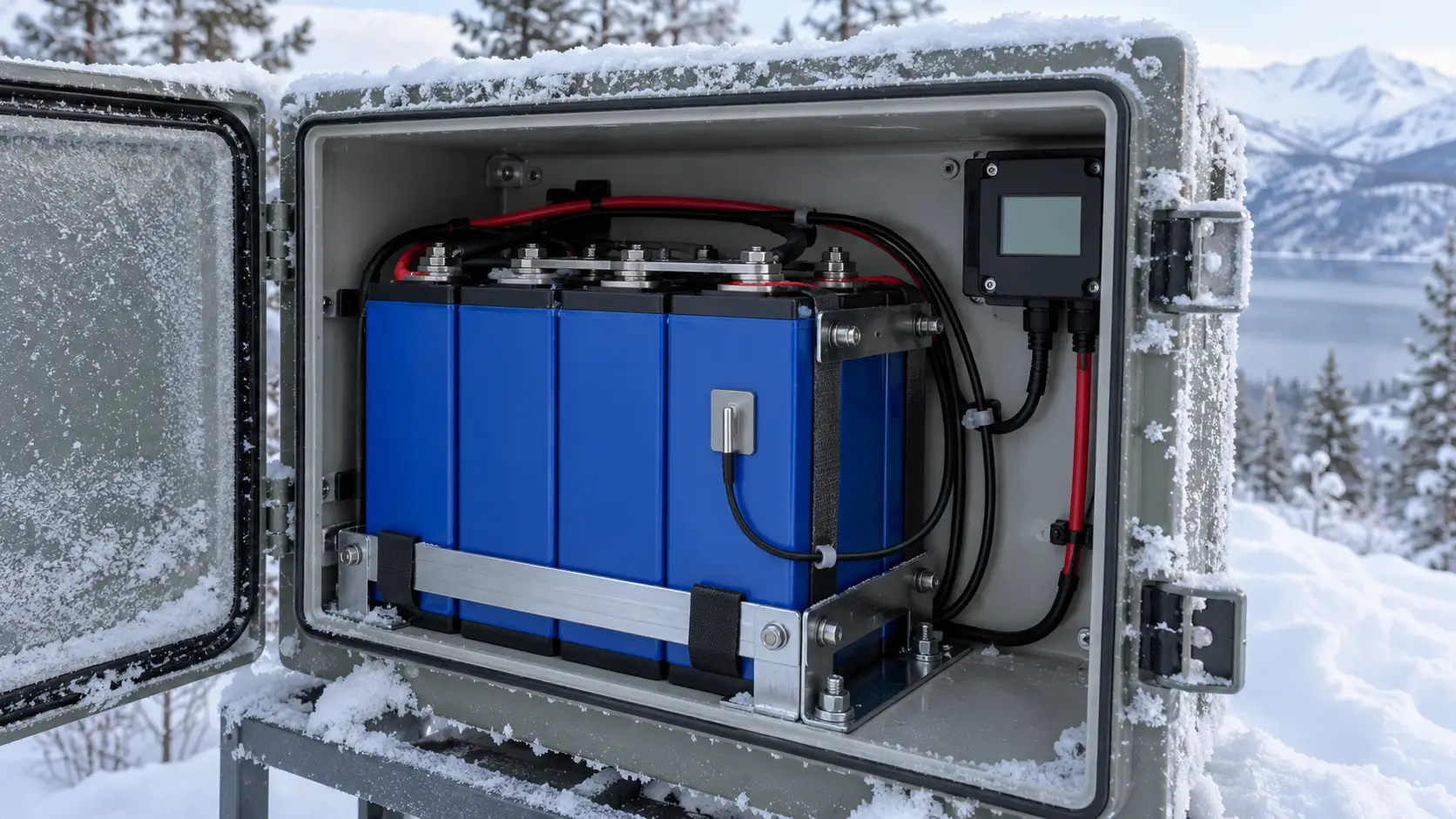
Cold weather reduces performance, and each pack has its own charge and discharge temperature limits. BU-205 says cold reduces LFP performance and that high storage temperature shortens service life.
- Read the limits on the datasheet: Jetray’s 12V 100Ah listing shows a charging temperature of 0 to 45°C and a discharging temperature of -20 to 60°C, so the pack is rated to deliver power in colder conditions than it is rated to charge in.
- Ask about low-temperature charging: confirm whether the BMS blocks charging below the rated charge temperature or whether the pack has a heater.
- Balance over time: because LFP self-discharge is elevated, a BMS with balancing helps keep the cells matched as the pack ages.
What is a LiFePO4 battery used for?
LiFePO4 batteries are used where steady power, long cycle life and thermal stability matter more than the lowest weight. BU-205 says LFP suits portable and stationary uses that need high load currents and endurance, and that it is used mainly for energy storage.
- Energy storage: home and commercial storage, such as the 48V 100Ah pack Jetray lists for household energy storage.
- Leisure and marine: RV house batteries and trolling motors; see our RV battery sizing guide.
- Vehicles: golf carts and forklifts, usually as a replacement for lead-acid; see Jetray’s golf cart battery page.
- Starter replacement: BU-205 notes LFP is often used to replace lead-acid starter batteries.
How does LiFePO4 compare with NMC and lead-acid?
LiFePO4 trades some energy density for stability and long life, which makes it a different choice from NMC and a stronger one than deep-cycle lead-acid for repeated deep discharge. The table uses Battery University figures.
| Item | LiFePO4 (LFP) | NMC | Deep-cycle lead-acid |
|---|---|---|---|
| Nominal cell voltage | 3.20 V | 3.60 V (3.70 V) | Not stated on the page |
| Specific energy | 90 to 120 Wh/kg | 150 to 220 Wh/kg | Low; poor weight-to-energy ratio |
| Cycle life | 1,000 to 2,000 (ideal, BU-216); 2,000 and higher (BU-205) | 1,000 to 2,000 (ideal) | 150 to 200 at 100% depth of discharge; 400 to 500 at 50%; 1,000 or more at 30% |
| Thermal runaway | 270°C, safe at full charge | 210°C, higher when empty | Not applicable |
| Notes | Flat curve, very safe, elevated self-discharge | High capacity and power | Strained by deep discharge |
Sources: BU-216, BU-205 and BU-201. Cycle counts are test-condition figures, not guarantees.
- Against NMC: pick NMC when weight and space decide the design, and LiFePO4 when stability and cycle count do. Our LFP vs NMC comparison goes further.
- Against lead-acid: BU-201 shows deep-cycle lead-acid cycle life falls quickly as depth of discharge rises, which is the case LiFePO4 handles better.
- Cost: compare cost per delivered kWh over the service life and include the BMS and charger, not only the purchase price.
What should OEM buyers check on a LiFePO4 pack?
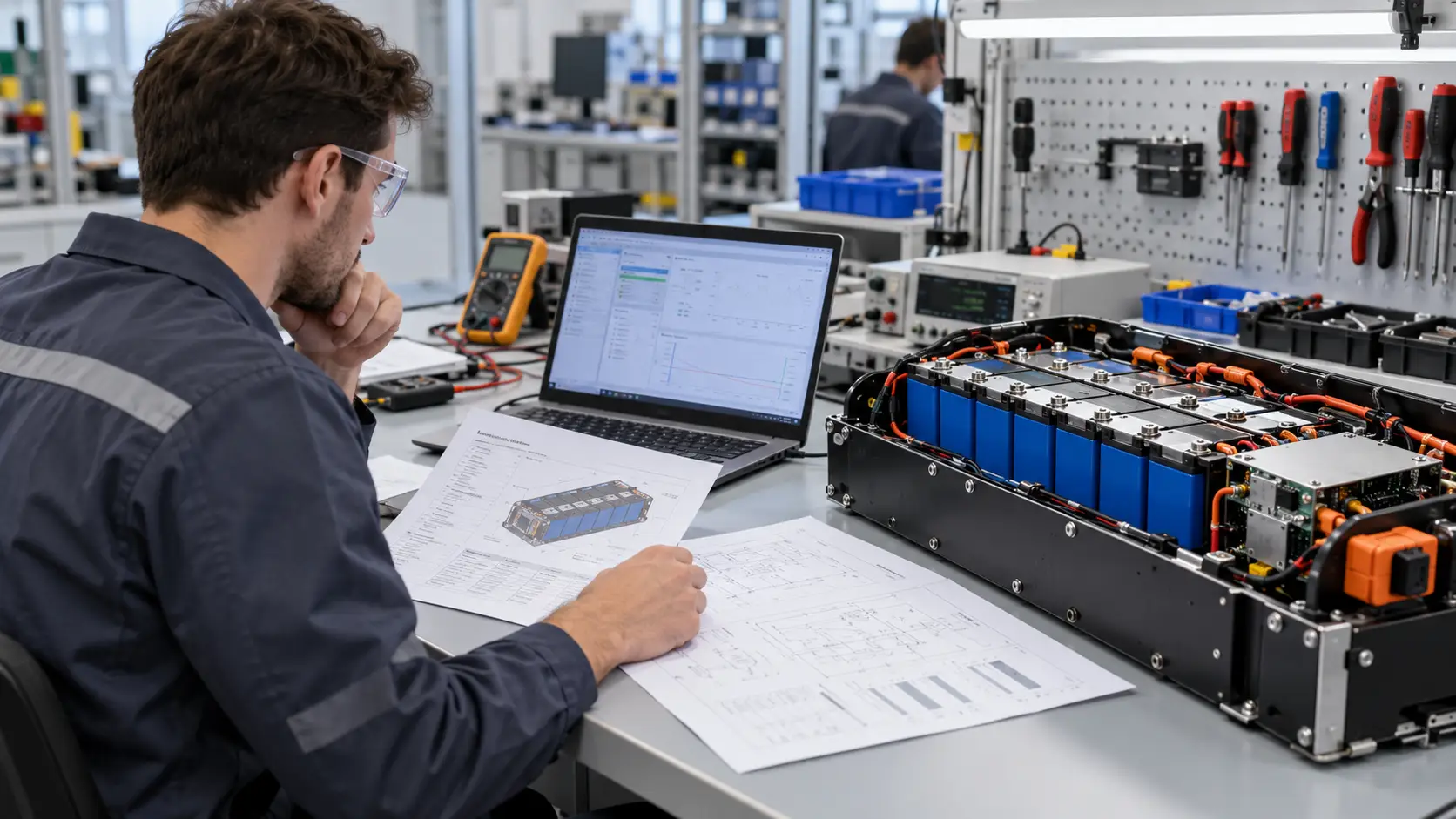
OEM buyers should ask for a pack datasheet that states the cell source, the BMS limits and the test conditions behind every cycle-life number. Two packs with the same Ah can differ a lot.
- Cell source and grade: ask which cell model is inside and for its datasheet, and confirm it is the same cell that was sampled.
- Voltage window and nominal voltage: check the cutoffs against your charger and load; Jetray’s 12V listing shows a 10 to 14.6 V operating range.
- Current limits: get the continuous and peak discharge current, the charge current and the BMS cutoff behavior.
- Temperature limits: get separate charge and discharge ranges and the low-temperature charging behavior.
- Cycle-life conditions: ask for the depth of discharge, charge rate, temperature and end-of-life capacity behind the number.
- Documents: request the certificates and transport test reports that apply to your exact pack model and confirm the model is in their scope.
- Communication and enclosure: specify CAN, RS485 or Bluetooth needs, the connector, size limits and ingress protection early.
How does Jetray approach LiFePO4 batteries?
Jetray is a lithium battery pack manufacturer in Shenzhen, China, and lists LiFePO4 packs from 12V to 72V in its LiFePO4 battery pack category. Below is what the website shows, as a reference.
- 12V 100Ah pack: the product page lists 12.8 V nominal, 100 Ah, a 10 to 14.6 V operating voltage, 0.5C standard and 1.0C maximum discharge current and a size of 307 × 169 × 208 mm.
- 48V 100Ah pack: the product page lists 100 Ah, 4,800 Wh, a 37.5 to 54.75 V operating range, 50 A maximum charge current, 100 A maximum discharge current, 2,000 cycles, 482 × 420 × 177 mm and 42 kg.
- Cell suppliers: Jetray’s About page lists EVE, Great Power and XingDong as LiFePO4 cell suppliers. The cell used in a given pack is shown on that product page.
- Custom packs: the customized service page covers cell selection, BMS design, housing and communication options (CAN, RS485, Bluetooth, WiFi), with OEM/ODM support.
Frequently Asked Questions
Is a LiFePO4 battery better than a lithium-ion battery?
A LiFePO4 battery is a type of lithium-ion battery, and whether it is better depends on the job. LFP has a lower specific energy (90 to 120 Wh/kg) than NMC (150 to 220 Wh/kg) but a higher listed thermal runaway temperature, so it suits stationary and heavy-cycle uses where stability matters more than weight.
Why is a LiFePO4 battery expensive?
A LiFePO4 battery costs more than a lead-acid battery up front because the pack includes lithium cells, a BMS and a matched charger. Judge it by cost per delivered kWh over the service life, using cycle-life figures with their test conditions, rather than by the purchase price alone.
How long does a LiFePO4 battery last?
A LiFePO4 battery lasts for a number of cycles that depends on depth of discharge, temperature and charge rate. Battery University gives 2,000 cycles or more, and Jetray’s 48V 100Ah listing shows 2,000 cycles, so ask the supplier for the conditions behind the number.
What voltage is a LiFePO4 battery?
A LiFePO4 cell is 3.2 V nominal, and a 12 V LiFePO4 battery is four cells in series at 12.8 V nominal. Cells charge to 3.65 V each, so a 12.8 V pack tops out around 14.6 V, which matches the 14.6 V upper limit on Jetray’s 12V 100Ah listing.
Can a LiFePO4 battery replace a lead-acid battery?
A LiFePO4 battery can replace a lead-acid battery in many uses, but you must check the voltage window, the charger profile and the current limits first. Lead-acid chargers are set for a different charge profile, and the BMS protects the lithium cells only within its set limits.
Need a Custom LiFePO4 Battery Pack?
Tell Jetray your voltage, capacity, peak current, operating temperature and size limits through the contact page, or read about the custom battery pack service. Jetray’s contact page says it replies within 24 hours.
Sources and data checked in October 2026: Battery University (Cadex) BU-205 Types of Lithium-ion, BU-216 Summary Table of Lithium-based Batteries and BU-201 How Does the Lead Acid Battery Work; Jetray product pages for the 12V 100Ah and 48V 100Ah LiFePO4 batteries, its About page and the customized service page. Cycle-life figures depend on test conditions; always use the datasheet for your pack.