




































Lithium Battery Technology, Explained for OEMs
Every custom pack comes down to three decisions: the chemistry, the cell format and how the cells are wired. These guides explain each one in plain terms, so you can brief us faster and compare quotes with confidence.
Three choices that shape every pack
Pick a topic. Each guide covers what matters for product design, not lab theory.
Chemistries
Li-ion, LiFePO4, LiPo and primary lithium compared by voltage, energy density, cycle life, safety and cost.
Compare chemistries →Cell formats
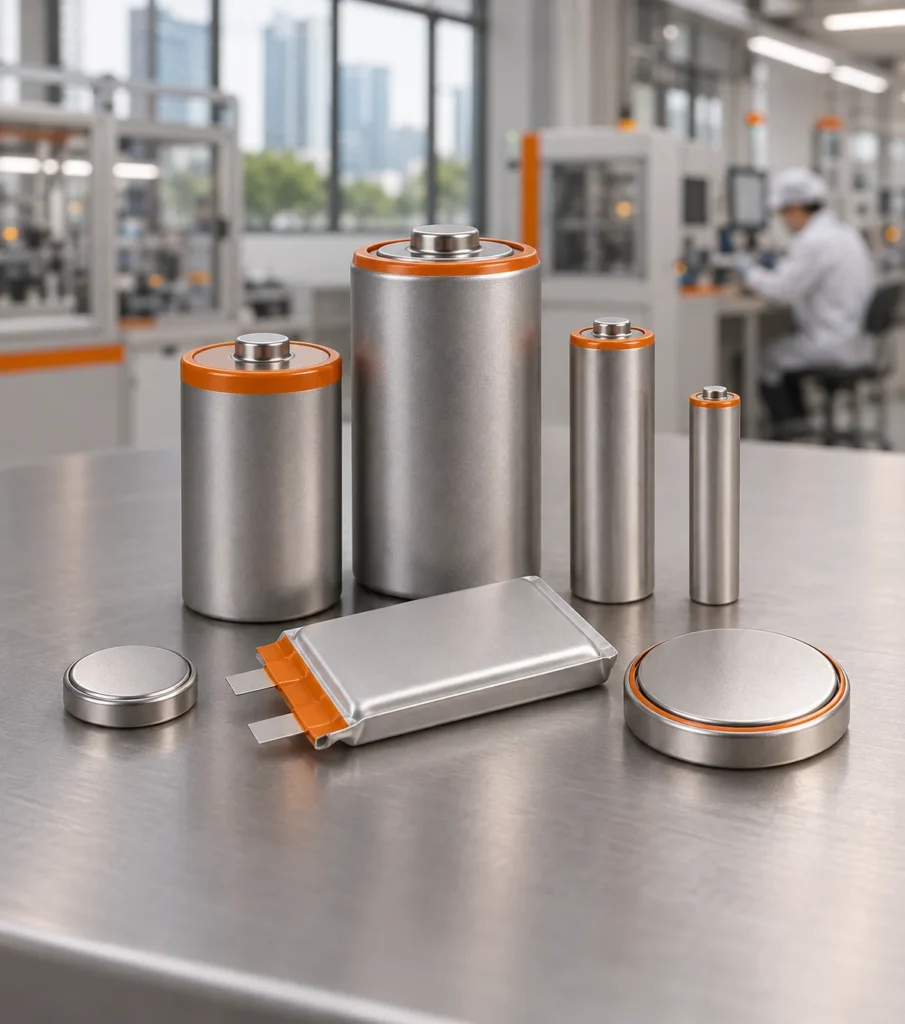
Cylindrical, prismatic, pouch and coin cells, and how the format affects size, cooling and price.
Compare formats →Voltage configurations
How cells are wired in series and parallel to reach your voltage, capacity and current.
See configurations →From device requirement to finished pack
The same order our engineers follow when they propose a solution.
- 1
Define the load
Voltage window, continuous and peak current, run time and operating temperature of your device.
- 2
Choose the chemistry
Energy density, cycle life and safety targets usually narrow it to one or two options.
- 3
Pick the cell
Format and cell model are chosen to fit the space and handle the current with margin.
- 4
Wire the pack
Series count sets the voltage, parallel count sets capacity and current.
- 5
Protect and package
BMS, wiring, connectors and enclosure are designed around the final layout.
Try a pack layout
Move the sliders to see how the series and parallel count change voltage, capacity and energy. Send us the result and we will check it against real cell datasheets.
- Li-ion cells: 3.6–3.7 V nominal each
- LiFePO4 cells: 3.2 V nominal each
- Energy (Wh) = nominal voltage × capacity (Ah)
Illustrative only. We confirm the final layout against the cell datasheet and your peak current.
Frequently asked questions
It depends on what matters most. Li-ion (NMC) gives the most energy in the least space, LiFePO4 gives long cycle life and high thermal stability, and LiPo pouch cells suit thin devices. Send us your size, run time and temperature range and we will recommend one.
Yes. We work with major cell brands as well as qualified domestic cells, and we can quote both so you can compare cost and lead time.
No. Tell us the voltage, capacity or run time and the space available. We will work out the configuration and explain the trade-offs.
Browse our product catalog for standard models, or send your requirement for a custom design.

Have a pack to design?
Share your voltage, capacity, size and current limits. An engineer will reply within 24 hours with a proposed chemistry, cell and layout.