
















































What Is Cell Matching?
Cell matching refers to the process of selecting and grouping battery cells with similar characteristics—primarily capacity, voltage, and internal resistance—before assembling them into a battery pack.
Even cells from the same production batch are never perfectly identical. Small variations in manufacturing can lead to differences in performance. Cell matching is used to minimize these differences and ensure that all cells in a pack behave as consistently as possible.
Why Cell Matching Matters
In a battery pack, cells do not operate independently. They are connected in series and/or parallel, meaning the performance of one cell directly affects the others.
If cells are not properly matched, weaker cells will reach their limits earlier. In a series configuration, the cell with the lowest capacity determines the usable capacity of the entire pack. In parallel configurations, differences in internal resistance can cause uneven current distribution, leading to localized heating and accelerated degradation.
Over time, these imbalances reduce overall performance, shorten cycle life, and increase the risk of safety issues. This is why cell matching is considered a fundamental step in battery pack design, not just a manufacturing detail.
Key Parameters in Cell Matching
Effective cell matching is based on a few measurable parameters.
Capacity is the most critical factor. Cells with different capacities will charge and discharge at different rates, which creates imbalance during operation.
Voltage is also important, especially during initial grouping. Cells should be aligned at a similar state of charge to prevent stress during the first cycles.
Internal resistance plays a key role in current distribution. Cells with higher resistance tend to generate more heat under load, which can further accelerate aging and create inconsistency within the pack.
In some cases, self-discharge rate is also considered, particularly for applications involving long storage periods or low-duty cycles.
How Cell Matching Is Done in Practice
In real production environments, cell matching follows a structured process.
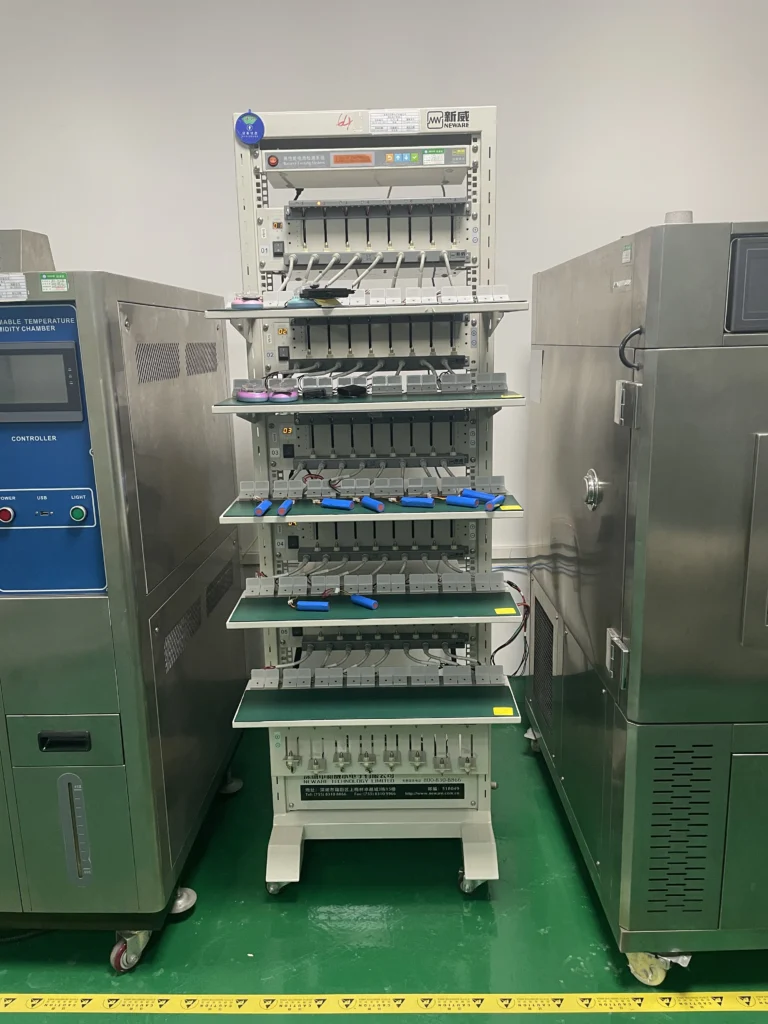
Cells are first tested to measure capacity, voltage, and internal resistance. Based on these results, they are sorted into groups with similar performance ranges. This process is often referred to as grading or binning.
Once classified, cells from the same group are assembled together into modules or packs. The goal is to ensure that each group behaves uniformly during operation.
For higher-end applications, the matching process may include tighter tolerance ranges and more detailed data tracking to maintain consistency across batches.
What Happens Without Proper Matching
When cell matching is ignored or poorly executed, the effects become visible over time.
The most common issue is reduced usable capacity. Since the weakest cell limits the entire pack, overall performance drops faster than expected.
Cycle life is also affected. Imbalance between cells leads to uneven stress, causing some cells to degrade faster than others. This creates a feedback loop where imbalance continues to grow.
In more severe cases, mismatched cells can contribute to safety risks. Overcharging or over-discharging individual cells increases the likelihood of thermal issues, especially under high load or high temperature conditions.
The Role of BMS and Cell Balancing
A Battery Management System (BMS) is designed to monitor and manage the performance of cells within a pack. One of its key functions is cell balancing, which helps reduce differences in state of charge between cells.
However, BMS is not a replacement for proper cell matching. It can only compensate for small variations during operation. If the initial mismatch is too large, the BMS will have limited ability to correct it.
In other words, good cell matching reduces the workload on the BMS and improves overall system stability.
How Strict Should Cell Matching Be?
The level of matching required depends on the application.
For high-performance systems such as electric vehicles, energy storage systems, or industrial equipment, tighter matching tolerances are necessary. These systems operate under higher loads and demand long-term stability.
For less demanding applications, such as low-power devices or backup systems, the matching requirements can be slightly relaxed without significant impact.
From a cost perspective, tighter matching increases testing and sorting complexity. The key is to find a balance between performance requirements and manufacturing efficiency.
Final Thoughts
Cell matching is a critical step in building reliable battery packs. It directly affects performance, lifespan, and safety, and should be considered part of system design rather than just a production process.
When done properly, it ensures consistent behavior across all cells, reduces stress during operation, and improves long-term stability. For manufacturers and system integrators, investing in proper cell matching is essential for delivering dependable battery solutions.