

















































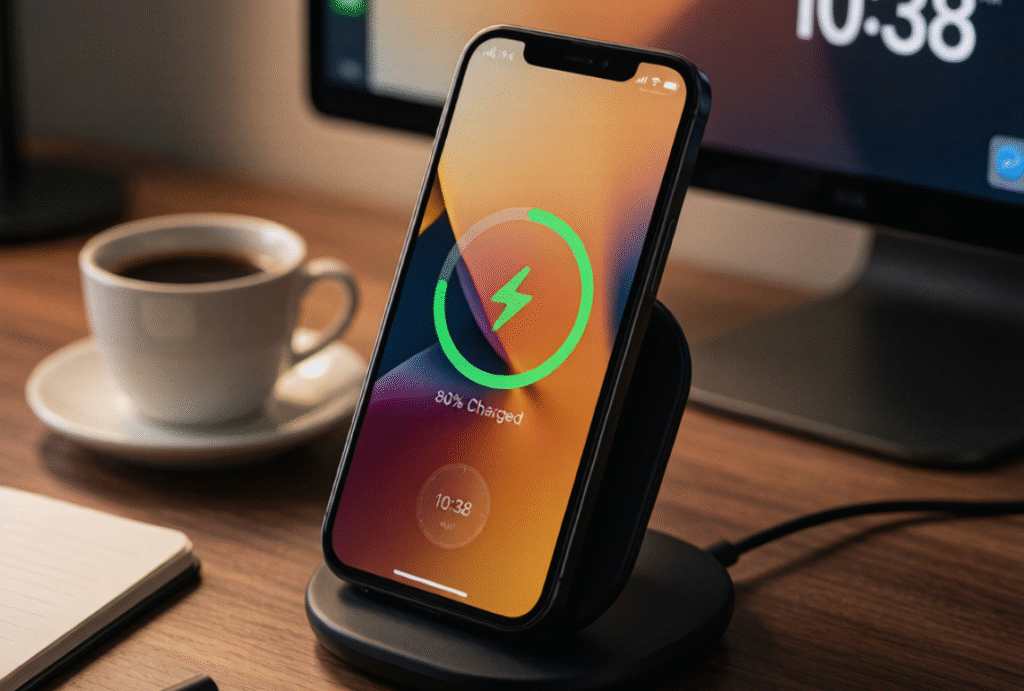
You have probably seen the advice: “Don’t charge your phone to 100% — stop at 80%.” Is this real science or internet folklore? The short answer: it is real science, and it can significantly extend your battery’s lifespan. This guide explains why and how.
For custom battery solutions, visit Jetray Lithium-ion Battery Packs.
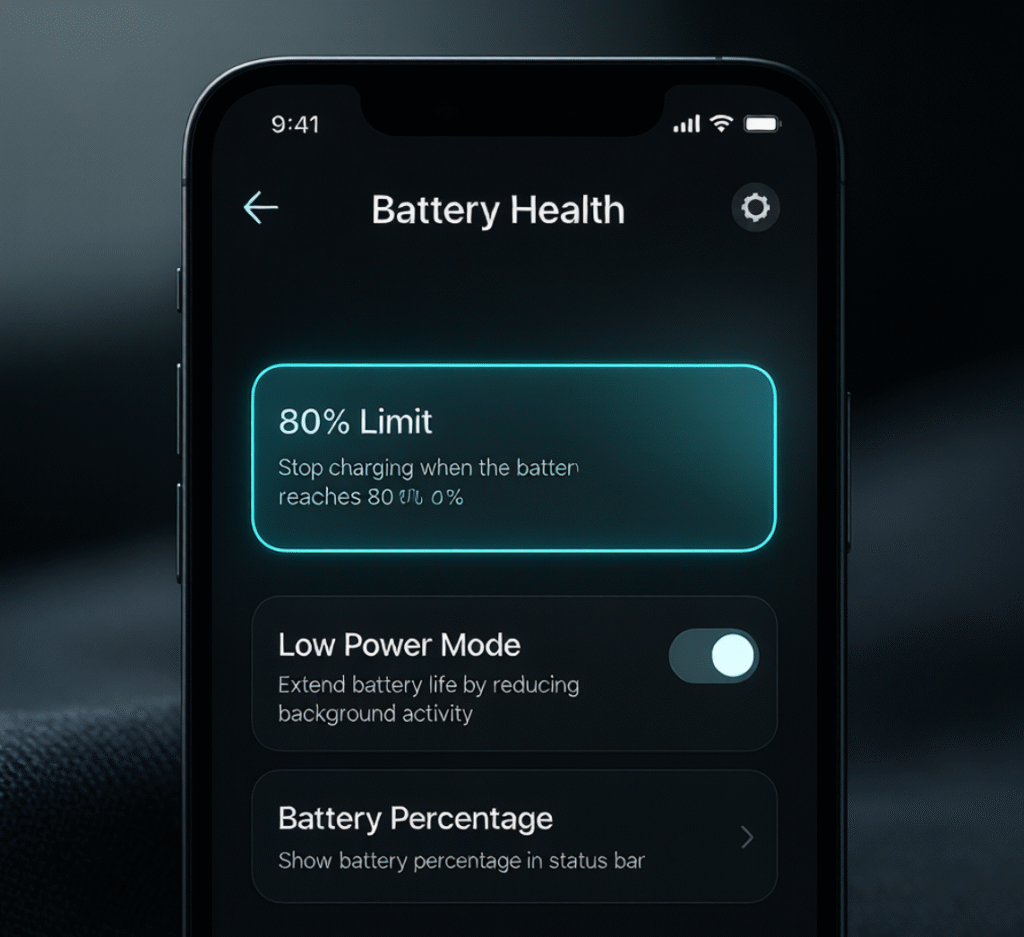
The Science Behind Li-ion Charging
Fundamental fact: Lithium-ion batteries experience the most stress at extreme states of charge. A battery at 100% operates at approximately 4.2V per cell — the upper voltage limit. At this voltage, the electrolyte begins to oxidize at the cathode, creating a resistive layer that permanently reduces capacity.
Research published by Battery University (Cadex) shows that charging to 100% causes approximately twice the capacity loss per cycle compared to charging to 80%. Over 500 cycles, this difference can mean the difference between a battery retaining 85% capacity vs 70% capacity.
A lithium-ion battery’s cycle life is directly related to its charge voltage:
- Charging to 100% (4.2V/cell): ~500 cycles to 80% capacity
- Charging to 85% (4.1V/cell): ~1,000 cycles to 80% capacity
- Charging to 75% (4.0V/cell): ~1,500-2,000 cycles to 80% capacity
Why 80% Is the Sweet Spot
The 80% recommendation balances battery longevity with practical usability. Charging to 80% provides enough daily range for most users while halving the voltage stress on the battery.
Tesla, Ford, and other EV manufacturers have long recommended daily charging to 80-90% for this reason. In 2023, Apple introduced an “Optimized Battery Charging” limit feature in iOS that lets iPhone 15 users set a hard charge limit of 80%. This followed similar features from Samsung and Sony.
Real-world impact: A phone battery charged to 100% daily may need replacement after 2 years. The same battery charged to 80% daily could last 4-5 years before reaching the same degradation level — a 2x increase in service life.
Common Charging Myths Debunked
Myth 1: “You must fully drain and recharge to calibrate the battery.” Modern lithium-ion batteries do not need calibration cycling. This was true for older nickel-cadmium batteries (memory effect) but does not apply to Li-ion.
Myth 2: “Don’t use your phone while charging.” Light usage while charging is fine. The concern is heat. Heavy gaming while fast charging generates a lot of heat, which degrades the battery. Light browsing or calls are fine.
Myth 3: “Leaving your phone plugged in overnight destroys the battery.” Modern phones stop charging at 100% and use trickle charging to maintain. The biggest issue is the time spent at 100% — if you charge to 100% at 7am and unplug at 7am, that is fine. Charging to 100% at 11pm and staying there until 7am is worse.
Best Charging Practices
- Keep it between 20-80%. This is the ideal operating range for maximum cycle life.
- Avoid heat. Heat is the number one enemy of lithium batteries. Do not leave phones in direct sunlight, on car dashboards, or charge under pillows.
- Use slow charging overnight. A 5W or 10W charger generates less heat than 20W+ fast charging.
- Remove thick cases while charging. Many cases trap heat, raising battery temperature significantly.
- Enable optimized charging features. iOS “Optimized Battery Charging” and Android equivalent learn your schedule to minimize time at 100%.
Phone Features That Help
| Brand | Feature | How to Enable |
|---|---|---|
| Apple (iPhone 15+) | 80% Charge Limit | Settings → Battery → Charging → Charge Limit → 80% |
| Samsung (Galaxy S24+) | Battery Protection | Settings → Battery → Battery Protection → Maximum |
| Google Pixel 8+ | Charging Optimization | Settings → Battery → Charging Optimization → Limited to 80% |
| Sony Xperia | Battery Care | Settings → Battery → Battery Care → 80% limit |
Frequently Asked Questions
Is charging to 80% better?
Yes. It significantly extends cycle life by reducing voltage stress on the battery.
Does charging to 100% damage the battery?
Occasional 100% charges are fine. Extended time at 100% accelerates degradation.
Does fast charging damage the battery?
Primarily through heat. Slower charging generates less heat and is gentler on the battery.
Should I drain to 0% before charging?
No. Deep discharge stresses Li-ion batteries. Keep above 20% when possible.
How long do phone batteries last?
500-800 full cycles before reaching 80% of original capacity. At one cycle/day, that is 2-3 years.
Conclusion
Charging to 80% is one of the simplest and most effective ways to extend your phone battery’s lifespan. The science is clear: lower charge voltage = longer cycle life. Combined with avoiding heat and using optimized charging features, you can double your battery’s useful life.