





























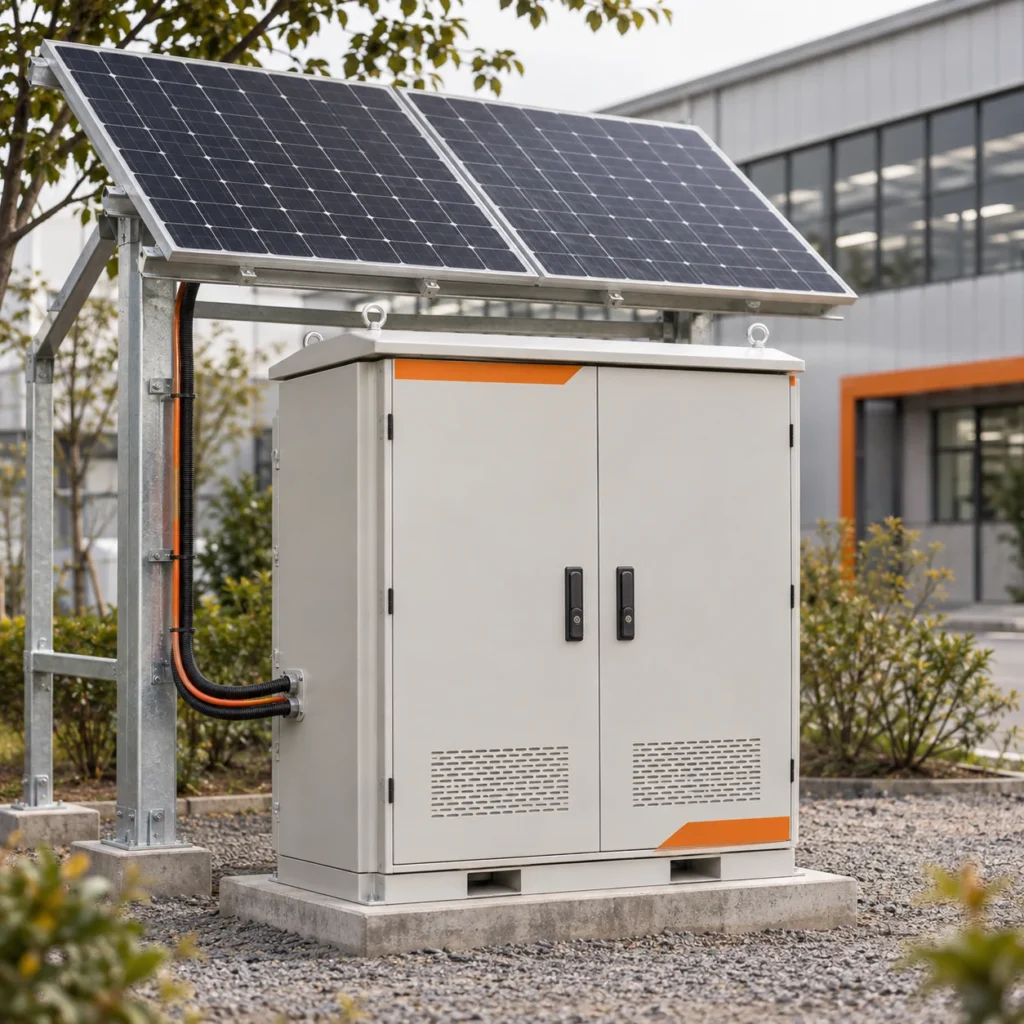
Sizing an off-grid battery bank is the most critical calculation in any solar installation. Under-size it and you will run out of power on cloudy days. Over-size it and you waste thousands of dollars.
This guide walks through each step. For energy storage solutions, visit Jetray Energy Storage.
Step 1: Daily Energy Audit
Starting point: You cannot size a battery bank without knowing your energy consumption. List every AC load (lights, fridge, TV, pump, etc.), its power in watts, and estimated hours of daily use. Total these to get your daily kWh consumption.
Example: 10 LED lights × 10W each × 5 hours/day = 500 Wh/day. Refrigerator: 150W × 8 hours/day = 1,200 Wh/day. TV: 100W × 4 hours = 400 Wh/day. Total: 2,100 Wh/day (2.1 kWh/day).
For comprehensive calculation tools, the US Department of Energy provides energy consumption calculators.
Step 2: Days of Autonomy
Days of autonomy = number of days the battery bank can power your loads without solar input. For most off-grid systems: 2-3 days is standard. Multiply your daily consumption by this number.
Example: 2.1 kWh/day × 3 days = 6.3 kWh
Step 3: Depth of Discharge
Batteries should not be fully discharged. Divide by the maximum depth of discharge (DoD):
- LiFePO4: 80-90% DoD → divide by 0.8-0.9
- Lead-acid (AGM/Gel): 50% DoD → divide by 0.5
- Flooded lead-acid: 50% DoD → divide by 0.5
Step 4: Temperature Derating
Battery capacity decreases in cold temperatures. Multiply by a temperature derating factor: 1.04 at 25°C, 1.11 at 10°C, 1.20 at 0°C, 1.30 at -10°C.
Step 5: Voltage Selection
| System Voltage | Best For | Max Continuous Power |
|---|---|---|
| 12V | Small cabins, <2 kWh/day | ~1,200W |
| 24V | Medium homes, 2-6 kWh/day | ~2,400W |
| 48V | Large homes, >6 kWh/day | ~4,800W+ |
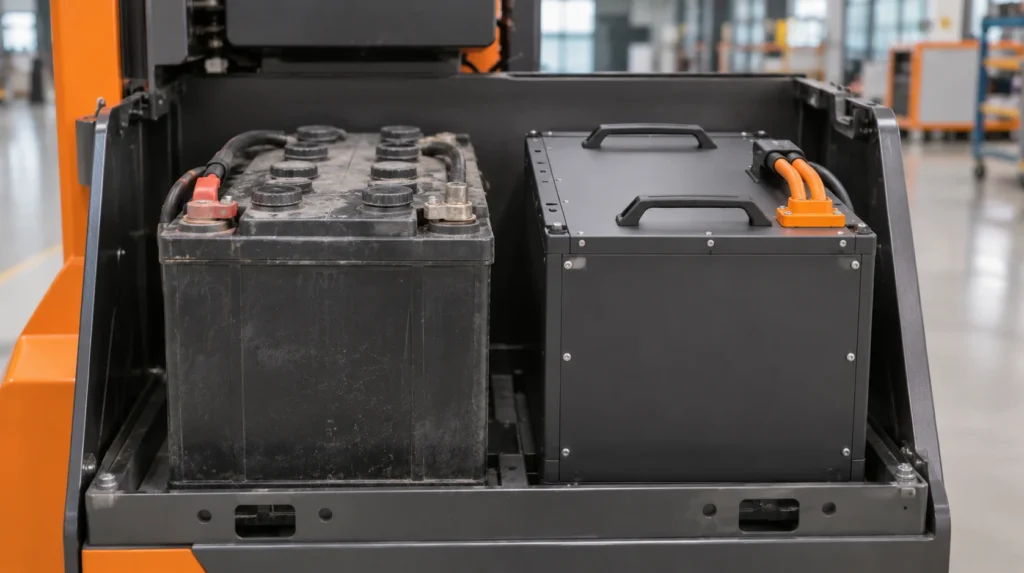
Battery Chemistry Comparison
| Factor | LiFePO4 | AGM Lead-Acid | Flooded Lead-Acid |
|---|---|---|---|
| Cycle life | 4,000-6,000 | 500-1,000 | 300-700 |
| DoD | 80-90% | 50% | 50% |
| Upfront cost | $$$ | $$ | $ |
| Lifetime cost/kWh | $0.10-0.15 | $0.20-0.30 | $0.15-0.25 |
| Maintenance | None | None | Watering monthly |
| Weight (for same usable kWh) | 1x | 2x | 2.5x |
Verdict: LiFePO4 has the highest upfront cost but the lowest lifetime cost per kWh by a significant margin. For off-grid systems expected to last 10+ years, LiFePO4 is the clear winner.
Sizing Example
Scenario: 5 kWh/day consumption, 3 days autonomy, LiFePO4 (80% DoD), 10°C average temperature.
Calculation: 5 kWh × 3 days ÷ 0.8 DoD × 1.11 temp factor = 20.8 kWh total capacity. At 48V: 20,800 Wh / 48V = 433 Ah. Choose a 48V 500Ah (24 kWh) battery bank for safety margin.
For custom battery bank configurations, contact Jetray Battery.
FAQ
How do I calculate battery bank size?
Daily kWh × autonomy days ÷ DoD × temp factor = total kWh needed.
How many batteries for off-grid?
10-15 kWh/day home needs ~25-37 kWh LiFePO4 or 40-60 kWh lead-acid.
What is the best battery for off-grid solar?
LiFePO4 — longest cycle life, highest DoD, no maintenance, lowest lifetime cost.
How many days of autonomy?
2-3 days standard. 5-7 days for areas with extended cloudy periods.
What voltage battery bank?
48V for most off-grid systems. 12V for small cabins. 24V for medium installations.
Conclusion
Proper battery bank sizing requires careful calculation of daily energy consumption, days of autonomy, depth of discharge, temperature effects, and voltage selection. While LiFePO4 batteries have a higher upfront cost, they offer the lowest lifetime cost and best performance for off-grid solar systems.