































A medical device battery has to do more than supply power. It must be safe on its own, work within the device’s safety standard (IEC 60601-1), report its state of charge accurately, and be built the same way every time with full traceability. The standards are the minimum. Reliability comes from the BMS design, cell choice and process control.
Key Takeaways
- The device is assessed to IEC 60601-1. The battery usually needs IEC 62133-2 and UN38.3 as well.
- The US FDA recognizes UL 2054 and UL 1642 as consensus standards for medical devices with lithium batteries (UL Solutions).
- An accurate fuel gauge and a clear low-battery warning are safety features, not extras.
- Choose a supplier that controls cell sourcing, freezes designs, and manages changes with notice.
Which Standards Apply to Medical Batteries?
| Standard | Role |
|---|---|
| IEC 60601-1 | General basic safety and essential performance of medical electrical equipment, including the battery as part of the device |
| IEC 60601-1-11 | Extra requirements for devices used in the home healthcare environment |
| IEC 62133-2 | Safety of the portable lithium battery itself |
| UL 2054 | Battery safety standard recognized by the FDA |
| UN38.3 | Transport testing, needed to ship devices and spare batteries |
| ISO 13485 | Quality management system for the medical device maker (and often expected of key suppliers) |
According to FDA guidance, the IEC 60601 series is used in the majority of premarket submissions for electrically powered medical devices to support device safety (FDA). The battery design affects both basic safety and essential performance. If the battery fails without warning, the device fails.
Design Priorities for Medical Battery Packs
1. Accurate state of charge
A clinician needs to trust the battery indicator. Use a fuel-gauge IC with impedance tracking and SMBus reporting, and calibrate it during production. See how to calibrate SMBus batteries.
2. Layered protection
Use two independent layers of protection: a primary BMS and a secondary protector or fuse. Place temperature sensors at the hottest cells. Our article on BMS PCBA reliability explains the details that reduce field failures.
3. Cell selection for consistency
Medical programs run for years. Choose tier-one cells with a long production life, and qualify a second source from the start. See our 21700 cell comparison.
4. Configuration matched to the load
Mobile medical robots and carts need different series/parallel layouts than handheld monitors. We cover two real layouts in 12S3P for mobile medical robots and 10S4P in surgical robots.
5. Mechanical and cleaning durability
Hospital devices are dropped, wiped and disinfected all the time. Specify enclosure plastics that resist the cleaning agents used, strain relief on the connectors, and a sealing level that matches your cleaning method.
Small Devices: Monitors and Meters
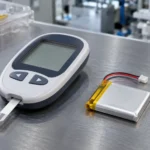
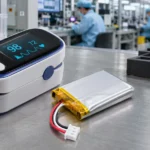
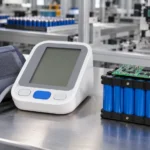
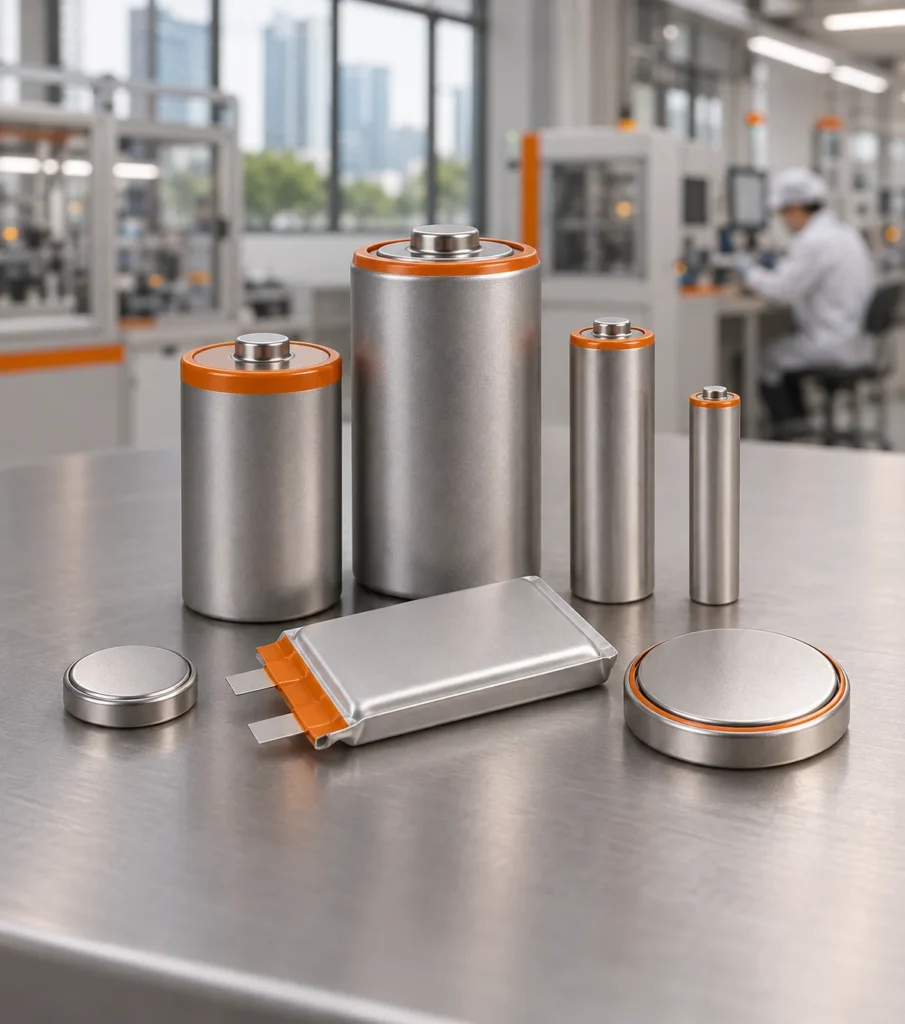
Glucose meters, pulse oximeters and blood pressure monitors mostly use coin cells, AA/AAA cells or small LiPo pouches. The priorities here are low self-discharge, a stable voltage for accurate readings, and a reliable low-battery warning. See our application pages for glucose meters, pulse oximeters and blood pressure monitors.
Supplier Qualification Checklist
- Documented quality system (ISO 9001 at minimum, with ISO 13485 processes where needed)
- Incoming cell inspection with records of OCV and internal-resistance sorting
- Traceability from each finished pack back to the cell batch
- A formal change-notification process: no change to cells, BMS or materials without notice and approval
- 100% end-of-line testing of capacity, protection and communication
- Test reports available for IEC 62133-2, UN38.3 and UL 2054 where required
- Support for your design history file and risk management (ISO 14971) documents
Frequently Asked Questions
Does the battery need its own FDA clearance?
Batteries are normally assessed as part of the device submission, not cleared on their own. Using recognized standards such as UL 2054 or IEC 62133-2 supports that submission.
Can I use off-the-shelf batteries in a medical device?
Yes, if they meet your standards and the supplier guarantees design control. Uncontrolled retail batteries are a risk, because their internal design can change without notice.
How do I extend battery life in medical devices?
Avoid storing packs fully charged, limit exposure to heat, and set sensible charge voltage limits. See battery capacity degradation.
Work with a Medical Battery Partner
Jetray supplies custom lithium packs for medical monitoring and mobile medical equipment, with IEC 62133 and UN38.3 compliance and full cell traceability. Explore our medical battery solutions or send your device requirements through our medical device battery page.