
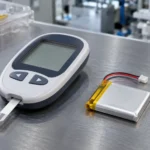
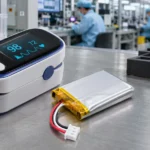



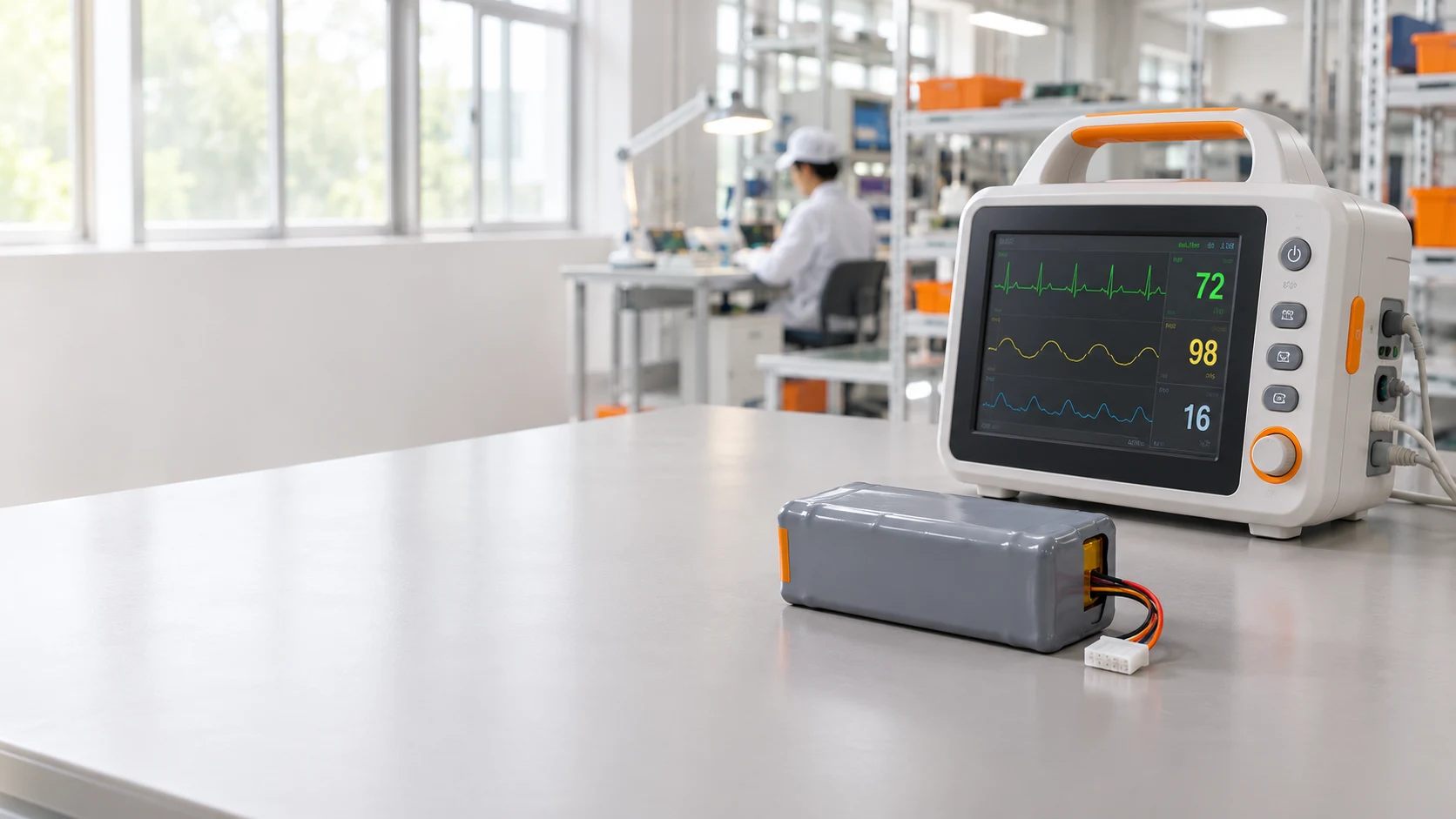

















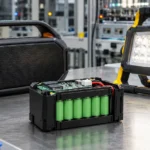








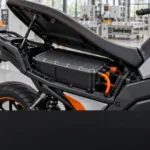
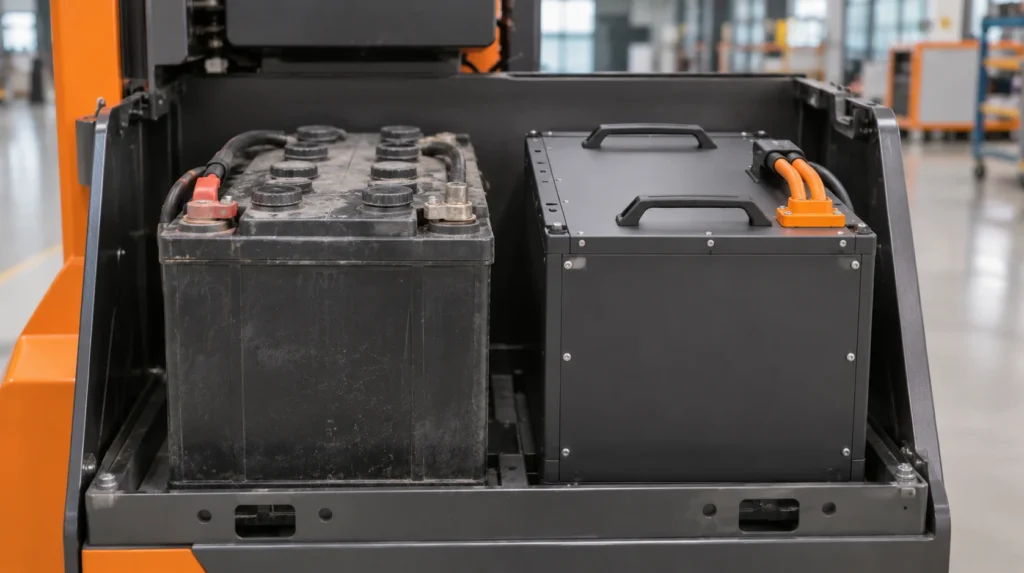






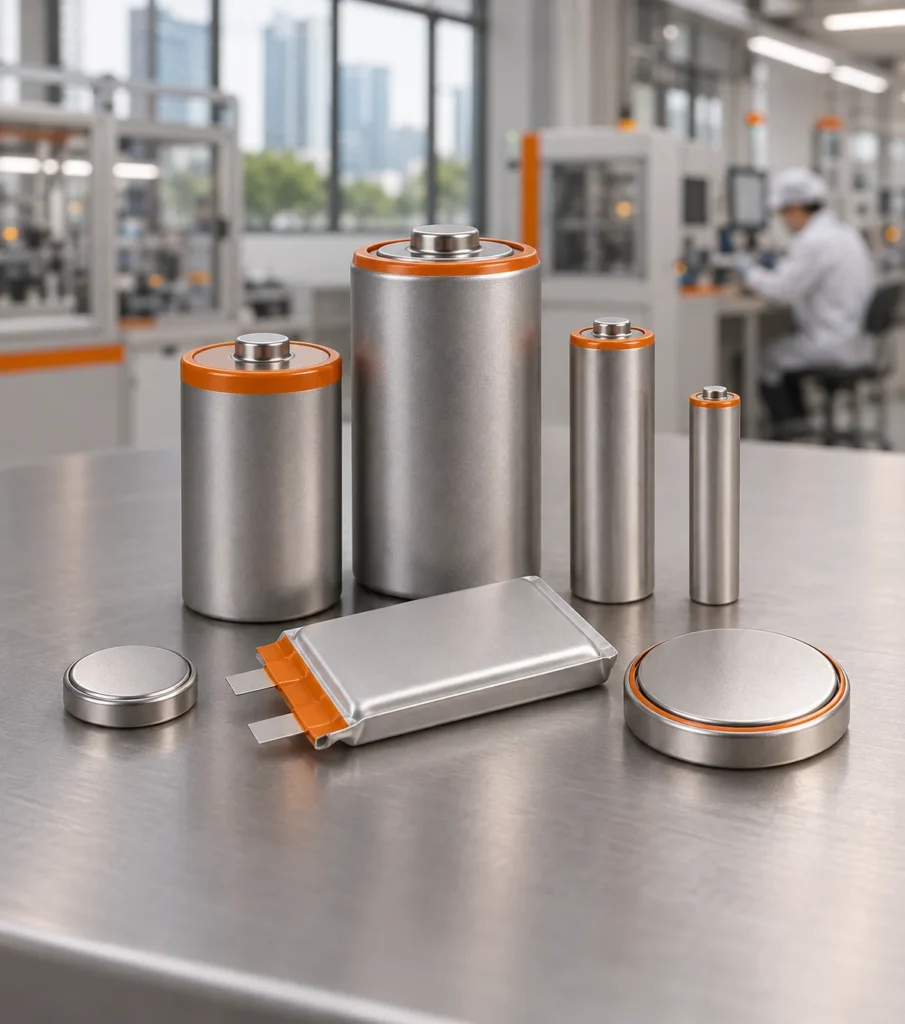

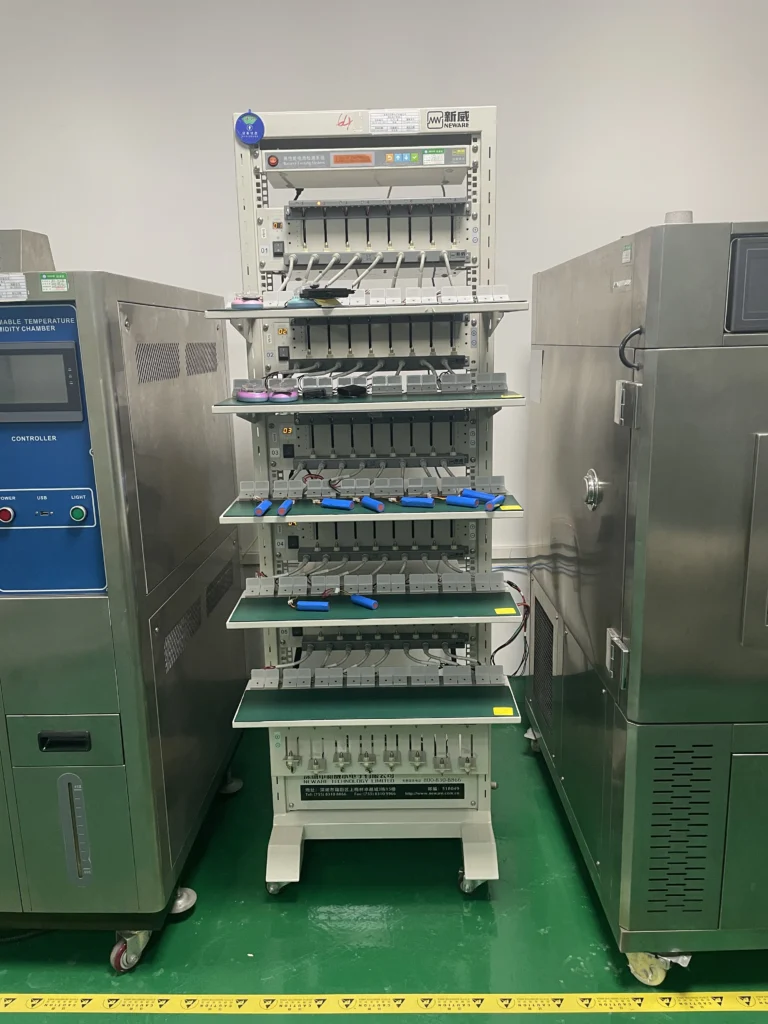
A LiPo battery is a lithium-ion battery that uses a gelled polymer electrolyte, usually sealed in a flat foil pouch. “Li-ion” in most listings means a rigid-cased cell, often cylindrical. LiPo wins on shape, weight and discharge rate, while Li-ion cells often win on energy density and ruggedness. The right pick depends on the specific cells and the job, not the label.
Key Takeaways
- LiPo is not a separate chemistry. Battery University says Li-polymer “is not considered a unique battery chemistry”; the cathode material still sets most of the performance.
- Cell chemistry moves energy density more than the polymer-versus-liquid label. Battery University lists about 90–120 Wh/kg for LFP and 150–220 Wh/kg for NMC cells.
- For drones, PX4 says LiPo packs deliver higher discharge rates, while Li-ion packs offer up to 60% higher energy density.
- Both types need a protection circuit, and pouch cells need room to swell. Cost depends on cell format and volume, so ask suppliers to quote the same specification.
What is the difference between LiPo and Li-ion batteries?
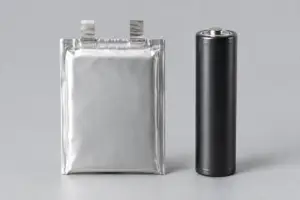
The difference is mainly the electrolyte and the enclosure. A LiPo cell uses a gelled electrolyte in a soft foil pouch. A typical Li-ion cell uses a liquid electrolyte in a rigid metal can.
- Electrolyte: Modern Li-polymer cells use a gelled electrolyte with a microporous separator, according to Battery University BU-206. The original dry polymer design conducted poorly at room temperature and had to be heated to 60°C and higher.
- Enclosure: The same page says a foil enclosure cuts weight by more than 20 percent compared with a hard shell, and that pouch cells are often labeled Li-polymer.
- Shape: Pouch cells can be made very thin or in custom outlines. Cylindrical cells come in standard sizes such as 18650 and 21700.
- Chemistry: Either format can use cobalt, NMC, phosphate or manganese cathodes. That is why one “LiPo” can behave very differently from another.
How do LiPo and Li-ion batteries compare side by side?
LiPo leads on shape and discharge rate; cylindrical Li-ion leads on standard formats and ruggedness. The table below summarizes the points that most often decide a design.
| Factor | LiPo (pouch, gel electrolyte) | Li-ion (typically cylindrical, rigid case) |
|---|---|---|
| Enclosure | Flexible foil pouch | Rigid metal can |
| Shape | Thin, custom outlines | Standard sizes (18650, 21700) |
| Energy density | Lower than Li-ion packs in PX4’s drone comparison | Up to 60% higher in the same comparison |
| Discharge and charge rate | Higher C-ratings relative to capacity | Lower relative to capacity |
| Durability | Foil is less durable; cells can swell | Tougher can |
| Cost | Pouch manufacturing costs more than cylindrical, per Battery University | Cheaper to make; high-energy drone packs cost more, per PX4 |
| Protection circuit | Required | Required |
| Typical uses | Drones, RC models, thin devices | Tools, e-mobility, long-runtime packs |
Treat the table as a starting point. Sources: PX4 Guide, Battery Chemistry and Battery University BU-206. The final answer always comes from the datasheet of the exact cell.
Which has higher energy density, LiPo or Li-ion?
Li-ion packs usually store more energy per kilogram in drone use, but the cathode chemistry matters more than the pouch label. PX4 says Li-ion packs can offer up to 60% higher energy density than LiPo packs and reach about 260 Wh/kg.
Battery University BU-205 lists these cell-level ranges:
- NCA: 200–260 Wh/kg.
- NMC: 150–220 Wh/kg.
- Lithium cobalt oxide: 150–200 Wh/kg.
- LFP: 90–120 Wh/kg.
A real pack also carries a case, wiring and protection, so pack-level numbers are lower. Using values from Jetray’s own product listings as an example, the 3S Li-ion polymer 2300 mAh 11.1V pack lists 128 g, which works out to roughly 200 Wh/kg. The 3S5P 18650 pack lists 113.22 Wh and about 700 g, or roughly 160 Wh/kg. These are our own calculations from listed values, with different cells and housings, so they are not a controlled comparison.
Which lasts longer and discharges harder?
Neither type has one fixed cycle life. Cycle life depends on the cathode chemistry, depth of discharge, charge rate, temperature and pack design, so a general ranking is unreliable.
- Listed cycle life: The 3S Li-ion polymer listing above states “typically 500 to 800 cycles”. Treat that as a nominal figure and ask for the test conditions.
- Discharge rate: PX4 says LiPo offers high discharge rates relative to capacity, while Li-ion has lower discharge rates relative to battery size.
- Charge rate: PX4 also lists higher charge rates for LiPo and lower charging rates for Li-ion relative to capacity.
For a high-current tool or a fast-response drone, discharge rate often decides the choice. For a long-runtime product, energy and cycle life matter more.
Which is safer, LiPo or Li-ion?
Neither is safe by itself; both need a protection circuit and correct charging. Battery University says Li-polymer needs protection circuits like Li-ion does.
- Swelling: Gas buildup during charging can make prismatic and pouch cells swell, so the enclosure needs room for expansion.
- Durability: Foil-packaged Li-polymer may be less durable than cylindrical Li-ion, per the same page.
- Supplier quality: PX4 notes that LiPo quality can vary given the abundance of suppliers.
- Temperature: PX4 says Li-ion requires more stringent temperature monitoring during charge and discharge.
A well-specified BMS and a clear charging procedure matter more than the format label.
Which costs less?
Cost depends on cell format, volume and quality, and the sources here do not agree on a single winner. Battery University says pouch-type manufacturing cost is said to be higher than cylindrical. PX4 calls its drone LiPo packs inexpensive and common, and calls high-energy Li-ion packs more expensive.
- Cylindrical cells: Standard formats are widely made, which usually helps unit cost at volume.
- Custom pouch cells: A new outline can mean tooling and minimum order quantities. Confirm both per project.
- Total cost: Include the BMS, housing, certification and shipping, not just the cell price.
The safest way to compare is to ask each supplier to quote the same voltage, capacity, discharge current and cycle target.
Where is each battery type used?
LiPo fits products where weight and shape are tight; Li-ion fits products where runtime and standard cells matter. These are common patterns, not rules.
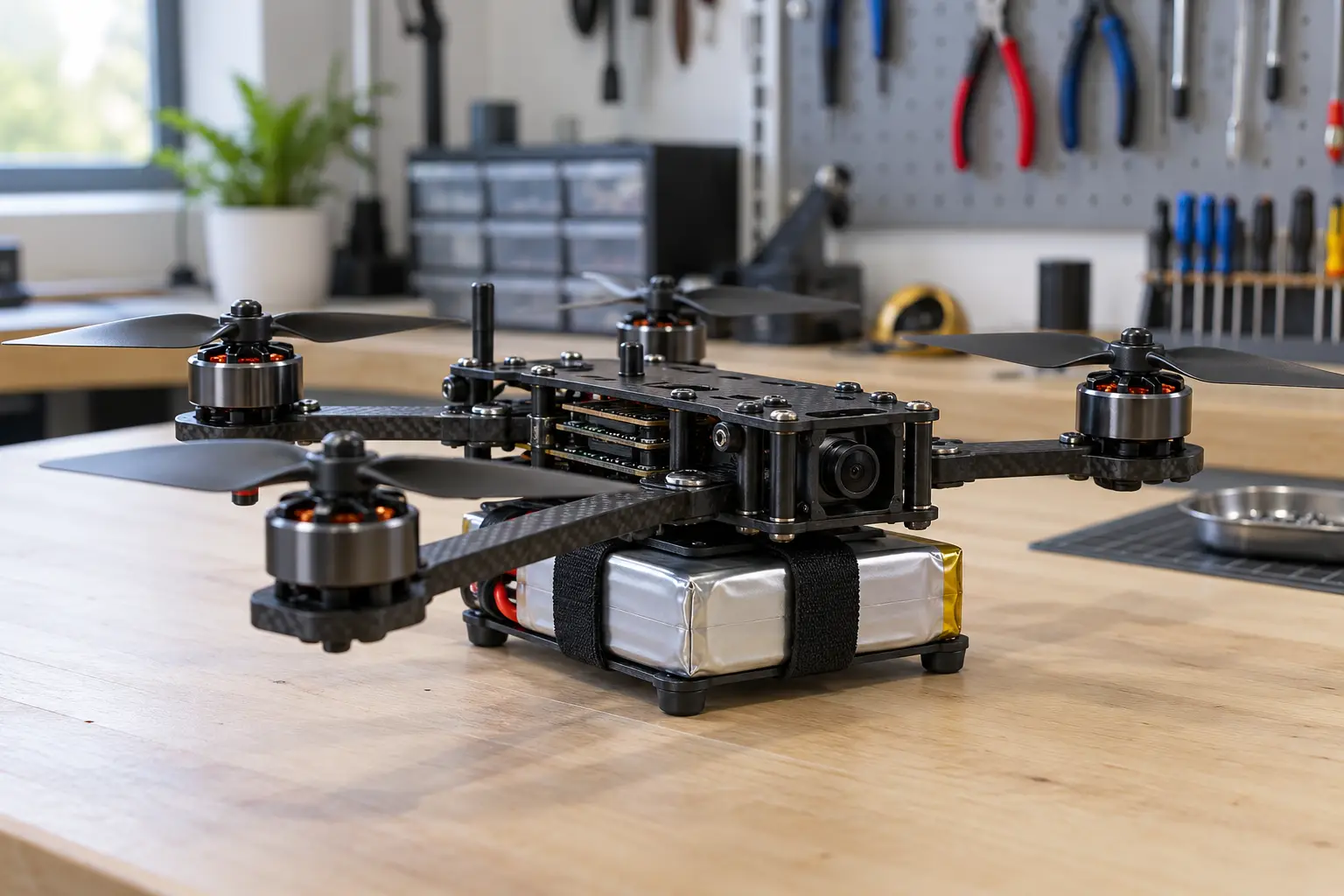
- LiPo: Battery University calls it the preferred choice for hobbyists because of light weight and high specific power, and notes it suits slim phones and tablets. PX4 calls LiPo very common and says it handles the high discharge rates typical of multirotor aircraft.
- Li-ion: Cylindrical cells such as 18650 are commonly built into packs for tools, e-mobility, robots and equipment that need long runtime.
- Either: Medical, industrial and instrument packs use both, chosen by size, current and certification needs.
How do you choose between LiPo and Li-ion?
Choose in this order: space, current, runtime, life, cost and shipping.
- Space: If the compartment is thin or irregular, a pouch cell may be the only fit.
- Peak current: Calculate the peak load and compare it with the cell’s rated continuous discharge.
- Runtime and weight: Estimate the Wh you need and compare pack-level Wh/kg.
- Life target: Define cycles, depth of discharge and end-of-life capacity before comparing datasheets.
- Cost and logistics: Compare full quotes and confirm test documents for shipping.
If you are also weighing high-voltage LiPo, read our comparison of LiHV and standard LiPo. For a wider look at cell types, see lithium metal and lithium-ion batteries.
How should you charge and store each type?
Use a charger matched to the pack’s cell count, chemistry and charge voltage. A charger made for one chemistry can overcharge or undercharge another.
- Charging: Follow the maker’s listed charge voltage and current. The 3S Li-ion polymer listing above, for example, lists a 12.6 V charging voltage and 0.2C to 1C charging current.
- Storage: Keep packs away from heat. That listing gives a storage temperature of 0°C to 45°C.
- Long-term storage: Follow the pack maker’s recommended storage state of charge, and check packs periodically.
- Swollen packs: Stop using any pack that puffs up, and do not charge it.
What should OEM buyers check?
OEM buyers should request the cell datasheet, the cycle-test conditions, the protection specification and the transport test documents before approving either type.
- Cell datasheet: Nominal voltage, capacity, maximum continuous discharge, maximum charge rate and dimensions.
- Swelling allowance: For pouch cells, ask how much thickness growth to design for over life.
- Cycle test: Rate, depth of discharge, temperature and end-of-life capacity used for the cycle claim.
- Protection: Cut-off voltages, current limits, temperature sensing and balancing for multi-cell packs.
- Transport: Under 49 CFR 173.185, each lithium cell or battery must be of a type proven to meet UN Manual of Tests and Criteria, Part III, subsection 38.3, and manufacturers and distributors must make a test summary available. Ask for the summary for your exact model. This is not legal advice; confirm requirements with your freight forwarder.
- Certificates: Ask for copies, scope and validity dates, and confirm the specific model falls inside the scope.

How does Jetray approach this?
Jetray builds both LiPo and cylindrical-cell Li-ion packs and treats the format choice as part of custom pack design. Its LiPo category lists packs from 1S to 8S, and its lithium-ion battery pack category covers a range of voltages, including 18650-based packs.
- Product examples: The 3S Li-ion polymer 2300 mAh pack lists a 128 g weight and a 1C discharge rate. The 3S5P 18650 pack lists a typical capacity of 10.2 Ah and names a Panasonic 18650B cell.
- Custom design: Jetray’s Customized Service page describes cell selection, BMS design, housing and structure, and communication options such as CAN, RS485, Bluetooth and WiFi.
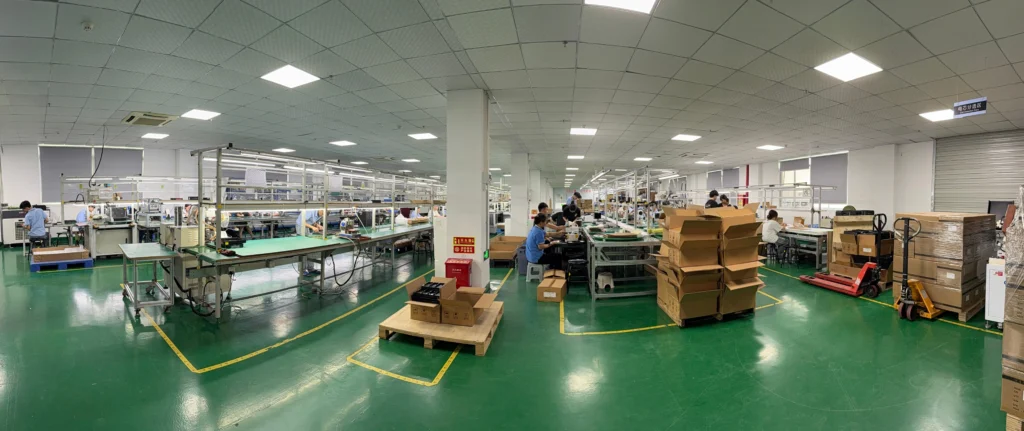
- Process: Jetray’s About page lists cell matching, spot welding, battery assembly, testing and inspection, and packaging.
- Certification: Jetray’s certification page lists ISO 9001, ISO 14001 and IEC 62133 certificates. Request copies and confirm your model is within scope.
Frequently Asked Questions
Is a LiPo battery the same as a Li-ion battery?
A LiPo battery is a type of Li-ion battery, not a separate chemistry. Battery University says Li-polymer is not considered a unique battery chemistry; it mainly differs in its gelled electrolyte and pouch enclosure.
Which is better, LiPo or Li-ion?
Neither LiPo nor Li-ion is better in every case. Pick LiPo for thin shapes and high discharge rates, and cylindrical Li-ion when energy density, standard formats and ruggedness matter more.
Is LiPo safer than Li-ion?
LiPo is not automatically safer than Li-ion, and the reverse is also not true. Both need a protection circuit, correct charging and enclosures that allow for cell swelling.
Can I charge a LiPo battery with a Li-ion charger?
Only use a charger matched to the pack’s cell count, chemistry and charge voltage as listed by its maker. A charger for one chemistry can overcharge or undercharge another, so check the pack label first.
Do LiPo batteries last longer than Li-ion?
LiPo batteries do not reliably last longer than Li-ion batteries. Cycle life depends on cathode chemistry, depth of discharge, charge rate and temperature, so compare datasheets and ask for the test conditions.
Need a Custom LiPo or Li-ion Pack?
Tell Jetray your voltage, current, capacity, space limits and operating conditions, and ask about pouch or cylindrical-cell options. Contact us or read about the custom battery pack service.
Sources and data checked in October 2026: PX4 Guide (Battery Chemistry), Battery University BU-205 and BU-206, 49 CFR 173.185 (eCFR), and Jetray product listings. Wh/kg figures for Jetray packs are our calculations from listed values.