

















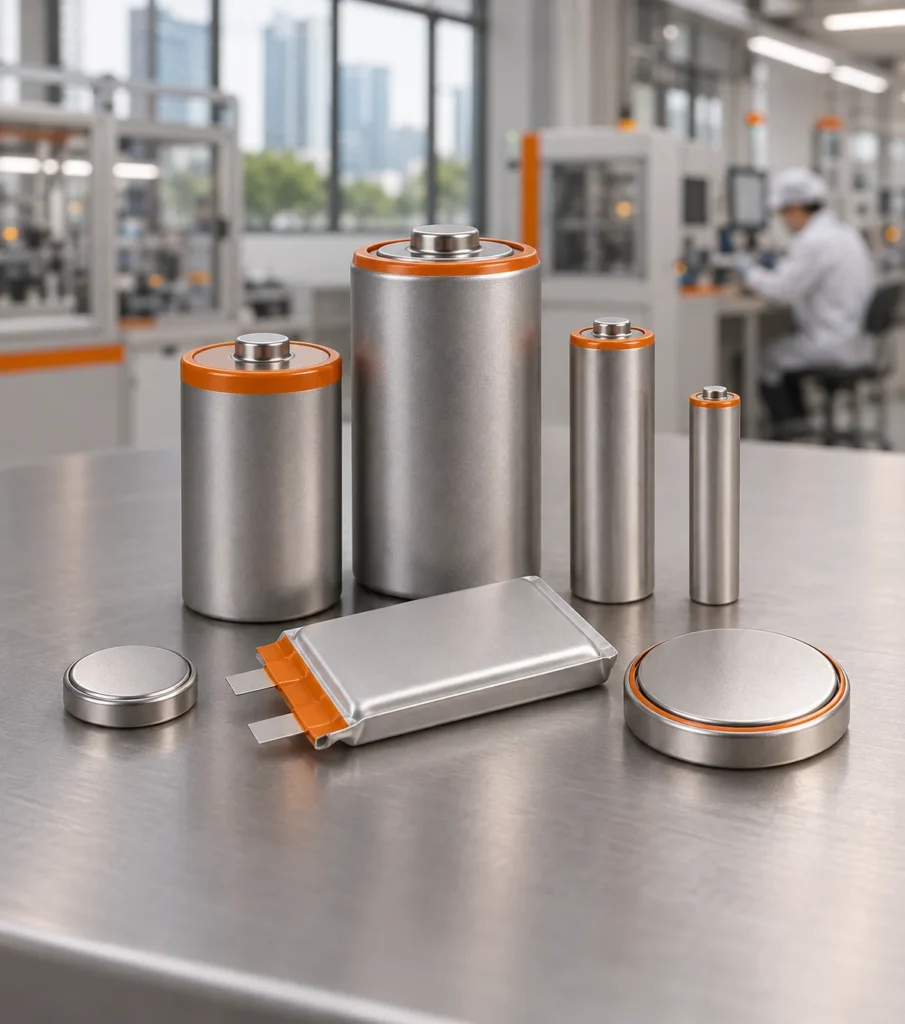

While zinc-carbon and alkaline batteries look identical from the outside and deliver the same nominal voltage (1.5V for AA, AAA, C, and D sizes), their internal chemistry, performance metrics, and cost structures differ significantly. Selecting the right cell type directly impacts device reliability and operating costs.
Core Parameter Comparison
| Feature | Carbon-Zinc Battery | Alkaline Battery |
| Electrolyte | Ammonium Chloride / Zinc Chloride (Acidic) | Potassium Hydroxide (Alkaline) |
| Energy Density | Low | High (3x to 5x higher capacity) |
| Shelf Life | 2 to 3 years | 7 to 10 years |
| Discharge Curve | Sloping (voltage drops steadily) | Relatively flat (stable voltage longer) |
| Leakage Risk | High (zinc container degrades during use) | Low (housed in a steel casing) |
| Cost | Budget / Economical | Premium |
Technical Breakdown
1. Internal Chemistry and Structure
The fundamental difference lies in the electrolyte and the physical arrangement of the active materials.
Carbon-Zinc: Uses a zinc outer shell as the anode (negative terminal) and a central carbon rod surrounded by manganese dioxide paste as the cathode (positive terminal). The acidic electrolyte causes the zinc shell to gradually dissolve as the chemical reaction progresses.
- Alkaline: Reverses this geometry. The outer casing is a stable nickel-plated steel drum. The zinc anode exists as a powder dispersed inside the cell, providing a significantly higher surface area for chemical reactions. It uses an alkaline potassium hydroxide ($KOH$) electrolyte, which conducts ions more efficiently than the acidic paste in carbon batteries.
2. Capacity and Discharge Behavior
Alkaline batteries outperform carbon-zinc variants across all current loads, but the gap widens dramatically in high-drain devices.
Energy Density: Alkaline cells store three to five times more energy than carbon cells of equivalent size.
Discharge Profile: Carbon batteries suffer from rapid voltage drop under load. If a device requires a steady 1.3V to function, a carbon battery will quickly fail to deliver, even if it still holds a charge. Alkaline batteries maintain their voltage near 1.5V for a much longer portion of their discharge cycle.
3. Shelf Life and Leakage Resistance
Leak Casing: Because a carbon battery uses its own outer zinc shell as the fuel source, the walls thin out as the battery drains. This frequently leads to structural failure and the leakage of corrosive acidic paste, damaging electronic terminals.
Self-Discharge: Carbon batteries experience a high self-discharge rate, limiting their shelf life to roughly 2 to 3 years. Alkaline batteries, housed in inert steel casings with a highly stable chemical composition, lose less than 2% of their charge per year, yielding a shelf life of up to a decade.
Application Strategy
When to Choose Carbon-Zinc
Carbon batteries remain viable strictly for ultra-low-drain, intermittent-use devices where high capacity is unnecessary, and low purchase price is a priority.
Wall clocks
Basic television remote controls
Low-power smoke detectors (requiring annual replacement anyway)
When to Choose Alkaline
Alkaline is the industry standard for continuous-use, high-drain, or mission-critical equipment.
Wireless mice and keyboards
Flashlights and emergency equipment
Motorized toys and portable medical devices (e.g., blood pressure monitors)