
AA and AAA batteries are two of the most commonly used cylindrical batteries in daily life. They power a wide range of devices, from remote controls and clocks to cameras and portable electronics. Because they share the same nominal voltage of 1.5V, many people assume they are interchangeable.
In reality, AA and AAA batteries differ significantly in physical size, capacity, performance, and suitable applications. These differences directly affect battery life, device reliability, and overall user experience.
This guide explains the key differences between AA and AAA batteries. It will help you choose the right battery based on power needs, device size, and usage scenarios.
Introduction
AA and AAA batteries are widely used in both consumer and light industrial devices. They are available in multiple chemistries, including alkaline, NiMH, and lithium-based versions.
Although AA and AAA batteries provide the same voltage, their size and internal material volume are very different. This leads to major differences in capacity, runtime, and current output.
The goal of this article is to help readers understand these differences and make the correct battery choice based on power demand, runtime expectations, and physical space constraints.
2. Physical Dimensions
AA Battery (Size AA)
The AA battery is also known as Double-A or Mignon. The name “Mignon” comes from French and means “small,” though it is larger than AAA.
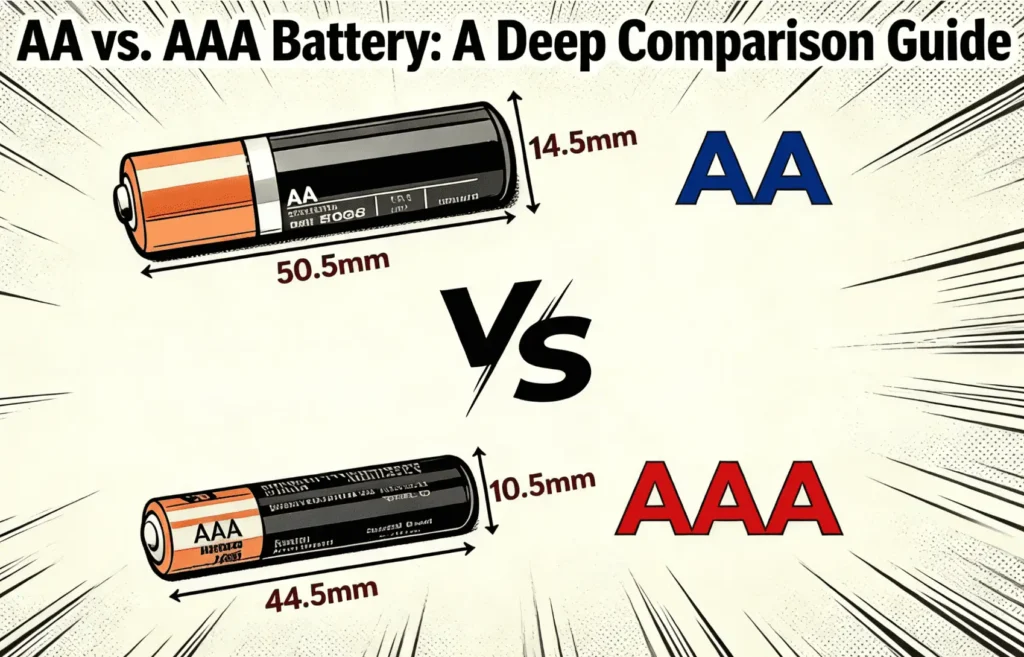
An AA battery has a diameter of approximately 14.5 mm and a length of about 50.5 mm. Its larger size allows it to hold more active material inside the cell.
Because of this, AA batteries generally provide higher capacity and longer runtime.
AAA Battery (Size AAA)
The AAA battery is also known as Triple-A. It is slimmer and shorter than an AA battery.
A typical AAA battery has a diameter of about 10.5 mm and a length of approximately 44.5 mm. Its compact size makes it suitable for small and lightweight devices.
AAA batteries are often chosen when device design requires minimal space or reduced weight.
3. Capacity & Performance Comparison
Voltage
Both AA and AAA batteries provide a nominal voltage of 1.5V when using alkaline chemistry. From a voltage perspective, they deliver the same electrical “pressure.”
The key difference is not voltage, but how long they can maintain that voltage under load.
Capacity
AA batteries have much higher capacity due to their larger internal volume. Typical AA battery capacity ranges from 1400 mAh to 3500 mAh, depending on chemistry. Alkaline AA batteries usually fall between 2000–3000 mAh.
AAA batteries have lower capacity, typically between 600 mAh and 1200 mAh.
This means AA batteries can power devices for a much longer time, especially under moderate or high load.
Runtime and Load Handling
Because AA batteries contain more active material, they perform better in devices that draw higher current. Under the same load, an AA battery will usually last significantly longer than a AAA battery.
AAA batteries are more suitable for low-drain devices. In high-drain applications, they may lose voltage faster and require frequent replacement.
Temperature Performance
AA batteries, especially lithium or high-quality alkaline types, generally perform better than AAA batteries in cold environments. The extra material helps stabilize output under low temperatures.
AAA batteries are more sensitive to cold and may show reduced runtime in harsh conditions.
4. Typical Usage Scenarios
AA Batteries: Medium to High Power Devices
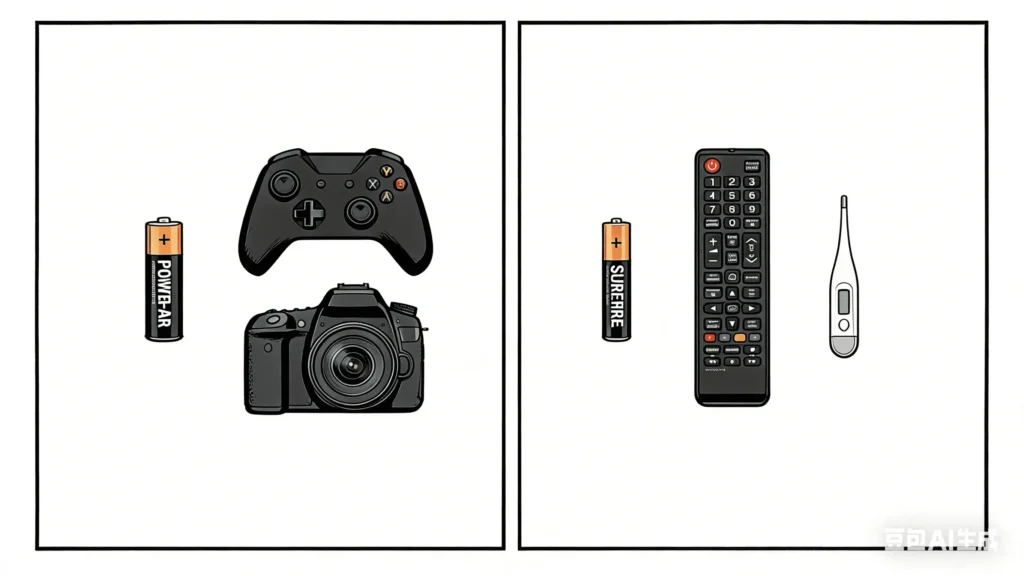
AA batteries are commonly used in devices that require higher current or longer runtime, such as:
Digital cameras
High-power flashlights
Game controllers
Toys and handheld electronics
These devices benefit from the higher capacity and better load handling of AA batteries.
AAA Batteries: Low Power and Compact Devices
AAA batteries are typically used in low-power devices where size and weight are more important than long runtime, such as:
TV remote controls
Wireless keyboards and mice
Wall clocks and timers
Small portable electronics
In these applications, AAA batteries offer a good balance between size and acceptable battery life.
5. Cost & Value Analysis
AA batteries usually cost slightly more than AAA batteries, but the price difference is not large.
From a value perspective, AA batteries often provide better cost per hour of use, especially in devices with moderate or continuous power consumption. Fewer replacements are needed over time.
For low-power devices with long standby periods, AAA batteries can be more economical due to lower initial cost and smaller size.
For both sizes, using rechargeable NiMH batteries is recommended to reduce waste and long-term expenses.
6. Advanced View: Industrial Use and Lithium Upgrades
This section is intended for professional users or readers with higher performance requirements.
In some industrial or professional applications, traditional AA or AAA batteries may not meet power or reliability needs. Examples include medical devices, robotics, or equipment that operates continuously.
Lithium Battery Upgrades
Lithium-based AA or AAA batteries offer several advantages:
50–60% higher energy density compared to alkaline
More stable voltage output
Longer shelf life
Better performance in extreme temperatures
In many cases, industrial devices use custom lithium battery packs instead of standard AA or AAA cells. These packs are often designed to withstand vibration, temperature changes, and long operating hours.
7. Conclusion and Selection Advice
AA and AAA batteries are designed for different use cases. Neither is “better” in all situations.
General selection guidance:
Choose AA batteries for higher power demand and longer runtime
Choose AAA batteries for compact, lightweight, low-power devices
For professional or harsh environments, consider lithium battery solutions
Making the correct choice improves device performance, reduces battery waste, and lowers long-term costs.
AA vs. AAA Battery Comparison Chart
| Feature | AA Battery | AAA Battery |
|---|---|---|
| Size (Diameter × Length) | 14.5 × 50.5 mm | 10.5 × 44.5 mm |
| Typical Capacity | 1400–3500 mAh | 600–1200 mAh |
| Nominal Voltage | 1.5 V | 1.5 V |
| Main Advantage | Higher capacity, longer runtime | Smaller size, lighter weight |
| Typical Devices | Cameras, toys, controllers | Remotes, keyboards, clocks |
| Power Suitability | Medium to high power | Low power |