





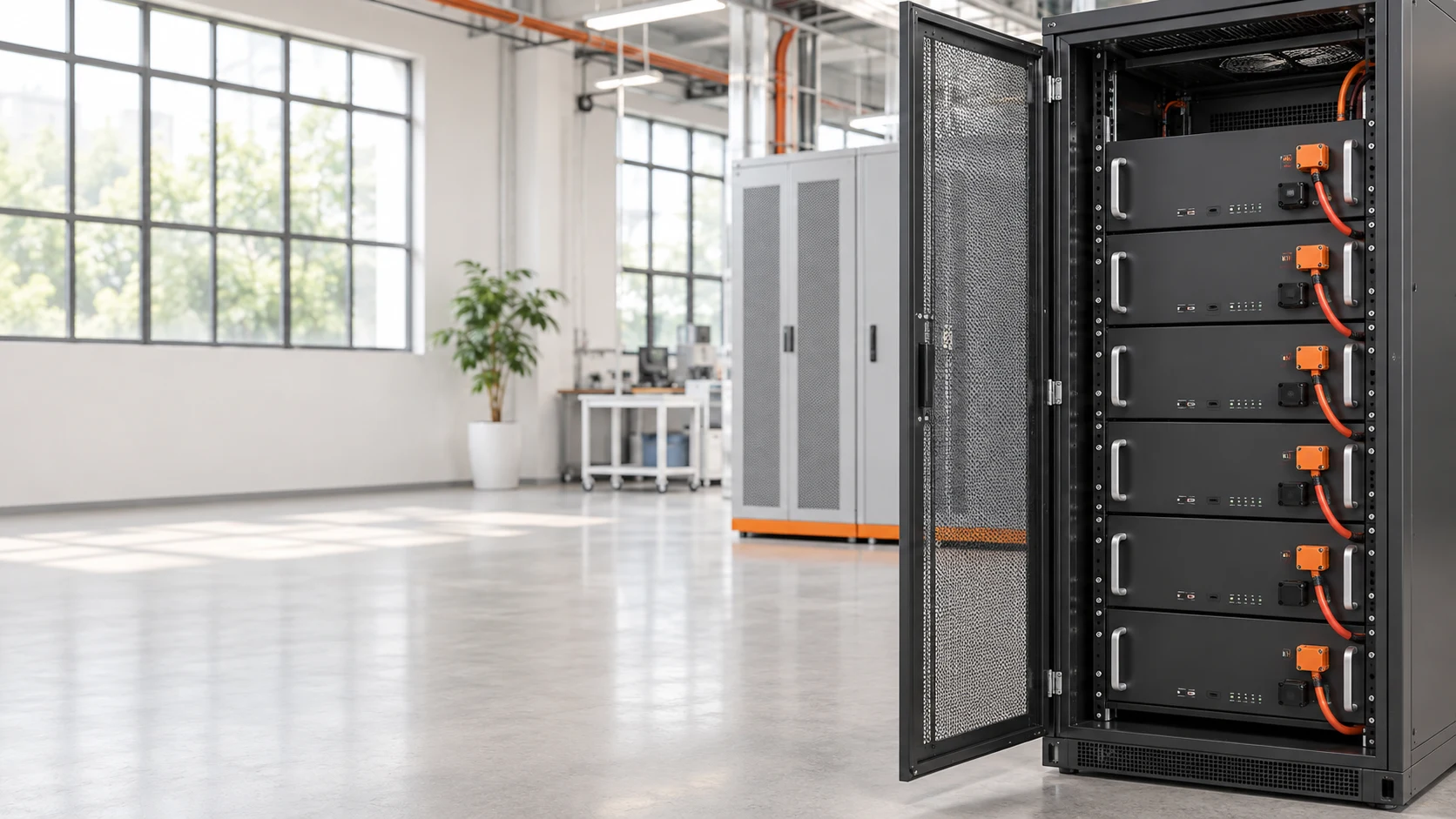
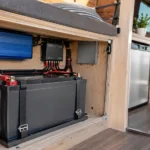










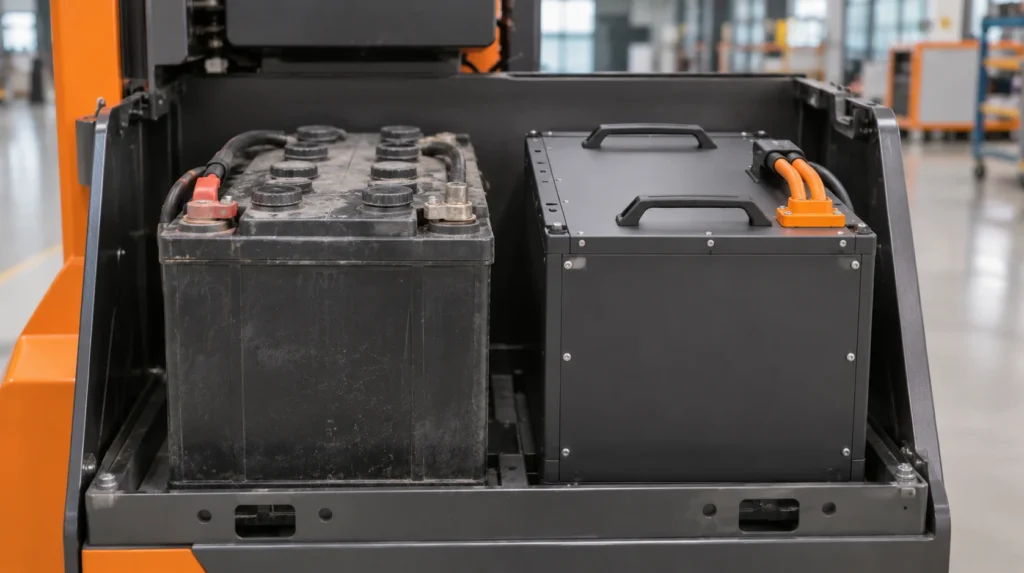








A 48V lithium battery is not a simple swap for a 36V golf cart battery. The pack raises system voltage by roughly 40%, so the controller, motor, solenoid, charger and 12V converter must all be rated for 48V first. If any of them is not, the safer route is a 36V-class lithium pack that keeps the original voltage.
Key Takeaways
- A nominal 51.2V LiFePO4 pack (16 cells in series) runs about 42% above a 36V system, so every voltage-rated part in the cart is affected.
- Some controllers are built for 36V or 48V, but the rating is model-specific. Check the part number, not the cart’s age or brand.
- The charger must match the new pack. A lead-acid charger profile does not fully charge a LiFePO4 pack.
- A 36V-class lithium pack (12 cells, 38.4V nominal) avoids the conversion entirely.
Can a 48V lithium battery replace the batteries in a 36V golf cart?
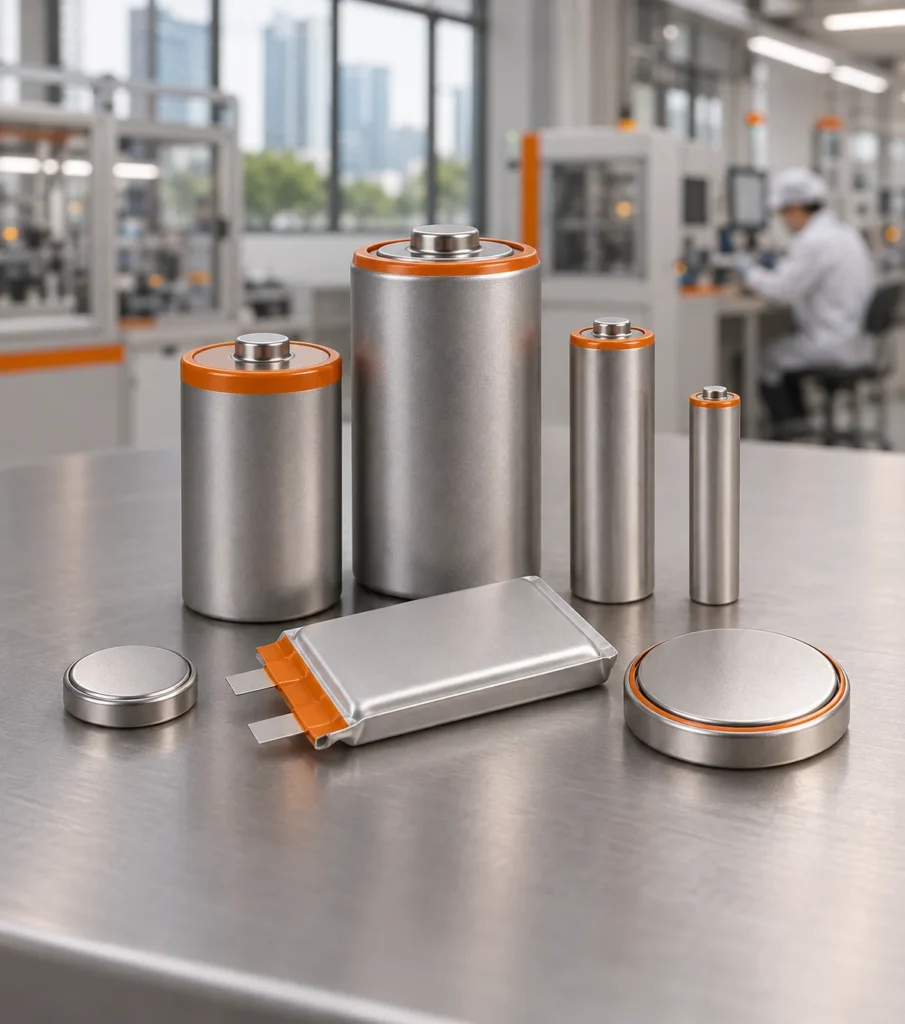
Not as a drop-in replacement, because the voltage is different, not just the chemistry. A typical 36V cart uses six 6V lead-acid batteries in series (6 × 6V = 36V). A 48V LiFePO4 pack is built from 16 cells of 3.2V nominal each, which gives 51.2V.
- 36V lead-acid cart: 36V nominal.
- 36V-class LiFePO4 pack: 12 cells × 3.2V = 38.4V nominal.
- 48V-class LiFePO4 pack: 16 cells × 3.2V = 51.2V nominal.
The nominal cell voltage of 3.2V and the 3.65V per-cell charge limit come from Battery University’s LiFePO4 charging guide, and a cell maker’s EVE LF280 specification lists the same 3.2V cell with a 3.65V charge cut-off. At full charge, 16 cells reach 58.4V (16 × 3.65V), against 43.8V for 12 cells. Anything connected to the pack sees those higher numbers.
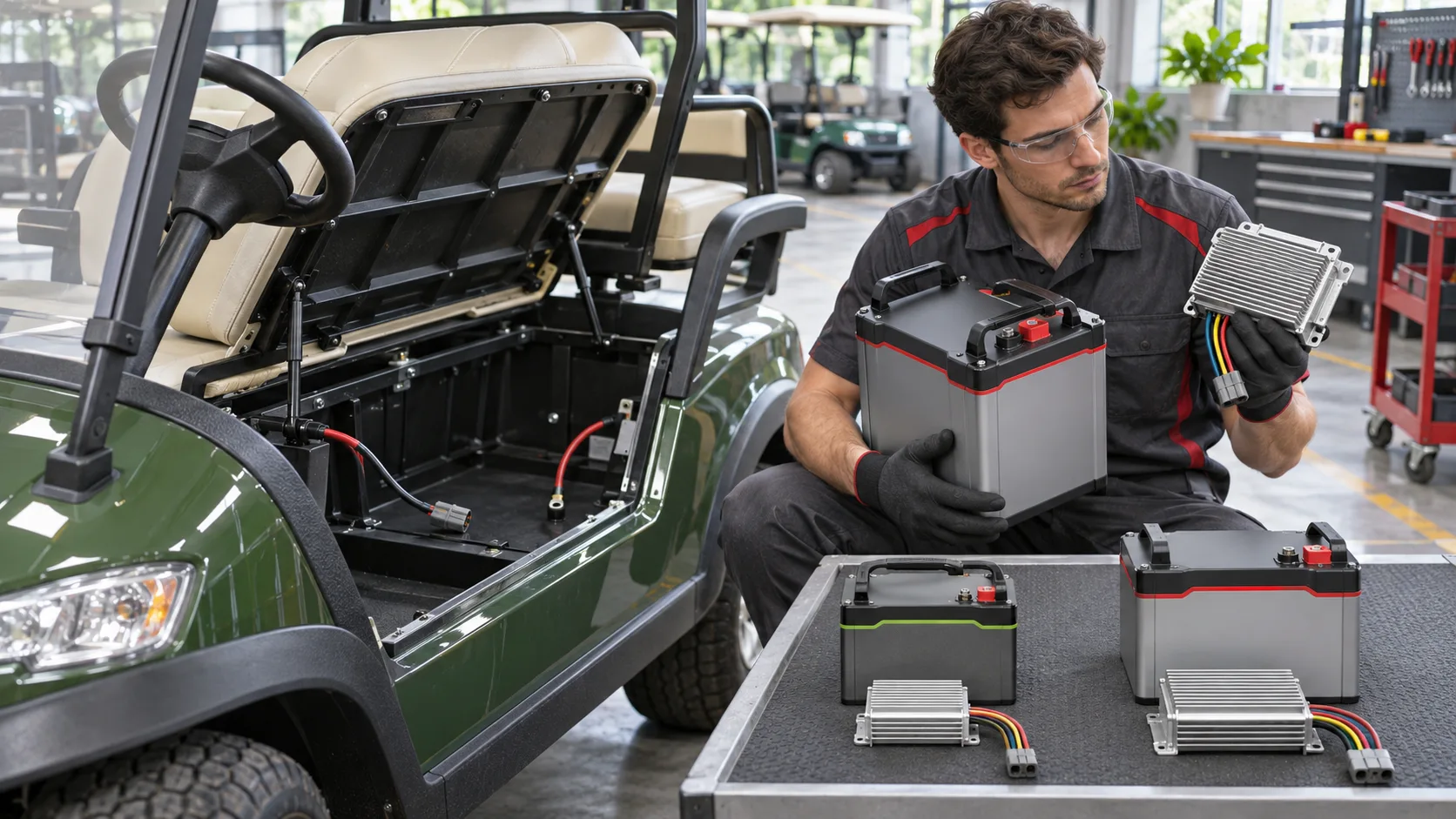
What has to change when a golf cart goes from 36V to 48V?
Six parts depend on system voltage, and each one needs a rating check before you connect a 48V pack. The list below applies to any 36V-to-48V move, whatever the battery chemistry.
| Part | Why voltage matters | What to check |
|---|---|---|
| Controller | Built for a nominal input voltage; overvoltage and undervoltage thresholds are set around it | Part number and the manufacturer’s voltage rating |
| Motor | Higher voltage means higher speed and current stress | Motor rating from the manufacturer |
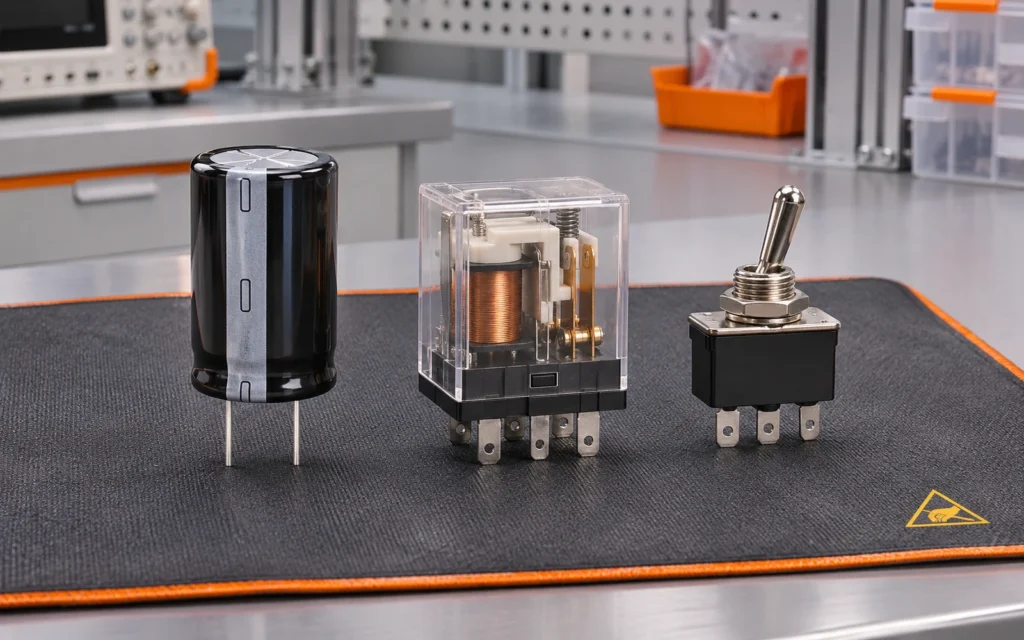
| Solenoid / contactor | Coil is specified for a nominal battery voltage | Coil voltage printed on the part |
| Charger | Output voltage and profile are set for one pack voltage and chemistry | A 48V charger with a LiFePO4 profile |
| 12V converter | Lights and accessories run from a DC-DC converter fed by the main pack | Converter input range covers 51.2V nominal and 58.4V at full charge |
| BMS and wiring | Continuous and peak current limits must cover the cart’s draw | BMS discharge rating, cable gauge and main fuse |
The controller point deserves care. The Curtis 1268 manual (Rev. C, 2011) lists the nominal input voltage as 36V or 48V, so that controller family comes in versions for either. The same manual says contactor coils must be specified at the nominal battery pack voltage. A cart with a 48V-rated controller can take a 48V pack, but a cart with a 36V-rated one cannot, even if both carry the same brand name.
How do you check whether your cart can take 48V?
Read the labels on the parts, then ask the manufacturers, in this order:
- Controller: read the part number and get the voltage rating from the manufacturer’s manual or support.
- Motor: confirm the rated voltage and any maximum current from the motor maker.
- Solenoid and accessories: check the coil voltage and any relay or horn that connects to the main pack.
- Charger: confirm output voltage and that it has a LiFePO4 charge profile.
- Converter: confirm the input range of the 12V DC-DC converter.
- Decide: if any part is rated for 36V only, either replace it with a 48V part or fit a 36V-class pack.
Is a 36V lithium pack the simpler choice?
Yes, because it keeps the cart’s voltage the same and leaves the controller, motor and solenoid untouched. A 12-cell LiFePO4 pack sits near 38.4V nominal, and the pack’s BMS and charger are the new parts to specify. Our golf cart lithium conversion kit guide covers what a conversion kit contains.
The charger still matters at 36V. Battery University’s table shows a 12V LiFePO4 battery on a lead-acid charger reaching 14.4V instead of 14.6V, so it is not fully charged. The same table notes that prolonged float charge shortens LiFePO4 battery life.
What should OEM buyers and cart converters ask a battery supplier?
Ask for the electrical limits in writing before you order, because the pack must match the cart’s weakest voltage-rated part. For an OEM or a converter handling many carts, a written spec also prevents a wrong-voltage pack reaching a customer’s vehicle.
- Voltage window: nominal, full-charge and low-voltage cut-off voltage of the pack.
- Current limits: continuous and peak discharge current, and how long the BMS allows the peak.
- Charger match: the exact charge voltage and current the pack needs.
- Communication: whether the BMS reports state of charge to a gauge or controller, and over which protocol.
- Documents: certificate copies, scope and validity for the exact model you will buy, not just the supplier’s general list.
- Mechanical fit: case dimensions, terminal type and mounting for your battery tray.
How does Jetray approach this?
Jetray designs custom lithium battery packs with cell selection, BMS design, case and structure, and communication options such as CAN, RS485 and Bluetooth, according to its Customized Service page. For a golf cart project it asks for the working voltage, current, capacity, peak load and discharge rate, plus the operating environment. You can browse 36V LiFePO4 packs, 48V LiFePO4 packs and the golf cart battery page. If you are comparing voltage classes in general, see the difference between 24V, 48V and 72V lithium batteries.
Frequently Asked Questions
Will a 48V lithium battery damage a 36V golf cart?
A 48V lithium battery can damage a 36V golf cart if the controller, motor, solenoid or converter is not rated for the higher voltage. The pack raises system voltage by about 40% to 51.2V nominal. Check each part’s rating with its manufacturer before connecting anything.
Can I use my 36V charger on a 48V lithium golf cart battery?
No, a 36V charger cannot properly charge a 48V lithium battery, because its output voltage is set for the lower pack. A 48V pack needs a 48V charger with a LiFePO4 profile. The reverse also applies: a 48V charger must not be connected to a 36V pack.
Do I need a new 12V converter for a 48V lithium pack?
Yes, if your current 12V converter is rated for 36V input only. A 48V LiFePO4 pack reaches 58.4V at full charge, so the converter’s input range must cover that. Lights, horns and gauges often run from this converter, so check it early.
Is a 36V lithium pack better than converting the cart to 48V?
A 36V lithium pack is simpler when you want to keep the existing controller, motor and solenoid. A 48V conversion makes sense only when every voltage-rated part can take 48V or you plan to replace them. The right choice depends on your cart’s parts, not on the battery alone.
Need a Golf Cart Lithium Pack Specified Correctly?
Tell Jetray your cart’s voltage, current draw, capacity and operating environment, and Jetray can propose a pack and BMS configuration. Contact us or see the custom battery pack service.
Sources and data checked in November 2026: Battery University BU-409b (Charging Lithium Iron Phosphate, updated 12 December 2023); Curtis 1268 controller manual, Rev. C, February 2011; EVE LF280 product specification, Version E, April 2019. Voltage figures for packs are calculated from the cell values in these sources.