


























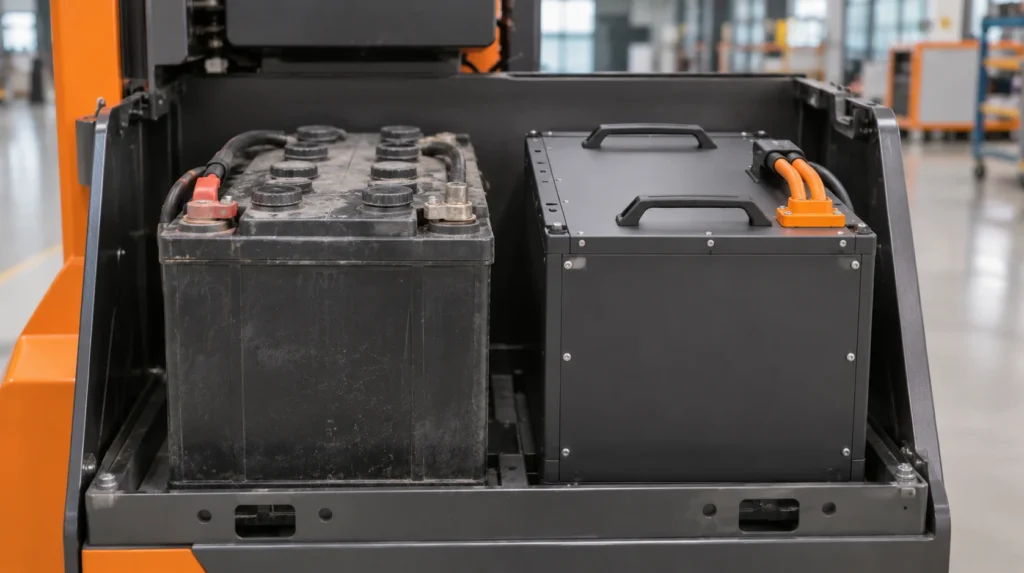









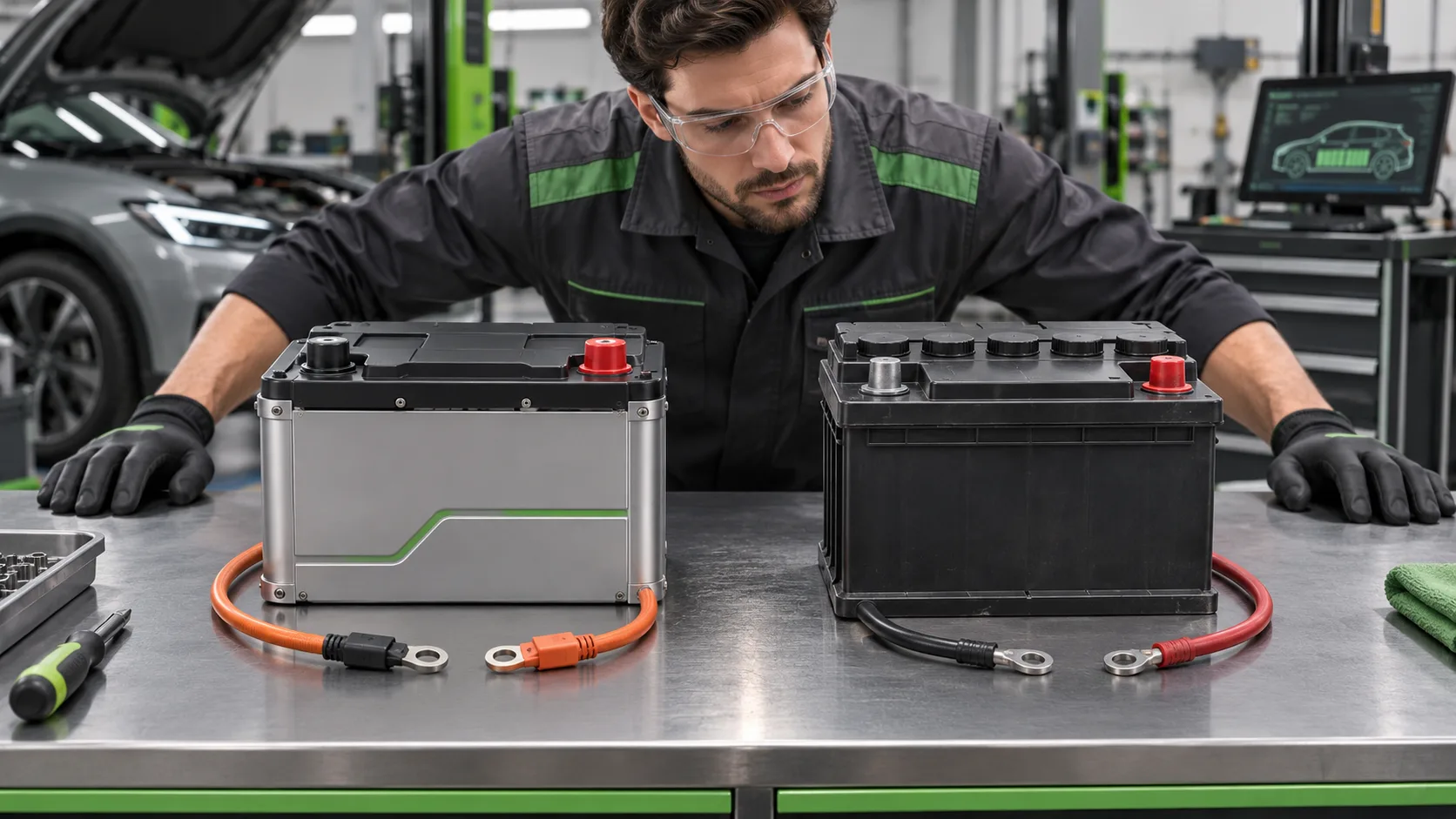
No, you should not mix lithium and lead-acid batteries in the same battery bank. They charge to different voltages, behave differently under load and need different protection, so wiring them together on one DC bus or one charger risks damaging both. If you need both chemistries, run them as separate systems with their own chargers.
Key Takeaways
- Industry sources quoted by Solar Power World say the two chemistries cannot safely share a DC bus; the workable route is isolated systems.
- A 12V LiFePO4 battery charges to 14.6V with its own charger, and reaches only 14.4V on a lead-acid charger profile, so it is not fully charged.
- Lead-acid chargers use a float stage; Battery University says prolonged float charge shortens LiFePO4 battery life.
- The lithium pack needs its own BMS; lead-acid needs only a charger.
- Mixing different lithium brands or chemistries is also discouraged by at least one battery maker quoted in the same article.
Why can’t you mix lithium and lead-acid batteries?
The two chemistries disagree on voltage, charging and protection, so a shared bank forces one of them to work outside its limits. Four mismatches cause the trouble:
- Charge voltage: a 12V LiFePO4 battery is charged to 14.6V by a LiFePO4 charger; a lead-acid charger profile gives it 14.4V and leaves it partly charged, according to Battery University’s BU-409b.
- Float charge: lead-acid chargers hold a float voltage (13.5V in the same table), while LiFePO4 uses no float charge and prolonged float shortens its life.
- Voltage behavior: when voltages differ or discharge rates do not match, current flows between the batteries and causes heating and lower efficiency, as described in Solar Power World’s report.
- Protection: the lithium pack needs its own BMS, charger and charge controller, while lead-acid needs a charger but no BMS, according to a battery-industry source quoted in the same report.
How do lead-acid and LiFePO4 batteries differ electrically?
A 12V LiFePO4 battery has four cells and a different charge profile from a 12V lead-acid battery with six cells. The table sets out the differences that matter for mixing.
| Item | Lead-acid (12V) | LiFePO4 (12V) |
|---|---|---|
| Cells in a 12V battery | Six 2V cells | Four 3.2V cells (12.8V nominal) |
| Charge voltage | 14.4V with a lead-acid charger profile | 14.6V with an LFP charger |
| Float stage | 13.5V in the lead-acid profile | None; prolonged float shortens life |
| Charge temperature (BU-410) | -20°C to 50°C | 0°C to 45°C for Li-ion; 0°C to 55°C for an EVE LiFePO4 cell |
| Protection | Charger only | BMS with charge and discharge cut-offs |
The voltage and float values come from BU-409b, and the temperature ranges from BU-410. Different temperature limits matter in a shared bank: a charger tuned for lead-acid can push current into a cold lithium pack that should not be charging.
What is a safe way to use both chemistries together?
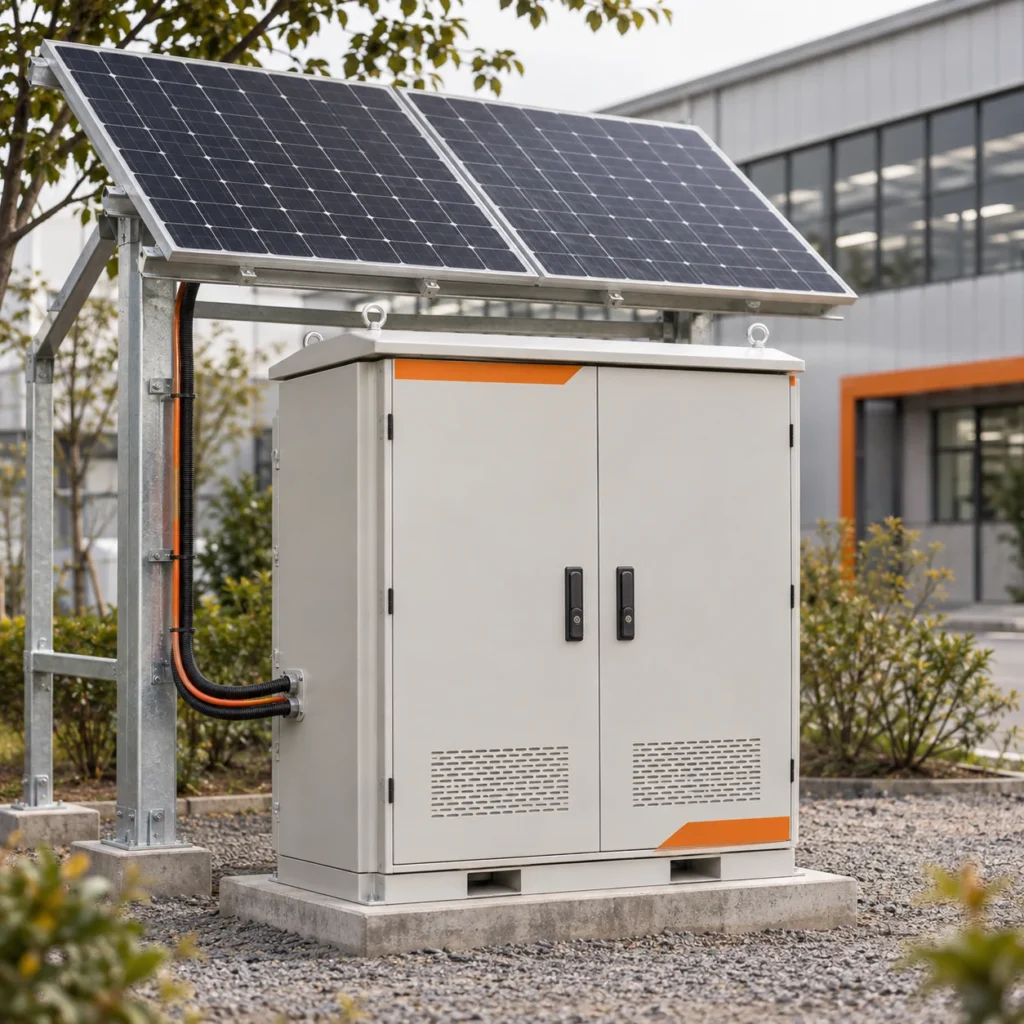
Keep them as separate systems and let each one have its own charger. The report from Solar Power World describes several arrangements:
- Two isolated systems: each system has its own charger and inverter and the two share the loads, which the report presents as the option for companies uncomfortable with mixing chemistries.
- Load splitting: a battery-industry source suggests dividing the loads between the two systems rather than combining the banks.
- Transfer switch: only one chemistry charges or discharges at a time, and the switching is likely manual.
- Manufacturer-designed hybrids: one portable power maker sells an expansion module that regulates power transfer between its lithium unit and lead-acid expansion batteries.
In a two-system layout each side keeps its own protection. A battery maker quoted in the report says the lithium side keeps its own BMS, charger and charge controller, while the lead-acid side needs its own charger or controller but no BMS. Both can serve the same loads in parallel, but sharing the load needs control. That is a design task for a qualified installer, not a wiring shortcut, and it is the reason some installers avoid hybrids altogether.
The same report says installers generally prefer one chemistry and one product, and that a professional should do any two-system installation. For a wider comparison of the two chemistries, see our lithium-ion vs lead-acid comparison guide.
What should OEM buyers check?
Specify one battery chemistry per product and block field mixing in the design. If your product replaces lead-acid with lithium, the old batteries and the old charger usually must go together.
- Charger match: confirm the charger is built for the chemistry you ship, with the right charge voltage and no float stage for LiFePO4.
- Labeling: mark the chemistry and nominal voltage on the pack and in the manual so a service shop does not add a lead-acid battery.
- Connector keying: use connectors that cannot mate with another chemistry’s pack or charger.
- Spare parts: keep lithium and lead-acid spares in separate part numbers.
- BMS limits: ask the supplier what the BMS does when another source is connected to the same terminals.
- Documents: request certificate copies, scope and validity for the exact pack model.
How does Jetray approach this?
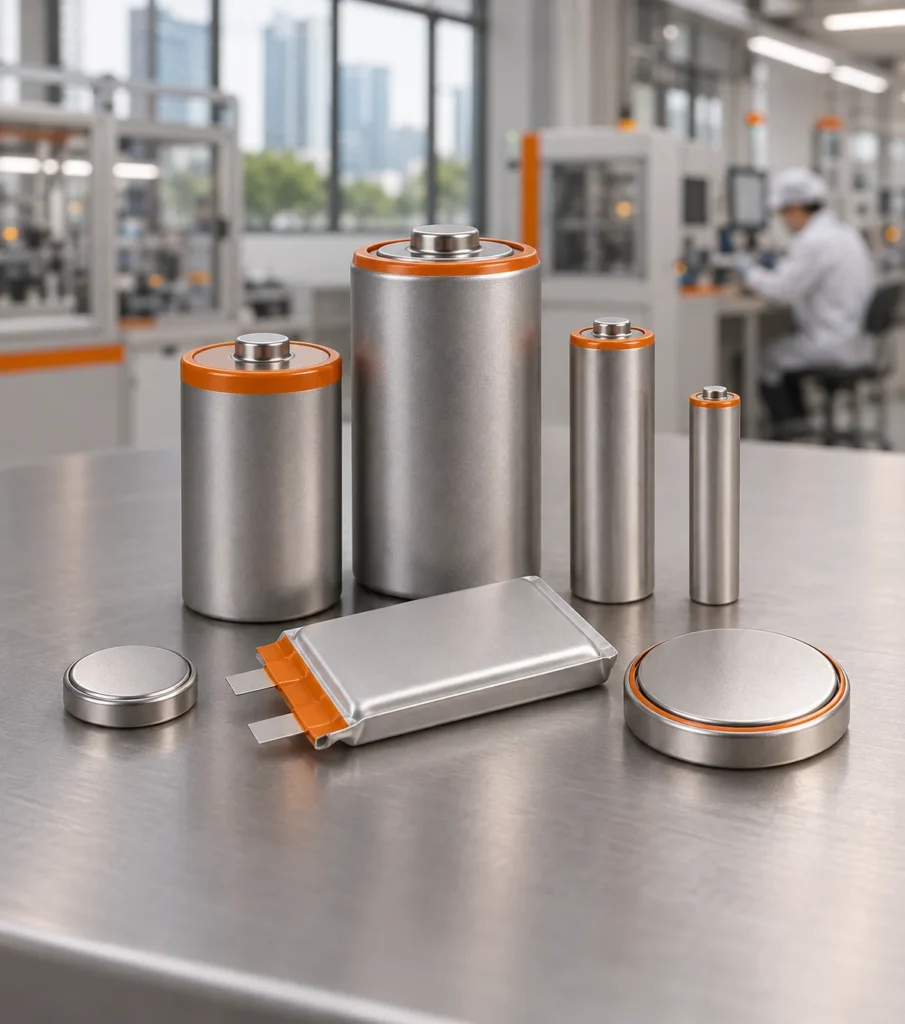
Jetray designs custom lithium packs with cell selection, BMS design and communication options, and it asks for the working voltage, current, capacity and operating environment before proposing a pack. For lead-acid replacement projects the key inputs are the voltage class, charger and BMS limits of the existing equipment. You can browse LiFePO4 battery packs and read about series and parallel connections before you plan a wiring layout.
Frequently Asked Questions
Can you connect a lithium battery in parallel with a lead-acid battery?
Connecting a lithium battery in parallel with a lead-acid battery is not recommended. The two chemistries charge to different voltages and need different protection, so current can flow between them. Industry sources quoted by Solar Power World say they cannot share a DC bus.
Can you charge lithium and lead-acid batteries with the same charger?
A lead-acid charger does not fully charge a LiFePO4 battery and adds a float stage that shortens its life. Battery University lists 14.4V on a lead-acid profile against 14.6V on an LFP charger. Use the charger made for each battery, and do not share one charger across both.
Can you use lithium and lead-acid batteries in the same system at all?
Yes, but only as separate, isolated systems or in a manufacturer-designed hybrid. Each system keeps its own charger, and a transfer switch or load splitting decides which one powers which load. A professional installer should set it up.
Can you mix different brands of lithium batteries?
Mixing different brands of lithium batteries is discouraged. One battery maker quoted by Solar Power World does not recommend mixing brands or chemistries in the same system. Buy matching packs from one supplier and check the supplier’s own parallel and series limits.
Replacing Lead-Acid Batteries with a Lithium Pack?
Send Jetray your equipment’s voltage, current draw and charger details, and it can propose a lithium pack and BMS configuration. Contact us or see the custom battery pack service.
Sources and data checked in November 2026: Solar Power World, “Can you mix lithium and lead-acid batteries on an energy storage project?” (17 August 2020); Battery University BU-409b (updated 12 December 2023) and BU-410 (updated 1 March 2022). Industry opinions are attributed to the sources quoted in the Solar Power World article.