
You notice the screen lifting. Or the back cover won’t sit flat. These are signs of a swollen battery — a condition demanding immediate attention.
This guide covers causes, risks, actions, and safe disposal. For quality batteries that minimize these risks, visit Jetray Battery Packs.
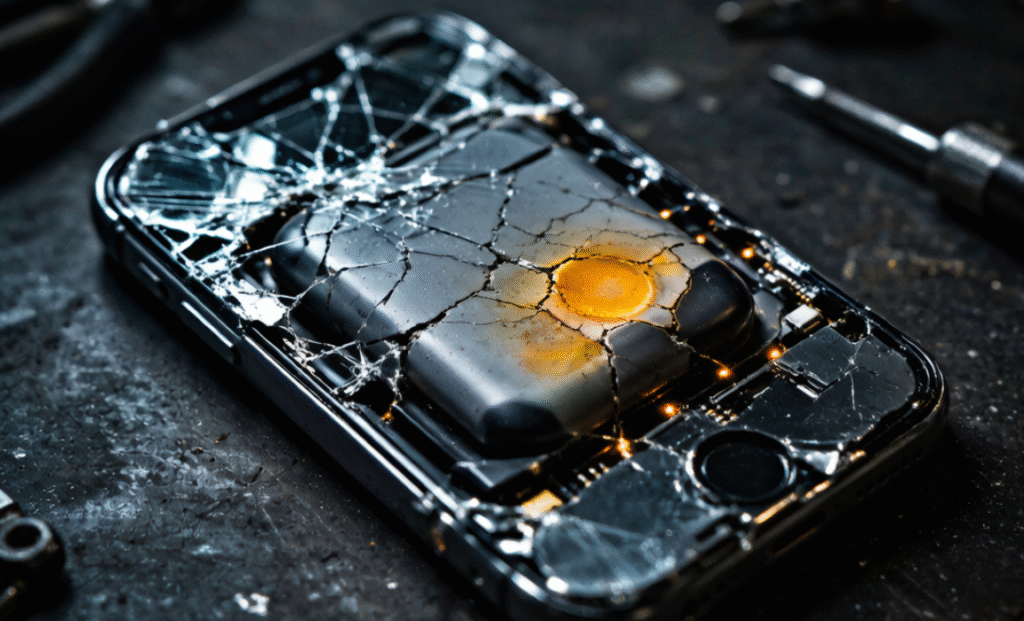

What Causes Battery Swelling?
Root cause: Swelling is caused by gas generation inside the cell as the liquid electrolyte decomposes under stress. The gas expands the flexible battery pouch, creating a visible bulge.
Primary causes: Overcharging, physical damage (drops), heat exposure, manufacturing defects, and age (2-3+ years). Each charge cycle causes microscopic degradation — after ~500 cycles, internal resistance increases and gas production risk grows.
The Risks
Critical: A swollen battery is a safety hazard. The pressurized gas can cause the casing to rupture, releasing flammable electrolytes that can result in fire and toxic fumes.
The NFPA classifies lithium battery failures as significant fire risks. Specific hazards: fire from flammable electrolyte, toxic gas (hydrogen fluoride), acid burns from electrolyte contact, and device damage.
Immediate Steps
- Stop using the device. Power it off.
- Do not charge it.
- Do not puncture or compress the battery.
- Place in a fireproof container away from flammables.
- Contact a certified battery recycler. The Call2Recycle program has drop-off locations nationwide.
Do NOT: Continue using · Charge · Puncture/deflate · Throw in trash · Store near heat.
Proper Disposal
Per EPA guidelines, swollen lithium batteries are hazardous waste. Steps: tape terminals with electrical tape, place in plastic bag, deliver to certified recycler. Major retailers (Best Buy, Staples, Lowes) accept lithium batteries.
Prevention
- Use certified chargers
- Avoid charging in heat
- Don’t overcharge (unplug after 100%)
- Use protective cases
- Store unused devices at 40-60% charge
- Replace aging batteries proactively
FAQ
What causes swelling?
Gas from electrolyte decomposition due to overcharging, heat, damage, or age.
Is it dangerous?
Yes. Fire, toxic gas, explosion risks. Stop using immediately.
What should I do?
Power off, stop charging, store safely, contact recycler.
Can I still use it?
No. Stop using it immediately.
How to dispose?
Certified battery recycler only. Tape terminals first.