
Lithium battery fires are rare but serious. When they occur, they burn hot, produce toxic gases, and are extremely difficult to extinguish. Understanding how to prevent, detect, and respond to lithium battery fires is essential knowledge for anyone using these powerful energy sources.
For quality, safety-tested batteries, visit Jetray Battery Packs.
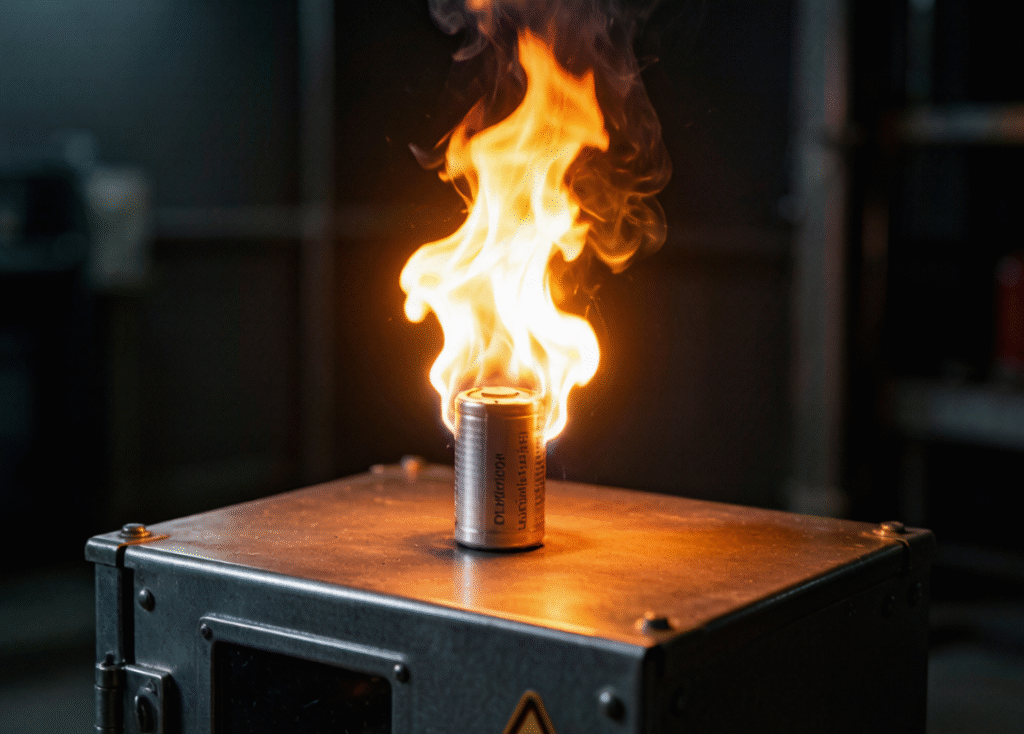
Understanding Thermal Runaway
Critical concept: Thermal runaway is a self-accelerating chain reaction. A short circuit generates heat. Heat causes the electrolyte to break down, releasing flammable gases. These gases ignite, generating more heat. The next cell in the battery overheats, and the chain reaction spreads. Unlike ordinary fires, thermal runaway produces its own oxygen, making it self-sustaining.
According to the NFPA (National Fire Protection Association), lithium battery fires are fundamentally different from ordinary fires because the electrolyte decomposition generates oxygen internally, allowing the fire to continue even if external oxygen is removed.
Common Causes
| Cause | Mechanism | Prevention |
|---|---|---|
| Physical damage | Puncture or impact causes internal short | Protective cases, careful handling |
| Overcharging | Charging beyond safe voltage | Use certified chargers, BMS |
| Manufacturing defect | Internal contamination or poor welding | Buy from reputable manufacturers |
| External heat | Battery heated above 80-100°C | Keep from direct sun, hot cars |
| Age/degradation | Internal resistance increase causes heating | Replace aging batteries |
Prevention Strategies
- Use quality batteries from reputable manufacturers with built-in BMS (battery management system)
- Use the correct charger — never charge a Li-ion battery with a NiMH charger or vice versa
- Never leave charging batteries unattended — charge in a fire-safe area, not while sleeping
- Inspect batteries regularly — look for swelling, damage, or overheating during charging
- Follow manufacturer charge limits — do not exceed specified voltage or current
- Store batteries properly — at 40-60% charge, in cool dry conditions
How to Extinguish a Lithium Battery Fire
Critical: Lithium battery fires require a different approach than ordinary fires. Standard ABC dry chemical extinguishers suppress the surrounding flames but may not stop thermal runaway inside the cells. The most effective approach is cooling.
Best extinguishing agents (in order):
- Class D extinguisher — specifically designed for metal fires (most effective)
- Lithium-specific extinguisher — newer products designed for Li-ion battery fires (e.g., Lith-Ex)
- Large amounts of water — water cools the battery below thermal runaway temperature. Use copious amounts — a small fire extinguisher’s worth will not be enough. A garden hose is effective if safe to approach.
- Sand or dirt — can smother a small fire but does not cool the cells
Do NOT use: ABC dry chemical extinguishers alone — they suppress flames but not thermal runaway. CO2 extinguishers — they cool but may not stop internal reactions. Covering with a non-breathing blanket — the fire produces its own oxygen.
The FAA guidelines for handling lithium battery fires on aircraft recommend water or soda-based extinguishers, with thermal imaging to monitor for reignition.
Safe Storage Practices
- Store at 40-60% charge (3.8V/cell for LiPo) — never fully charged for long periods
- Use fireproof containers — LiPo bags, metal ammunition boxes, or ceramic containers
- Keep away from flammables — curtains, paper, gasoline, cleaning products
- Individual storage — do not stack batteries or let terminals touch
- Storage area — cool (10-25°C), dry, well-ventilated. Not in direct sunlight, garages in summer, or near heat sources
- Damaged batteries — store in fireproof container, dispose of promptly
For large battery storage installations, refer to NFPA 855: Standard for Installation of Stationary Energy Storage Systems, which provides detailed safety requirements.
Emergency Response
If a battery begins to smoke or catch fire:
- Evacuate the area. Toxic gases are released.
- Call emergency services — tell them it is a lithium battery fire.
- If safe to do so, move the burning device outside or to a non-combustible area.
- Apply cooling — water from a safe distance if possible.
- Monitor for reignition — lithium fires can reignite hours later.
FAQ
What causes lithium fires?
Thermal runaway from internal short, overcharge, damage, or heat. Self-sustaining chain reaction.
How to extinguish?
Class D extinguisher or water (for cooling). ABC dry chemical suppresses flames but not thermal runaway.
Can fires start without warning?
Yes. While swelling and smoke are common, thermal runaway can occur suddenly from internal defects.
How to store safely?
40-60% charge, fireproof containers, cool dry place, away from flammables.
Are lithium fires more dangerous?
Yes. Self-oxidizing (produces own oxygen), releases toxic gases, can reignite hours later.
Conclusion
Lithium battery fires are rare but require specific knowledge to prevent and respond to properly. Prevention is the best strategy — use quality batteries with built-in safety features, charge properly, inspect regularly, and store at the correct charge level. If a fire does occur, prioritize evacuation and use the correct extinguishing method for these unique fires.