
If you’ve ever used a drone, RC car, or any battery-powered device, you’ve likely come across LiPo and LiHv batteries. They look similar, but their performance isn’t the same.
So, what’s the difference between them—and which one suits you better? Let’s break it down in simple terms.
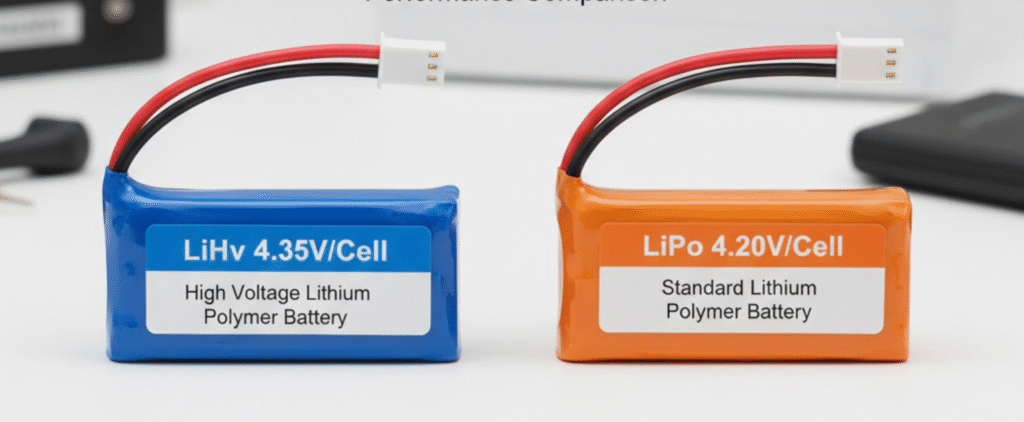
1. What They Are
LiPo Battery (Lithium Polymer)
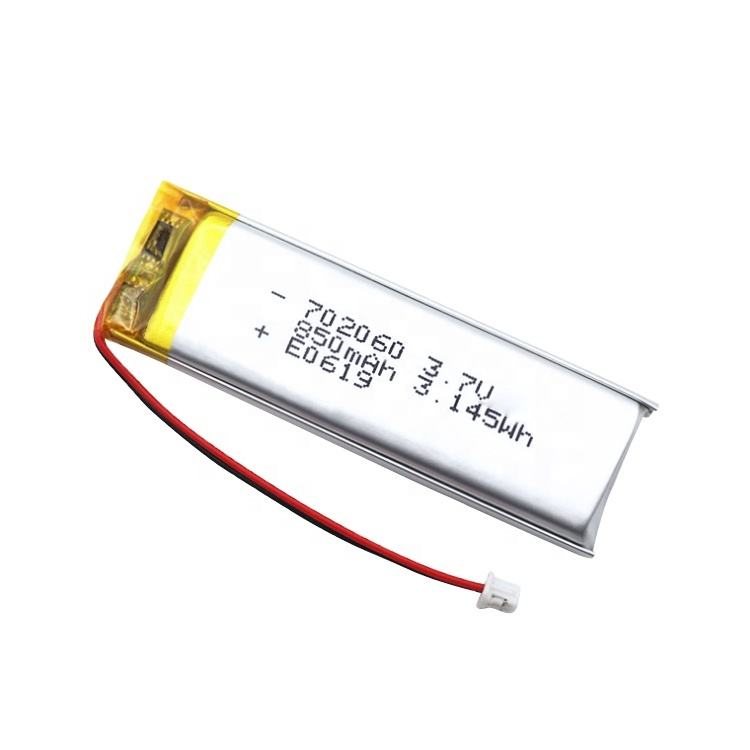
LiPo is short for Lithium Polymer. Each cell has a nominal voltage of 3.7 V and can charge up to 4.2 V.
It uses a flexible, lightweight polymer shell and is known for being compact, powerful, and affordable. You’ll find LiPo batteries in drones, RC models, and portable devices.
LiHv Battery (High-Voltage Lithium Polymer)
LiHv stands for High Voltage Lithium Polymer. Each cell’s nominal voltage is 3.8 V, and it can charge up to 4.35 V—a small but important increase.
That higher voltage gives LiHv batteries a stronger burst of power, slightly longer runtime, and better performance under heavy load.
2. Main Differences at a Glance
| Feature | LiPo Battery | LiHv Battery |
|---|---|---|
| Nominal Voltage | 3.7 V | 3.8 V |
| Fully Charged Voltage | 4.2 V | 4.35 V |
| Energy Density | Standard | Slightly higher (≈7–10%) |
| Power Output | Stable | Stronger bursts of power |
| Compatibility | Works with most devices | Requires LiHv-compatible charger and ESC |
| Cost | Lower | Slightly higher |
| Lifespan | Longer | Slightly shorter at high voltage |
| Typical Use | Everyday drones, RC cars, tools | Racing drones, FPV, high-power models |
3. Performance Breakdown
Voltage and Power
Because LiHv batteries charge to 4.35 V per cell instead of 4.2 V, they offer more voltage overall.
For example, a 4S LiPo pack = 16.8 V, while a 4S LiHv pack = 17.4 V.
That extra voltage translates to faster acceleration and stronger thrust—especially noticeable in racing drones or heavy-lift models.
Flight Time or Runtime
According to Large Battery (2025) tests, LiHv packs can increase flight time by 3–7% under light loads, thanks to their higher energy density.
But if you constantly fly at full throttle, the gain might disappear because higher voltage also draws more current.
Lifespan
LiHv batteries tend to age slightly faster. After 100 full charge/discharge cycles, capacity loss might reach 5%, compared to around 3–4% for LiPo.
That’s because higher voltage stresses the chemical materials more. If you want longer life, avoid always charging LiHv to 4.35 V—stop at 4.25–4.3 V instead.
4. Charging and Compatibility
Charger requirements: You need a charger with LiHv mode (4.35 V per cell). Using a standard LiPo charger (4.2 V) is safe, but the battery won’t charge to full capacity.
Do not overcharge: Never charge a LiPo in LiHv mode—it can overheat or even catch fire.
Device compatibility: Some flight controllers or ESCs only support 16.8 V (standard 4S LiPo). Always check your specs before switching to LiHv.
Storage voltage: Whether LiPo or LiHv, store batteries around 3.8 V per cell when not in use to prevent swelling or degradation.
5. Pros and Cons
LiPo Battery
Pros
Cheaper and widely available
Longer cycle life
Safer and easier for beginners
Cons
Slightly lower voltage
Less power for high-demand systems
LiHv Battery
Pros
Higher voltage = more power and better throttle response
Slightly longer flight time
Less voltage drop under heavy load
Cons
More expensive
Shorter lifespan when charged fully
Requires specific chargers and compatible electronics
6. Which One Should You Pick?
| Your Situation | Recommended Battery | Why |
|---|---|---|
| Beginner or casual flyer | LiPo | Reliable, safe, and more affordable |
| Racing or FPV drone pilot | LiHv | Higher voltage for stronger power and faster response |
| Aerial photography / long flight user | LiPo | Stable performance and balanced flight time |
| Professional FPV or high-load application | LiHv | More power per gram, ideal for competition or heavy use |
7. Safety Tips
Always use a balance charger and check cell voltage regularly.
Never overcharge or discharge below 3.0 V per cell.
Keep away from heat or direct sunlight.
Store batteries at half charge (~50%) if unused for long periods.
If you see swelling or damage—stop using it immediately.
8. Final Thoughts
There’s no universal “best” battery—it depends on what you need.
Choose LiPo if you want something affordable, stable, and long-lasting.
Choose LiHv if you need every bit of performance for racing or professional work.
For most hobbyists, LiPo is perfectly fine. But if you love pushing your gear to the limit, LiHv gives that extra edge.
In short:
LiPo = dependable everyday power.
LiHv = higher voltage, more thrill.