
1. What Is a 6S Battery
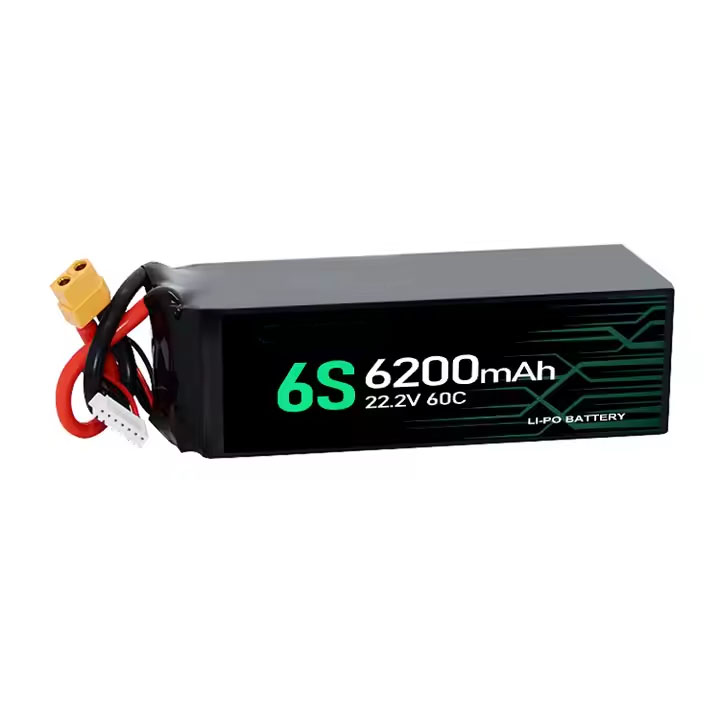
In the world of drones, e-bikes, RC models, and industrial equipment, the term “6S battery” has become synonymous with high performance.
The “6S” stands for six cells connected in series, where the voltage of each cell adds up.
In a standard LiPo (Lithium Polymer) configuration, each cell has a nominal voltage of 3.7 V. Therefore, a 6S battery has a nominal voltage of 22.2 V (3.7 × 6).
When fully charged (4.2 V per cell), the total voltage reaches 25.2 V, and when discharged, it drops to around 18 V.
Compared with 3S or 4S packs, a 6S battery provides higher voltage, stronger power output, and more stable performance—making it ideal for demanding applications.
2. Core Specifications: Voltage, Capacity & Discharge Rate
To understand a 6S battery fully, you need to look at its three core parameters: voltage, capacity, and discharge rate (C-rating).
Voltage
Because six cells are connected in series, the 6S configuration produces higher voltage.
This allows the motor to deliver the same power at a lower current, reducing heat generation and energy loss.
For example, a motor that draws 20 A on a 3S battery might only require about 10 A with a 6S battery—resulting in greater efficiency and longer lifespan of the system.
Capacity (mAh)
Capacity determines how long the battery can supply power. A higher capacity means longer runtime but also greater weight and size.
Typical 6S packs range from 1300 mAh (lightweight drones) to 10 000 mAh (professional aerial platforms).
Selecting capacity involves balancing flight duration and payload weight.
Discharge Rate (C-Rating)
The C-rating shows how quickly a battery can safely discharge.
For instance, a 5000 mAh battery rated at 50C can theoretically provide 250 A (5 × 50) of current.
High-C batteries are essential for racing drones or RC cars requiring burst power, while 30C–40C suits general use.
3. Common 6S Battery Chemistries
LiPo (Lithium Polymer)
The most popular type of 6S battery, offering high energy density and lightweight performance. It’s perfect for drones and industrial tools that require high power in a compact size.
LiHV (High-Voltage LiPo)
An advanced version allowing up to 4.35 V per cell, achieving a total of 26.1 V.
It delivers more energy and stronger output but needs a compatible charger and extra care during charging.
LiFePO₄ (Lithium Iron Phosphate)
Each cell provides about 3.2 V, resulting in a 6S pack voltage of 19.2 V.
Though its voltage is lower than LiPo, it offers higher safety, longer life cycle, and better temperature resistance, making it suitable for EVs and energy storage systems.
Li-ion (Lithium-Ion)
Typically built from cylindrical cells (e.g., 18650, 21700), Li-ion batteries provide higher energy density and longer life but have lower discharge rates—less suited for high-power bursts.
4. Structure and Manufacturing Process
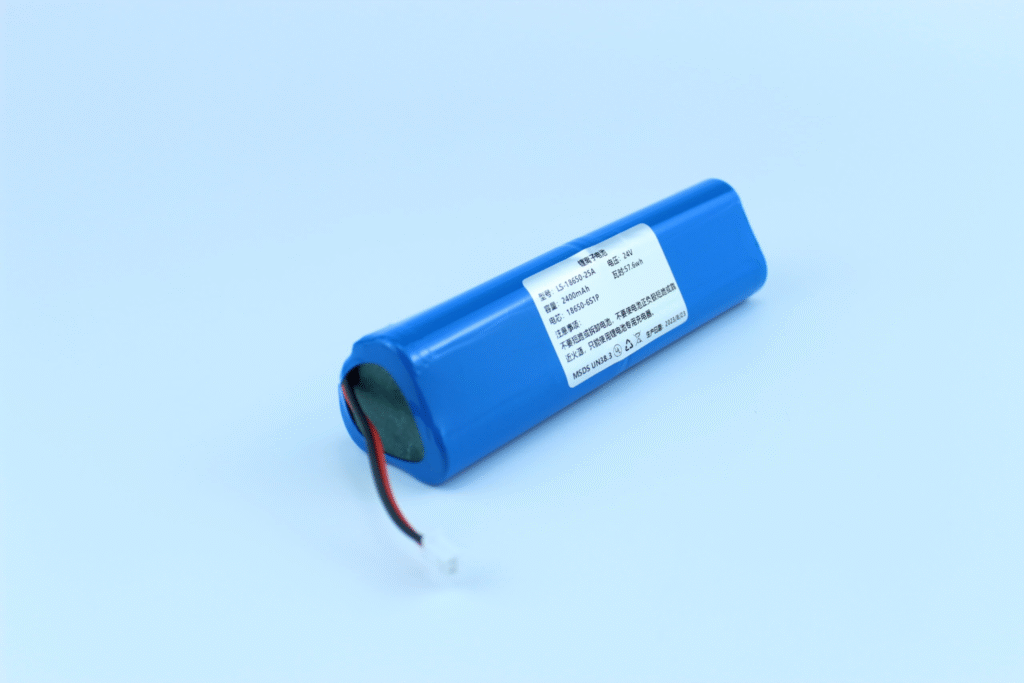
A 6S battery pack consists of six cells, bus bars, a Battery Management System (BMS), and an outer casing.
Manufacturing steps include:
Cell Matching: Grouping cells by voltage and capacity for uniform performance.
Welding and Assembly: Connecting cells with nickel or copper strips to minimize resistance.
Protection Circuit Design: Incorporating BMS to monitor voltage, current, and temperature to prevent overcharge or over-discharge.
Sealing and Testing: Soft-pouch (LiPo) or hard-shell (Li-ion) packs are tested for voltage balance, thermal stability, and discharge reliability before shipping.
Top manufacturers maintain cell voltage deviations within ±0.02 V to ensure consistent lifespan and performance.
5. Key Advantages of 6S Batteries
| Feature | Benefit |
|---|---|
| High Voltage Output | Delivers the same power with lower current, reducing energy loss and heat generation. |
| High Power Density | Provides strong current output for demanding loads such as drones and RC models. |
| Fast Response | Maintains stable voltage under dynamic load conditions for precise control. |
| Thermal Stability | Even current distribution minimizes temperature rise and enhances safety. |
| Scalability | Can be paralleled with other packs to increase capacity and extend runtime. |
6. Typical Applications
Drones and Aerial Systems
6S LiPo batteries are the standard choice for medium-to-large drones, offering longer flight time, better wind resistance, and faster response to throttle changes.
RC Cars and Boats
For RC enthusiasts, 6S means speed and torque. These packs can provide instantaneous bursts of current for competitive racing and stunts.
Electric Bicycles and Scooters
A single 6S battery provides 25.2 V; multiple packs can be connected in series/parallel for larger e-bike or skateboard power systems.
Industrial Equipment and Power Tools
Used in portable tools, inspection devices, and robotics that require stable DC voltage and long working cycles.
7. Charging and Maintenance
Proper Charging
Use a 6S-compatible balance charger to keep all cells evenly charged.
Charge at 0.5C–1C to avoid excessive heat or chemical degradation.
Always charge at room temperature—never when the pack is hot.
Place the battery in a LiPo-safe bag or on a non-flammable surface.
Storage Guidelines
For long-term storage, keep each cell at 3.8–3.85 V (≈ 23 V total).
Store in a cool, dry place, away from sunlight or heat sources.
Lifespan
Well-maintained 6S LiPo batteries can last 200–400 charge cycles.
Stop using the pack immediately if you notice swelling, temperature spikes, or large voltage imbalance between cells.
8. How to Choose the Right 6S Battery
Check Device Compatibility: Ensure the ESC, motor, and controller support 22.2–25.2 V input.
Select Proper Capacity: 1500–2500 mAh for lightweight drones; 6000 mAh+ for heavy payloads.
Discharge Rating (C-Value): Racing or industrial drones may need 60C+, while 35C–50C works for standard setups.
Connector Type: Choose XT60, XT90, or EC5 connectors to match your equipment.
Quality and Certification: Look for UN38.3, CE, and MSDS compliance.
Balance Price and Longevity: Premium packs are safer and last longer despite a higher upfront cost.
9. Market Trends and Future Outlook
With the rapid growth of e-mobility, drones, and energy storage industries, the 6S battery market continues to expand.
From 2025 to 2030, analysts forecast a compound annual growth rate (CAGR) of over 6%.
Emerging trends include:
Higher-density materials such as silicon-carbon anodes and solid-state electrolytes.
Smart BMS integration for real-time health monitoring and safety.
Eco-friendly production that complies with RoHS and REACH standards.
China’s OEM manufacturers remain key players in this global supply chain due to their advanced production capabilities and competitive pricing.
10. Conclusion
A 6S battery is more than just a power source—it’s a precise balance between voltage, capacity, and safety.
It delivers outstanding performance across drones, EVs, and industrial applications while maintaining efficiency and reliability.
By selecting the right configuration and following proper maintenance, a 6S battery can become your most dependable energy solution—
a compact powerhouse combining strength, endurance, and innovation.