
When you see “3 V” on a battery label — whether it’s CR2032, CR123A, or CR2 — it refers to the nominal voltage output of 3 volts.
These small but powerful batteries are the backbone of many everyday devices: remote controls, key fobs, cameras, wearables, and industrial sensors.
In this quick guide, you’ll learn what 3-volt batteries are, how they work, which types exist, and how to pick the right one for your needs.

What Is a 3 Volt Battery?
A 3 volt battery is a single-cell power source that provides around 3 volts of direct current (DC).
Most 3 V cells are lithium-based, meaning they use lithium metal or lithium compounds as the anode, offering high energy density and a long shelf life.
Unlike AA or AAA alkaline batteries (1.5 V), a single 3 V battery can deliver enough voltage for low-power electronics without needing multiple cells in series.
That’s why they’re so popular in compact devices that demand stable voltage over long periods.
Common 3 V Battery Types
| Type | Typical Model | Chemistry | Features | Common Uses |
|---|---|---|---|---|
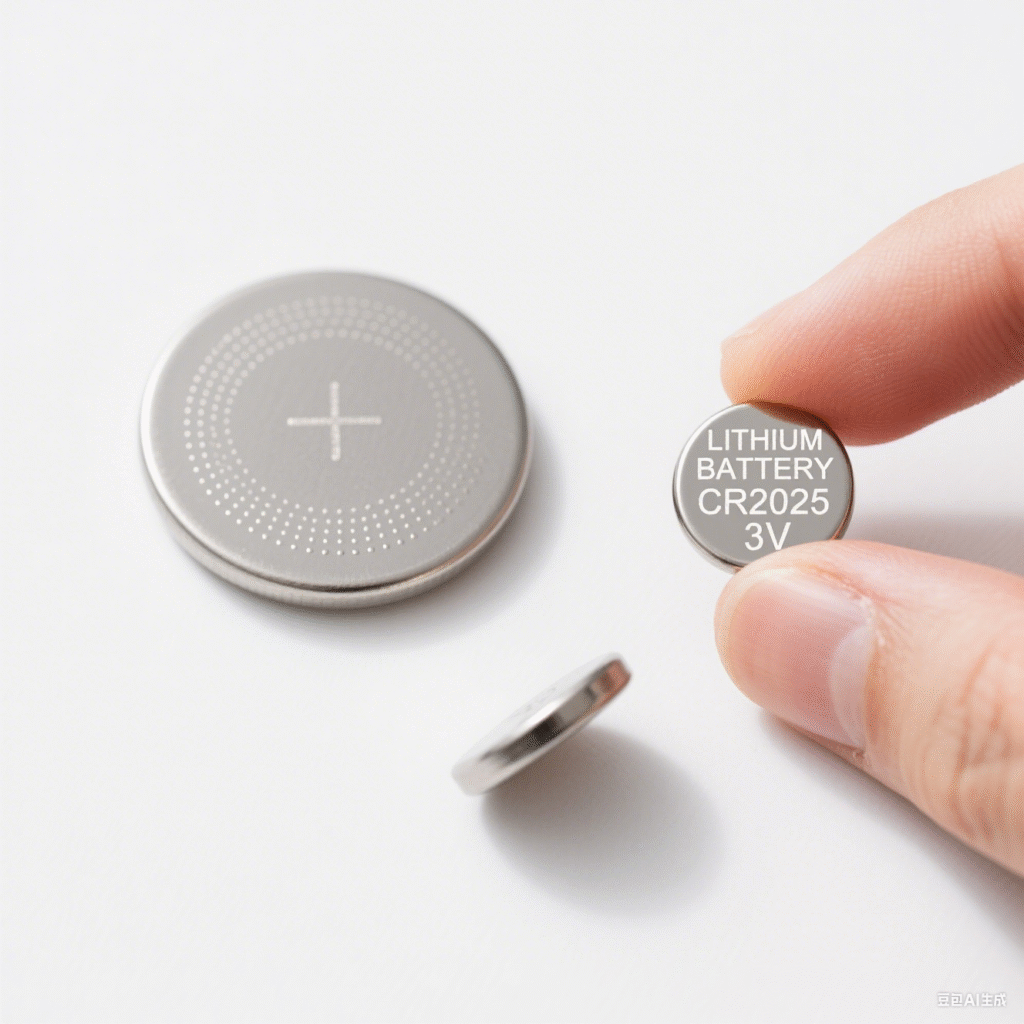
| Coin / Button Cells | CR2032, CR2025 | Lithium Manganese Dioxide (Li-MnO₂) | Compact, cheap, 3–10 year shelf life | Watches, remotes, IoT devices |
| Cylindrical Cells | CR123A, CR2 | Lithium or Lithium-Thionyl Chloride | Higher capacity (700–1500 mAh) | Flashlights, cameras, security sensors |
| Rechargeable 3 V Cells | 16340 (RCR123A) | Li-ion (3.6–3.7 V nominal) | Reusable, slightly higher voltage | Smart home systems, pro equipment |
💡 “CR” stands for lithium-manganese chemistry; “R” before it (as in RCR123A) means rechargeable.
How Long Do 3 V Batteries Last?
Lifespan depends heavily on chemistry, capacity, and usage pattern.
Here’s a general idea:
Coin cells (CR2032) – up to 5–10 years in low-drain devices like watches.
CR123A cells – 1–2 years in flashlights or motion sensors.
Rechargeable Li-ion 3 V cells – 300–500 charge cycles.
Key factors that shorten lifespan include:
High temperature (> 40 °C / 104 °F).
Deep discharge (fully draining the battery).
Poor storage — full or empty state for too long.
Using cheap, unbranded batteries with inconsistent chemistry.
Main Advantages of 3 V Batteries
High Energy Density – A small CR2032 can deliver 220 mAh of capacity in a tiny package.
Long Shelf Life – Lithium coin cells can sit unused for a decade and still retain most charge.
Stable Voltage Output – Perfect for precision electronics and memory backup devices.
Wide Temperature Range – Usually -20 °C to +60 °C (-4 °F to 140 °F).
Lightweight & Maintenance-Free – No leakage or maintenance required unlike alkaline batteries.
Choosing the Right 3 V Battery
Picking the wrong battery can cause a device to malfunction or even damage its circuitry.
Here’s how to choose smartly:
Check the Model Code – e.g., CR2032 (20 mm diameter, 3.2 mm thick). The numbers aren’t random!
Match the Chemistry – Never replace a Li-ion rechargeable with a primary lithium cell.
Mind the Voltage Tolerance – Some “3 V” cells output up to 3.7 V; check device rating before mixing.
Consider Environment – For outdoor or industrial use, choose cells with extended temperature ratings.
Buy Trusted Brands – Panasonic, Energizer, Duracell, Sony, and reliable OEM suppliers offer consistent quality.
Safety & Storage Tips
Avoid Mixing Old and New Batteries. Voltage imbalance can cause leaks or short circuits.
Keep Away from Children and Pets. Coin cells are a serious choking hazard.
Store Properly. Cool, dry, and away from direct sunlight is ideal.
Dispose Responsibly. Do not throw lithium batteries into fire or regular trash — use battery recycling bins.
If you’re an OEM or engineer sourcing in bulk, request MSDS (Material Safety Data Sheet) and RoHS compliance from the supplier.
Industrial and DIY Applications
Beyond consumer gadgets, 3 V batteries play a critical role in:
Smart Meters and Sensors: Stable voltage and low self-discharge make them ideal for long-term deployments.
Medical Devices: Heart rate monitors, hearing aids, and portable diagnostic tools use mini 3 V cells.
Memory Backup Power: Computers and PLC systems often use 3 V coin cells (CMOS backup).
DIY Electronics Projects: Arduino boards and prototyping kits commonly run on 3 V sources.
Final Thoughts
A 3 volt battery might look tiny, but its engineering is impressively sophisticated — stable output, compact design, and long shelf life make it the quiet workhorse of modern electronics.
When selecting or designing around a 3 V battery, consider its chemistry, size, capacity, and safety certifications.
A few minutes of proper selection can save you months of maintenance and replacement later.
If you’re in manufacturing or product design, partner with a reliable battery supplier that can offer consistent quality, custom packaging, and engineering support — that’s how your 3 V power source stays strong for years.