
Quick Answer:
If your device is compact, low-power, or designed around AA-size compatibility, the 14500 battery is a smart pick.
But if you need higher capacity, longer runtime, and stronger discharge performance, 18650 batteries easily take the lead.
Now let’s dive into the details — because while both are lithium-ion batteries, they’re built for very different jobs.
Why Compare 14500 and 18650 Batteries?
If you’ve ever searched for rechargeable lithium batteries, you’ve probably seen these two numbers pop up everywhere — 14500 and 18650. They look similar at first glance, but don’t be fooled by appearances: inside, they’re two completely different beasts.
For engineers, DIY users, or anyone choosing a power source for a project, knowing how these two types differ in capacity, current output, safety, and compatibility can save you a lot of frustration — and sometimes, expensive damage.
The Basics — What Do “14500” and “18650” Mean?
Those numbers aren’t random. They describe the physical dimensions of the battery.
14500 Battery

Diameter: ~14 mm
Length: ~50 mm
Similar in size to a standard AA battery
Nominal voltage: 3.6 – 3.7 V (fully charged ≈ 4.2 V)
Typical capacity: 500 – 1000 mAh
Because it’s nearly the same size as a regular AA cell, many people assume they can use 14500s as drop-in replacements — but don’t do that.
A standard AA alkaline battery outputs 1.5 V, while a 14500 delivers 3.7 V — more than double. Plugging it into a device not rated for lithium-ion voltage can fry the electronics instantly.
18650 Battery
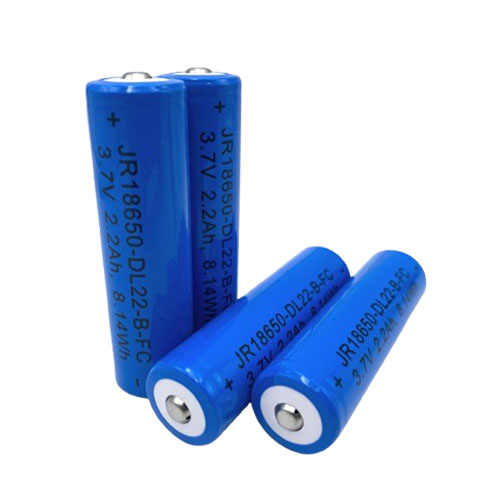
Diameter: ~18 mm
Length: ~65 mm
Nominal voltage: 3.6 – 3.7 V
Typical capacity: 1800 – 3500 mAh (Modern cells can exceed 4000 mAh)
18650 cells are the industry standard for high-performance lithium-ion batteries. They’re the building blocks behind laptop battery packs, e-bikes, power tools, flashlights, and even Tesla’s early EV packs.
Head-to-Head Comparison
| Specification | 14500 Battery | 18650 Battery |
|---|---|---|
| Size | 14 mm × 50 mm | 18 mm × 65 mm |
| Voltage | 3.6 – 3.7 V | 3.6 – 3.7 V |
| Capacity | 500 – 1000 mAh | 1800 – 3500 mAh |
| Continuous Discharge | 2 – 3 A typical | 10 – 20 A (depends on model) |
| Weight | ≈ 20 g | ≈ 45 g |
| Energy Density | Lower | Higher |
| Cost per Unit | Lower | Slightly higher, but better value per mAh |
| Typical Use | Low-drain gadgets | High-power devices, battery packs |
The main difference? Energy and endurance.
A single 18650 can hold roughly 3–4 times the energy of a 14500 cell.
That’s why 14500 batteries fit in smaller, lighter devices — while 18650s dominate where endurance and performance matter.
Size and Compatibility
The 14500 is roughly the same size as a AA, which is both convenient and risky.
Convenient, because you can find devices or adapters that fit it easily.
Risky, because many users think “same size = same voltage.” It’s not. Using 3.7 V in a 1.5 V circuit is a recipe for burnt chips or melted springs.
The 18650, on the other hand, is much larger — too big for AA compartments — but it’s standardized across many industries. Battery holders, chargers, and packs are widely available, making it the go-to for engineers and battery designers.
Capacity and Runtime
Battery capacity (mAh) tells you how long a battery can power your device.
And here, the gap is huge:
14500: 500 – 1000 mAh
18650: 2000 – 3500 mAh
In practice, this means:
If your flashlight runs for 1 hour on a 14500, it could run 3–4 hours on a comparable 18650.
That’s why long-runtime devices — like bike lights, e-scooters, or power tools — almost always rely on 18650s or larger formats (21700, 26650, etc.).
Of course, that capacity comes with trade-offs: more weight, larger space, and slightly longer charging time. But for anyone serious about reliability, it’s worth it.
Discharge Performance
When it comes to output current, 18650s are clear winners.
Many 18650 cells (like Samsung 25R or Sony VTC6) support continuous discharge rates of 15–20 A — some even higher. That’s enough to power high-drain tools, drones, or e-bikes without overheating.
In contrast, 14500 batteries typically max out around 2–3 A, which limits them to low-drain applications. Push them harder and you’ll see heat buildup, voltage sag, and reduced lifespan.
So if your device needs strong, steady power, 18650s are the safer, more reliable bet.
Cost and Value
At first glance, a 14500 might look cheaper. But per mAh (or per watt-hour), 18650s deliver better value.
Let’s say:
A 14500 = 800 mAh for $3.
A 18650 = 2500 mAh for $6.
That’s about $3.75 per Ah for the 18650 vs $7.50 per Ah for the 14500.
So even though 18650s cost more per piece, you’re getting double the energy for the price.
Safety and Protection
Both battery types use lithium-ion chemistry, which means they need proper care.
That includes:
Avoiding over-charging or over-discharging.
Using chargers designed for lithium-ion cells.
Avoiding physical damage or exposure to heat.
Storing between 40 – 60 % charge if unused for long periods.
👉 Always buy protected cells when possible. These have built-in safety circuits that prevent over-voltage, short circuits, or deep discharge.
Also, note that unprotected 18650s are more common (especially for battery packs), so users need to be extra careful about matching cells and using proper BMS (Battery Management Systems).
Real-World Applications
Let’s look at where each one fits best.
Ideal Uses for 14500 Batteries
Compact flashlights
Wireless sensors and IoT modules
Remote controls
Laser pointers
Small electronics where space matters more than endurance
Ideal Uses for 18650 Batteries
Compact flashlights
Wireless sensors and IoT modules
Remote controls
Laser pointers
Small electronics where space matters more than endurance
Quick analogy:
Think of 14500s as the city commuter bikes of the battery world — lightweight, efficient, and perfect for short trips.
18650s are more like SUVs — built for range, power, and reliability under heavy loads.
Safety Tips and Storage Advice
Never mix old and new cells. Differences in voltage can cause imbalance and overheating.
Avoid extreme temperatures. Heat accelerates chemical degradation; cold reduces performance.
Use a proper charger. Universal or cheap chargers can over-voltage cells.
Store safely. Use battery cases, not loose drawers or pockets.
Recycle responsibly. Do not throw lithium batteries into household trash.
Buying Advice
When choosing a battery, pay attention to three things:
Brand Reputation – Stick to trusted names like Samsung, LG, Panasonic, Sanyo, or Sony.
Protection Circuit – Choose “protected” cells for standalone use, and ensure your pack includes a proper BMS.
Application Fit – A battery that’s “too strong” or “too big” can be as problematic as one that’s too weak.
If you’re an OEM or engineer sourcing cells in bulk, always request:
Full specification sheet (datasheet).
MSDS and UN38.3 certification.
Cycle life testing results.
Production date and batch traceability.
Which Should You Choose?
Here’s a quick cheat sheet:
| Scenario | Recommended Battery |
|---|---|
| Small portable device | 14500 |
| AA-sized compartment, low power | 14500 |
| High-power flashlight | 18650 |
| Power tool / e-bike / EV | 18650 |
| Long runtime needed | 18650 |
| Compact, lightweight project | 14500 |
| Best value per mAh | 18650 |
| Simplest swap-in convenience | 14500 (check voltage first!) |
🧭 In short:
14500 = Compact + Low Power + Portable
18650 = High Capacity + Strong Output + Long Life
Choose based on your device’s current draw, runtime expectations, and physical space — not just the price tag.
Final Thoughts
Both 14500 and 18650 batteries have earned their place in modern electronics.
The 14500 shines in lightweight, space-restricted designs, while the 18650 dominates in high-performance and industrial environments.
If you want convenience and compact power, go for 14500.
If you value endurance, reliability, and scalability, 18650 is your best bet.
Whichever you choose, invest in quality, safety, and proper usage habits — because even the best battery is only as good as how you treat it.